



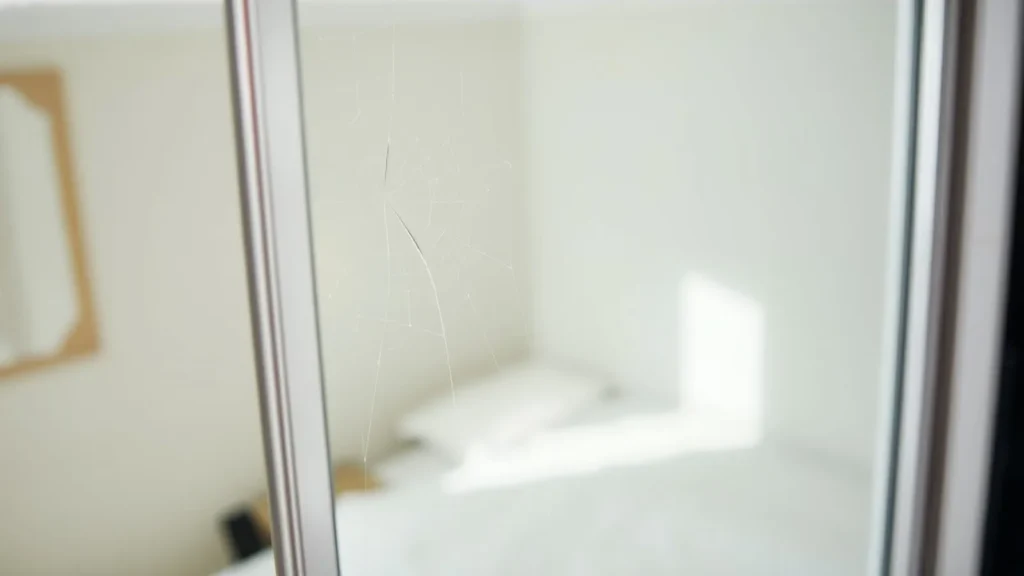
A crack in a wardrobe mirror has a way of ruining a bedroom. It runs across your reflection every morning, it catches the light, and you worry that the next time the door slides it will go further. The good news is that this is a very common glass problem, and there is a clear way to think it through.
This guide sits under our main guide to sliding wardrobe doors. It covers what to do in the first few minutes, what a glazier needs from you, how to decide between replacing one panel and replacing the whole set, and what to expect. It is general information, and the right answer for your wardrobe depends on how your doors are built.
First, make it safe
A cracked mirror can break further, and the edges are sharp. Before anything else:
- Stop sliding that door. Movement and vibration can make a crack run.
- Tape across the crack. Use wide tape on the room side, in an X or along the crack, to hold the pieces together.
- Keep children and pets away. Close the bedroom door if you need to.
- Do not lean on it or hang things on it.
- If pieces have fallen, wear shoes and gloves, collect the large pieces carefully and vacuum the floor thoroughly, including the bottom track.
- Do not try to lift a damaged panel off the track yourself. Large mirrors are heavy, the edges are sharp and a cracked panel is weaker than it looks.
If the mirror has broken into pieces or the panel has come off the track, treat it as an emergency. Our glass repairs service includes an emergency option, and our guide to avoiding delays with emergency glass replacement lists what to have ready.
Why mirrors crack in wardrobe doors
Understanding the cause helps you prevent a repeat.
- A knock or an impact. A bag, a vacuum cleaner or a child leaning on a door.
- A panel that is out of level or binding. If a door sticks and is forced, stress builds in the glass.
- Worn rollers. A panel that drops or scrapes puts uneven load on the glass.
- Temperature and movement. Small changes over time can make an old flaw grow.
- Edge damage. A tiny chip at the edge can spread into a long crack.
- Moisture and ageing. Damp at the edges can weaken the backing and the glass edge.
If the cause was a worn roller or a bent track, replacing the mirror alone will not stop it happening again. This is why it is worth looking at the whole door system when a panel fails.
What your glazier needs from you
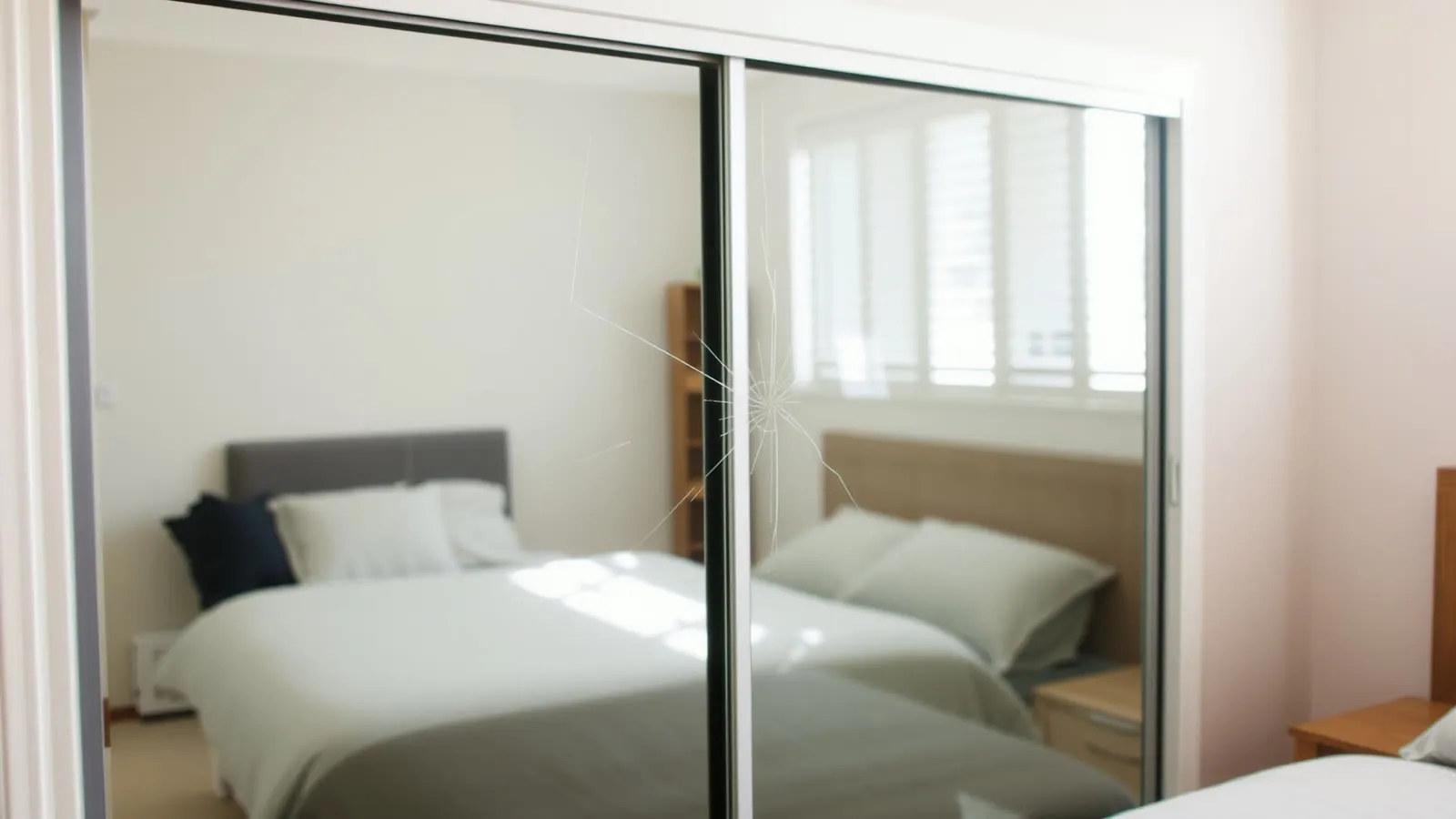
A glazier can usually give you much better guidance from good photos than from a description. Gather these:
- A photo of the whole wardrobe with the doors closed.
- A close photo of the crack, from the front.
- A photo of the top and bottom edge of the door, to show how the mirror is held.
- A photo of the frame, if it has one, including the corners and the finish.
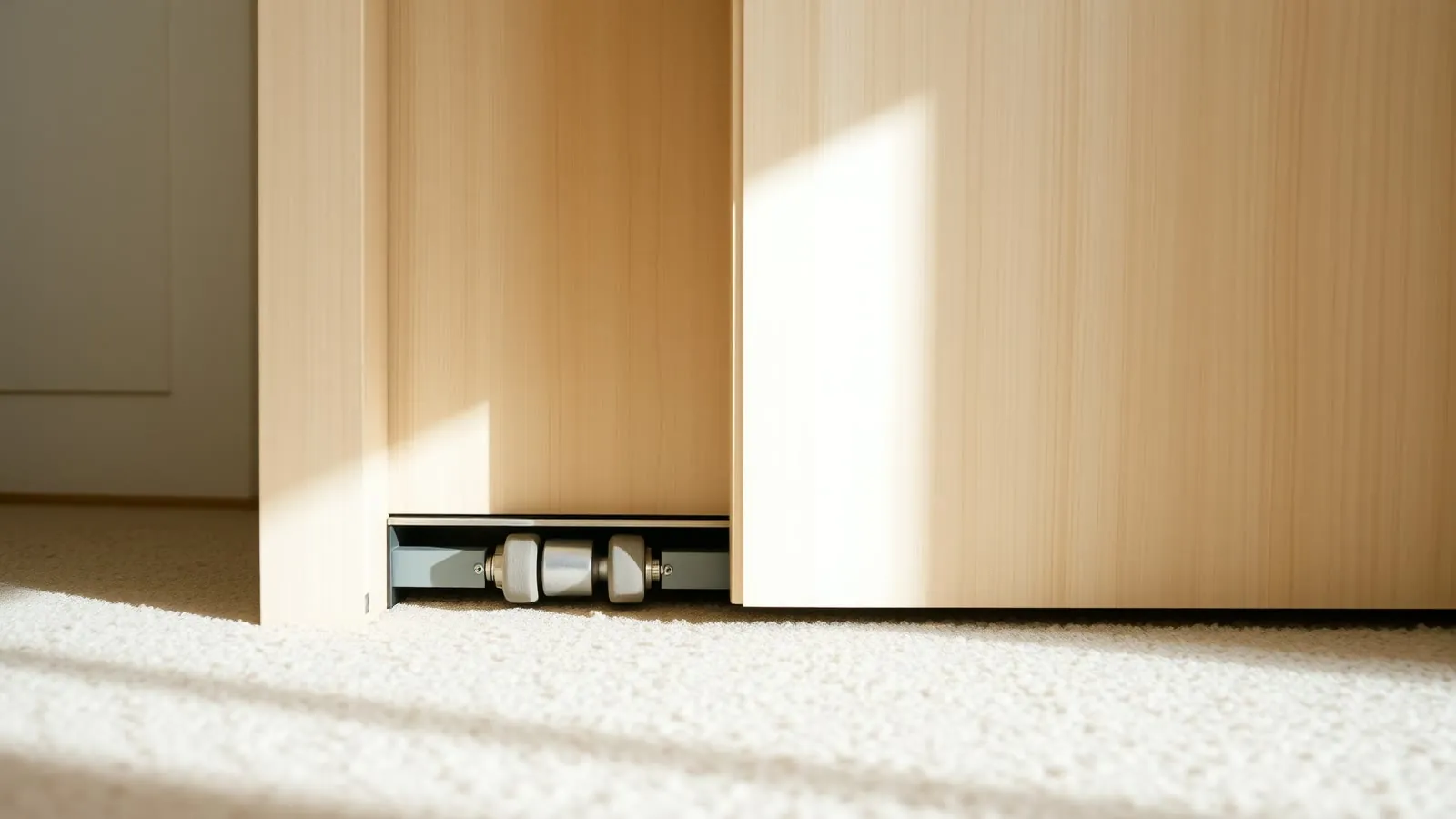
- A photo of the track and rollers, if you can see them.
- Rough measurements of the width and height of the panel, and of the whole opening.
- The thickness of the mirror, if you can read it at an edge. Do not force anything to find out.
- A note of when it happened and why, if you know.
Do not worry about perfect measurements. A glazier can confirm everything on site before making anything to size.
Replace the panel or the whole set?
This is the real decision, and it depends on the condition of everything around the crack.
A single new panel often makes sense when:
- the other panels are in good condition,
- the frame, if there is one, is straight and undamaged,
- the track and rollers are working,
- you like the look of the existing set,
- a matching panel can be made.
A new set often makes more sense when:
- the track is bent or damaged,
- several rollers are worn,
- the frames are scratched, bent or corroded,
- the finish has faded and a new panel would stand out,
- the other mirrors are spotting or lifting at the edges,
- you want a different layout or style anyway.
A useful test is to ask what would happen in two years. If the answer is “the next panel will fail”, replace more now. If the answer is “everything else is fine”, a single panel is a sensible fix.
Our guide to mirrors cut to size explains how mirror sizes are measured and finished, which helps when you are checking a quote for a single panel.
Matching the new panel to the old
If you replace one panel in a set, the new one should sit well with the rest.
- Size. It must fit the frame or the fittings exactly.
- Thickness. A mismatch can affect how it sits in the channel.
- Tint. Most mirrors look clear, but some have a slight tone. Old and new can look different side by side.
- Edge finish. If the existing edges are polished or bevelled, the new one should match.
- Safety backing. Ask whether the new panel will carry a backing that holds the pieces together if it breaks.
- Frame and fittings. For framed doors, ask whether the frame can be reused or must be replaced.
Our custom mirrors page lists edge finishes such as flat polished, bevelled and seamed, and mentions a home assessment with measuring. For any particular wardrobe, the practical question is whether the mirror in your doors can be replaced without replacing the frame. That depends on how your doors are constructed, so photos help a lot.
What it might involve
Replacing a panel is usually a short job once the new glass is made. The usual steps look like this:
- Assessment. Photos or a home visit to measure and see how the door is built.
- Making the glass. A mirror is made to size, so allow time for it.
- Removal. The damaged panel is taken out of the track safely.
- Fitting. The new panel is installed, the rollers are checked and the door is adjusted so it slides freely.
- Cleaning up. The old glass is taken away.
Because it is made to measure, a mirror cannot be cut again once it exists. Measurements must be right the first time, which is why a site check is worth having.
Thinking about cost without a figure
Cost depends on size, thickness, edge finish, whether the frame is reused, and whether other parts need replacing. Our broader guide to what it costs to fix a broken window explains what drives the price of glass work in general. For a wardrobe, the best way to get a clear picture is to ask for a quote that lists every item, so you can compare a single panel with a new set on the same basis.
When a new set is the better move
Sometimes the crack is the push you needed. If the doors have been noisy, heavy or tired for years, new doors give you more than a fix.
Our range of framed sliding wardrobe doors comes in a choice of finishes, with dual, triple and four door layouts, dual or triple track, an integrated handle and quiet rollers with adjustable brackets. Frameless doors are also available in a smaller range of colours. If you are weighing the two styles, see framed and frameless mirror sliding doors for how they compare in daily use.
What not to do
- Do not use the door “just to get dressed” if the crack is spreading.
- Do not tape a large crack and leave it for months. Tape is a short-term hold.
- Do not force a stuck door. It can crack the glass.
- Do not lift a heavy panel alone.
- Do not order a mirror from a rough measurement. Confirm the size on site.
- Do not ignore the track. A bad track will break the next panel.
Frequently asked questions
Can I replace just the cracked mirror in my sliding wardrobe door?
Often yes, but it depends on how the door is built. In some doors the mirror sits in a frame that can be reused. In others the whole door is replaced. Send photos and a glazier can tell you.
Is a cracked wardrobe mirror dangerous?
It can be. A cracked mirror can break further and the edges are sharp. Tape across it, avoid using the door and have it checked.
How long does a replacement take?
The fitting is usually quick. The time before it is the making of the glass to size, so ask for a timeframe when you quote.
Will the new mirror match the old ones?
Size, thickness and edge finish can be matched. Tint and age can differ slightly, so ask for a sample if matching matters.
Should I replace the rollers at the same time?
If the rollers are worn, yes, because a worn roller may have put stress on the old panel. Ask the glazier to check them when the panel is out.
What do I need to measure?
The width and height of the panel and the opening. Rough measurements are enough to start, and the glazier will confirm on site.
Can the mirror have a safety backing?
Ask when you request a quote. Not every mirror has one, and it is worth knowing what you are getting.
A calm next step
If a mirror in your wardrobe door is cracked, send us photos and rough measurements on our request a quote page. We will tell you plainly what is possible for your doors, with no pressure.