



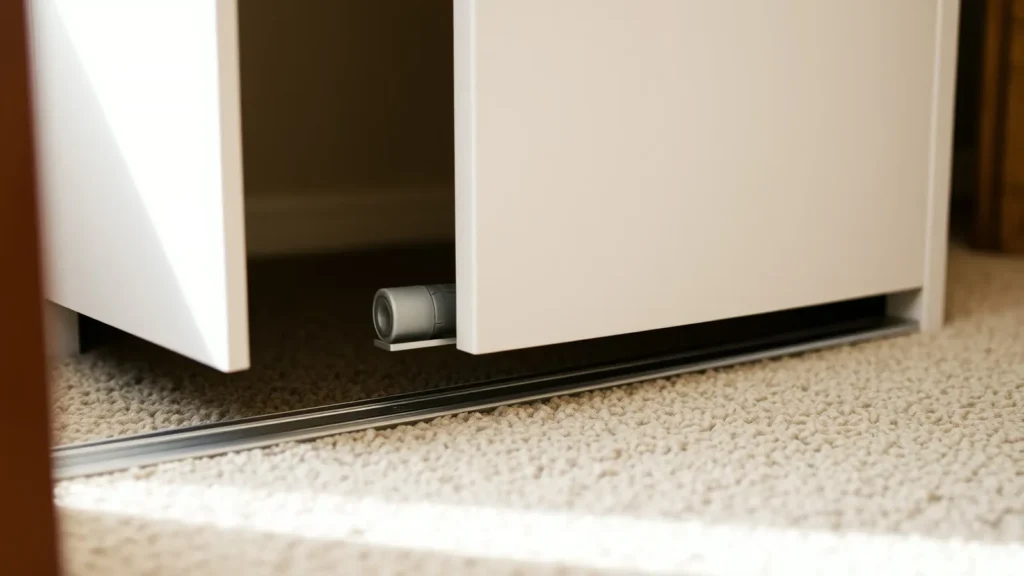
A sliding wardrobe door is one of the hardest working parts of a bedroom. It opens and closes every day, often several times, carrying a heavy panel of glass or mirror on a few small wheels. When those wheels wear, the whole door tells you about it: it grinds, it sticks, it jumps, or it leans.
This guide sits under our main guide to sliding wardrobe doors. It explains how wardrobe door rollers work, the signs they are wearing out, what you can safely check yourself, and when it is time to ask a professional. It is general information. Every wardrobe is built a little differently, so photos of your own doors will always tell a glazier more than any description.
How the rollers work
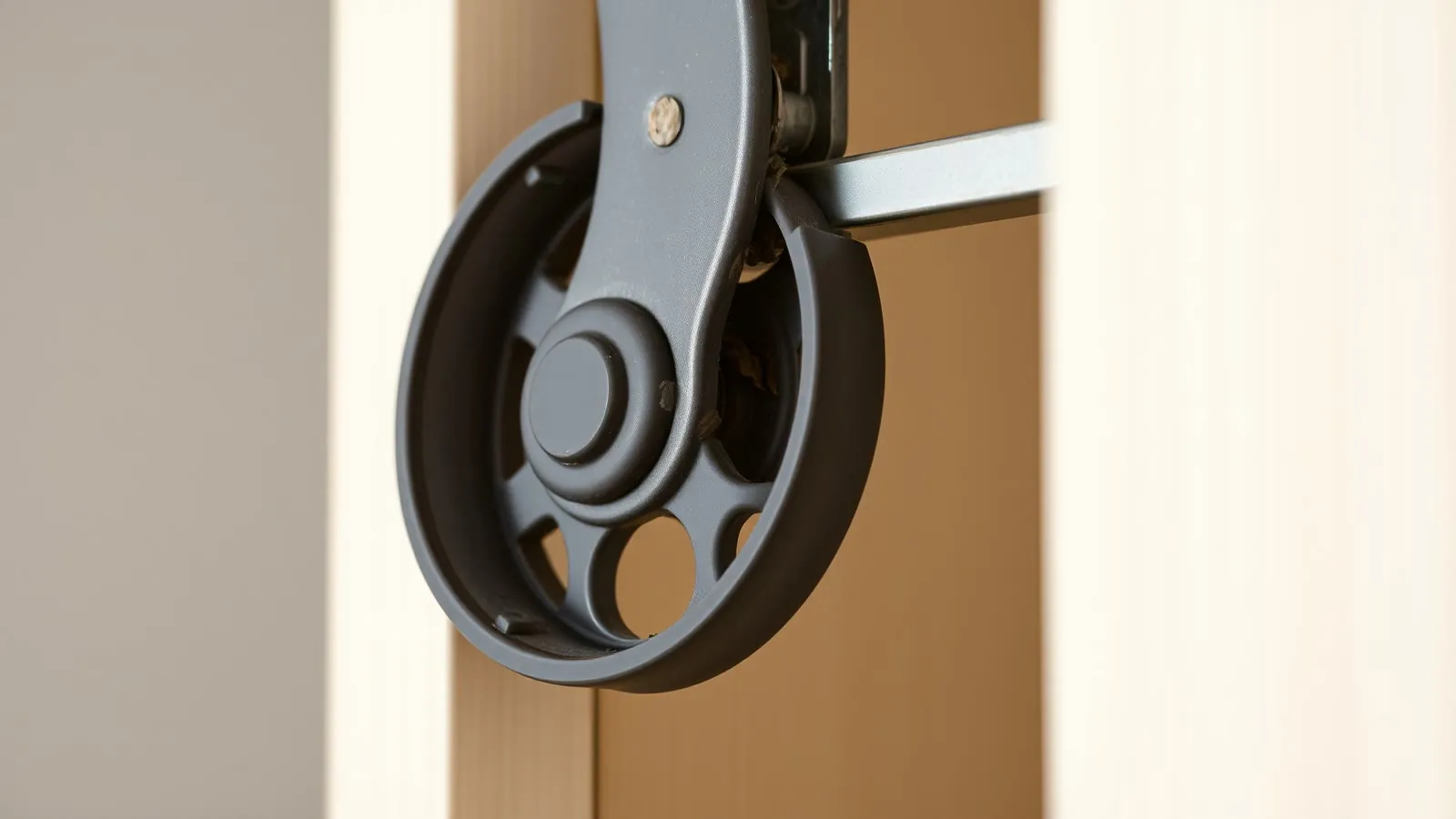
Most sliding wardrobe doors hang from, or run along, a track. Small wheels, usually called rollers, carry the weight of each panel.
- Bottom rollers sit in the base of the door and run along a track in the floor of the wardrobe. Many doors rest on these.
- Top guides or rollers keep the door upright and stop it swinging out. In some designs the door hangs from the top instead.
- Adjustment screws let the height of each roller be changed, so the door sits level and clears the track.
- The track itself is a channel, usually aluminium, that the wheels run in. A dented or clogged track is as bad as a worn wheel.
A door with a mirror is heavy. The wheels carry that weight every time the door moves, which is why they eventually wear.
Signs the rollers are wearing out
Rollers rarely fail suddenly. They give warnings for months.
- Grinding or rumbling noise. A gritty sound usually means dirt, a worn wheel or a wheel with a flat spot.
- The door feels heavy or sticks. You have to pull or push harder than you used to.
- The door jumps or catches. It moves in jerks, often at the same place along the track.
- The door drops or leans. A gap opens at the top or one side, or the door looks lower than its neighbour.
- The door rubs the frame or the floor. A worn roller lets the panel sag.
- The door will not stay on the track. It lifts out, or the bottom swings loose.
- Visible wear. Flat, cracked or squashed wheels, or a wheel that no longer turns.
If you notice any of these, deal with it soon. A sticking door that is forced can crack a mirror, and a door that comes off the track can fall.
Start with the track
Dirt is the most common cause of a rough door, and it costs nothing to fix. Before you blame the wheels:
- Empty the track. Vacuum out dust, hair and grit with a narrow nozzle.
- Wipe it clean. Use a damp cloth, then dry it.
- Look for damage. Dents, bends or burrs in the channel can catch a wheel.
- Check for debris. A coin, a button or a pebble can sit in the track and stop a wheel dead.
- Slide the door slowly. See whether the rough spot is in the same place every time.
If the track is bent, no new wheel will fix the problem. Our broader guide on how to clean your new glass products is a useful reference for keeping the glass itself clean while you are at it.
Cleaning and gentle care
Once the track is clear:
- Wipe the wheels with a dry cloth where you can reach them.
- Use a light, dry lubricant only if the maker of your doors recommends one. Greasy products can attract dust and turn the track into a gritty paste.
- Do not spray oil on the mirror edges or backing. It can damage the backing and stain the glass.
If cleaning solves it, you are done. If the door is still rough, the wheels, the adjustment or the track need a closer look.
Checking the adjustment
Many doors have adjustment screws at the bottom, which raise or lower the door. A door can feel worn when it is simply out of adjustment.
- Check the gap at the top of each panel. It should be even from side to side.
- Check that the door hangs level, not tilted.
- Check that it clears the track and the floor without rubbing.
Adjusting is a small job in many cases, but doors are heavy and mirrors are fragile. If you are unsure how your doors adjust, or if a panel is cracked or chipped, leave it alone and ask for help.
When it is time to stop
Some situations are not for DIY.
- A cracked or chipped mirror. The glass is weaker than it looks, and handling it can make a crack run. See replacing a cracked wardrobe mirror for what to do first.
- A door that has come off the track. Lifting a large panel back into place alone is a two person job at least.
- A door that leans or drops badly. The weight may have shifted onto a damaged part.
- A bent frame or track. This needs the right parts and tools.
- Anything you cannot reach safely.
For these, a glazier can look at the door and the glass at the same time, which matters when the mirror is part of the problem.

What your glazier will want to know
Good photos save a lot of back and forth. Gather:
- A photo of the whole wardrobe, doors closed.
- A photo of the door in the open position, showing the gap.
- A close photo of the bottom edge and wheels, if you can see them.
- A photo of the top edge or top track.
- A photo of the frame and finish, including the corners.
- A note of how many doors there are, and how many are mirrored.
- Rough measurements of the opening.
- A short description of the problem: noise, sticking, dropping, or coming off.
Do not remove parts to take pictures. A glazier can usually see what they need from the outside.
Roller wear or something deeper?
Sometimes the wheels are only the visible part of the problem. Ask yourself:
- Is only one door rough? Then a single roller or a panel is likely at fault.
- Are all the doors rough? The track or the whole set may be tired.
- Is the track dented? Wheels will keep wearing until that is fixed.
- Has the door been heavily loaded? Hanging things on the door or leaning on it speeds up wear.
- Is the wardrobe old? After many years, a full replacement can be more sensible than repeated fixes.
The main guide sets out how to decide between a repair, a single panel and a new set.
When a new set makes sense
If the wheels, the track and the finish are all tired, new doors may give you a better result than patching the old ones. Our range of sliding wardrobe doors includes framed doors in a choice of finishes, with dual, triple and four door layouts, dual or triple track, an integrated handle, and quiet rollers with adjustable brackets. Frameless doors are also available in a smaller range of colours.
If you are weighing the two styles, our guide to framed and frameless mirror sliding doors compares them in daily use. For wider background, our guide to mirror wardrobe doors walks through the options in more detail.
What Economy Glass can help with
Economy Glass is a glazier, so our focus is the glass in your doors. Our glass repairs service covers mirrors and other household glass, including an emergency service. When a door is rough, we would rather look at photos and give you a straight answer than guess. Tell us what is happening and we will say plainly whether it is something we can help with.
Frequently asked questions
Why is my sliding wardrobe door so hard to move?
Dirt in the track is the most common cause. Next are worn or flat wheels and a door that is out of adjustment. Clean the track first.
Why does my wardrobe door make a grinding noise?
Usually grit in the track, or a wheel that has worn flat. Cleaning often helps. If the noise continues, the wheel may need replacing.
Can I oil my wardrobe door rollers?
Only if the maker recommends it. Many wheels run best dry, and oil attracts dust. Keep any lubricant off the mirror.
My wardrobe door has come off the track. What should I do?
Do not force it. Large panels are heavy and the glass can break. Ask for help, and take photos of the track and the door.
How do I know if the track is the problem?
Slide the door slowly and see whether it sticks in the same place each time. Look for dents or bends in the channel.
Should I replace the rollers or the doors?
If the track, finish and frame are in good shape, fixing the rollers is reasonable. If everything is worn, new doors may be the neater option.
How often should the track be cleaned?
A quick vacuum every few months keeps most tracks running smoothly.
A calm next step
If your wardrobe doors are sticking, noisy or leaning, send us photos and a short description on our request a quote page. We will tell you plainly what we can help with, with no pressure.