



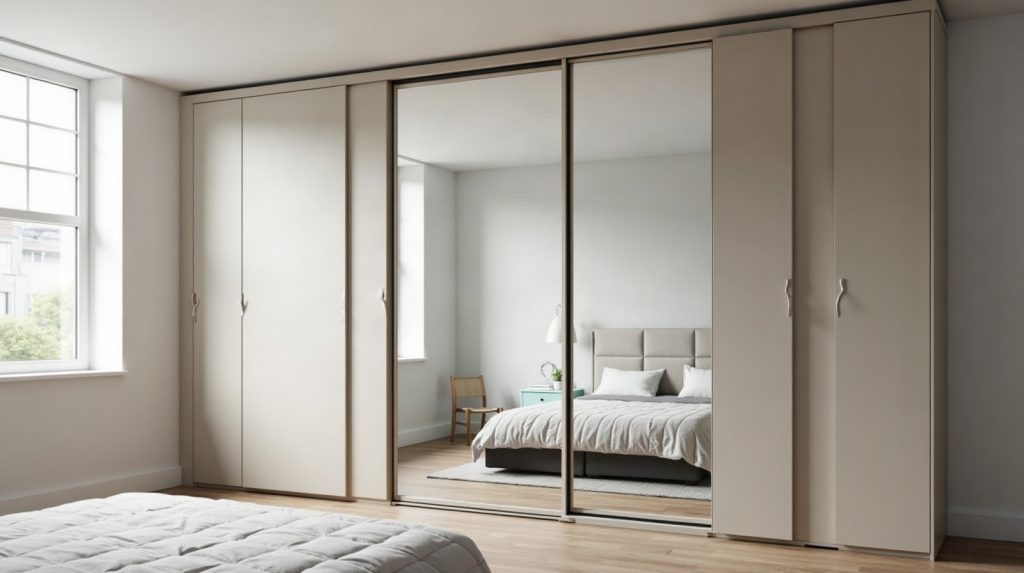
Mirror wardrobe doors are a mirror panel held in a slim metal frame, either sliding on a track or hinged like a cupboard. Sliding is by far the more common choice in Melbourne bedrooms, because the doors need no swing space and a wall of mirror makes a small room feel much larger. Before you order, what matters is the size of the opening measured at more than one point, floor track or top track, how many panels, and whether you want soft-close. If one panel of an existing set has cracked, that panel alone can usually be replaced.
Here are the choices in the order a glazier would walk you through them, whether the wardrobe is in a new build in Tarneit or a weatherboard in Williamstown.
Sliding or hinged mirror wardrobe doors
Mirror sliding wardrobe doors run on a track and overlap each other, so at least one panel always covers part of the opening. Two doors cover a standard reach-in wardrobe, three or four suit a wider one, and each door overlaps its neighbour by a small margin. Sliding doors suit bedrooms where a bed or a doorway sits close to the wardrobe, because nothing swings out into the room.
Hinged mirror doors give you the whole opening at once, which is handy for a wardrobe with drawers inside or a walk-in used as a dressing room. The trade-off is swing space: a full-height mirror door is heavy, so it needs solid hinges and clear floor in front of it. For most reach-in robes, sliding is the practical answer.
Framed mirror panels and what the frame does
The mirror in a wardrobe door is not bare glass. It has a safety backing bonded to the rear, so that if it is ever broken the pieces stay on the backing rather than falling into the room. That matters because safety glass is required where people can walk into glass, and a wardrobe door is exactly that. The panel sits inside an aluminium frame on all four edges, with a rubber or foam glazing strip so the mirror never touches bare metal.
The frame is the slim line you see around each door, in natural silver, white, black or a darker bronze. Silver disappears against the mirror; black or white suits a room where the joinery is already that colour. The frame also carries the rollers at the bottom or the hangers at the top, so a bent frame is one of the first things a glazier checks when a door stops running true.
Tracks, rollers and the checks you can do yourself
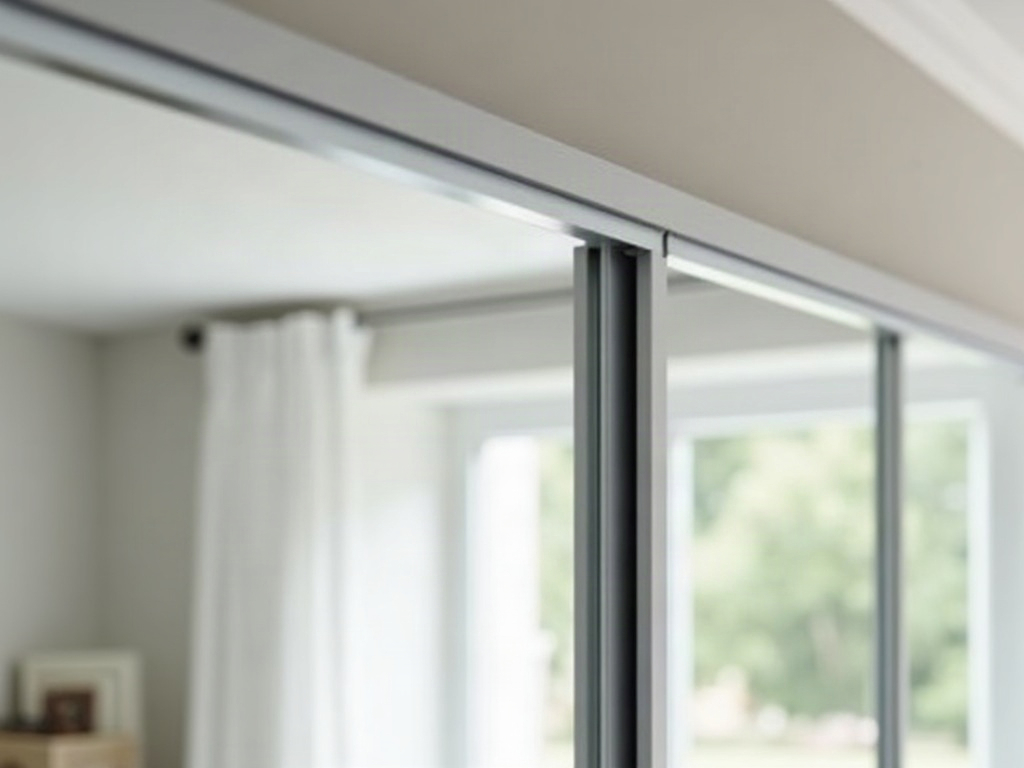
Sliding wardrobe doors run one of two ways. Bottom-rolling doors sit on wheels in a floor track, with a top track that only guides them. Top-hung doors hang from wheels in a heavier top track, with a floor guide to stop them swinging. Bottom-rolling is more common in existing homes across Melbourne’s west; top-hung keeps the floor line clean and runs quietly, but the head has to carry the weight of the doors.
If your doors drag, jump the track or need a shove to move, check a few things first. Vacuum the floor track: grit and hair in the track is the most common cause of a rough-running door. Look at the rollers with a torch; a wheel that is flat-spotted or cracked needs replacing, and check whether the track is bent or loose. Most bottom rollers have a small adjustment screw that lifts or lowers that corner of the door so the meeting edges line up, and turning it a little at a time is fine. Lifting a full mirror door off its track is not: it is heavy and top-heavy, and the mirror edge is unforgiving.
How to measure the wardrobe opening
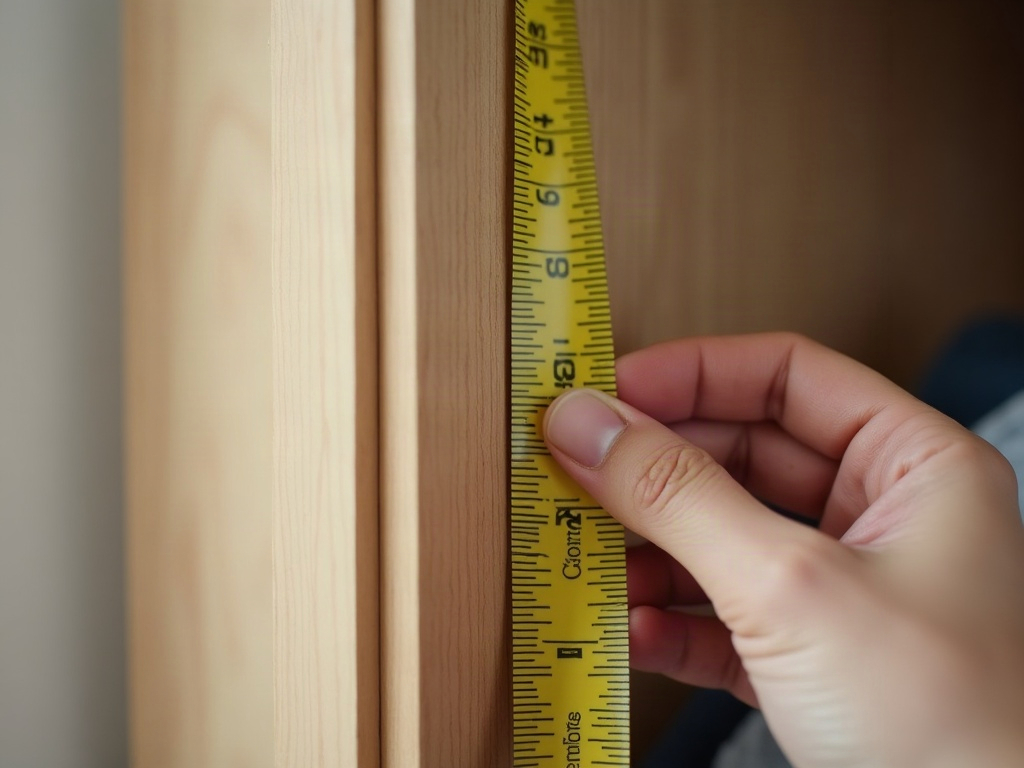
A wardrobe opening is rarely a perfect rectangle, so the doors are made to the opening, not to a nominal size. Measure the width at the top, middle and bottom, from one finished side to the other, and the height at the left, centre and right, from the finished floor to the underside of the head. Note the smallest of each; the doors are sized from those so they fit everywhere. Check with a level whether the floor drops across the opening, because a sloping floor is why some doors show a wedge-shaped gap at the top.
Also note what the doors will run on: bare timber, carpet, tiles or the raised bottom rail of a built-in robe. Carpet is fine, but the track needs a firm base, so the carpet under it is often trimmed back or packed. Photograph the opening from the front; that is enough for a quote. The glazier measures again on site before the doors are made.
Soft-close, handles and the mirror itself
Soft-close is a damper in the top track that catches the door in the last part of its travel and eases it closed, so it never bangs against the side of the opening. It protects the frame and is quieter in a bedroom. Ask for it when the doors are ordered, because adding it later can mean a new track.
Handles on a sliding mirror door are a recessed finger pull or a slim vertical bar, because a protruding handle would stop the doors passing each other. The last choice is the mirror. Standard silver is the everyday option, low-iron gives a clearer, less green reflection where the doors are large and the room is bright, and a grey or bronze tint softens the reflection where a wall of bright mirror would feel like too much. We make all of these as custom mirrors as well as wardrobe doors.
Replacing a cracked panel, the whole set, and when to call a glazier
One cracked mirror panel does not mean new doors. The frame is taken apart on the bench, the broken mirror is lifted out, a new safety-backed mirror is cut to the same size from the same type of mirror, and the frame goes back together around it. Until then, tape over the crack with wide painter’s tape, keep the door closed and do not slide it. A cracked wardrobe door mirror on a safety backing will usually hold, but the edges are sharp and the door is heavy.
A whole new set makes sense when the track or frames are bent, when the rollers and track are worn out, when you want to change from bottom-rolling to top-hung, or when the doors were never sized properly and have gaps no adjustment closes. Measuring, cleaning and adjusting rollers are yours to do. Cutting mirror, replacing a panel and lifting doors in and out of the track is glazier work, and the glazier will specify the mirror and its backing. Our guide to toughened vs laminated glass covers the safety glass used in doors and showers.
That is where Economy Glass comes in. Economy Glass supplies and installs mirror wardrobe doors across Melbourne’s west and beyond from our Hoppers Crossing workshop, with 45 years in the glass trade and glass cut and finished to Australian Standards. Call (03) 9360 9900, Monday to Friday 8am to 4pm, or request a quote online.
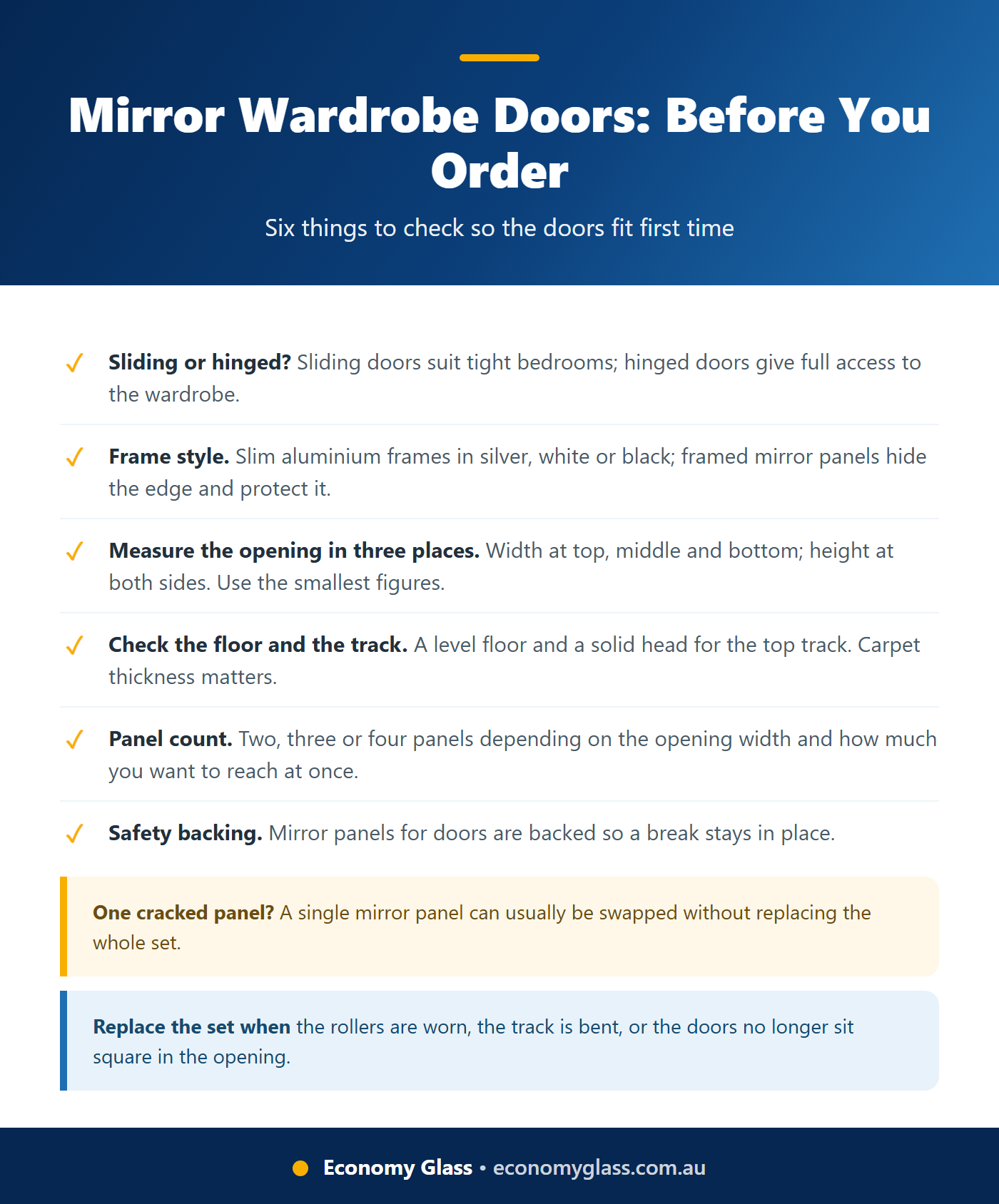
Mirror Wardrobe Doors: A Buyer’s Guide: the quick version
Save or print this checklist before you call.
Frequently asked questions
Are mirror wardrobe doors safe in a bedroom?
Can I replace just one of my mirrored wardrobe doors?
How do I measure for sliding wardrobe doors?
Why do my sliding mirror doors jump off the track?
Read about our custom mirrors, see glass cut to size for shelves and other panels, read our guide to toughened vs laminated glass, or request a quote from Economy Glass.