



Double glazing retrofit is a possibility to investigate, not a promise that every existing window can be upgraded. Before discussing glass options, establish what the proposed work means and whether the existing opening can accommodate it.
For a replacement-only enquiry, keep the question precise: can suitable replacement glazing be fitted while retaining the existing frame? If that has not been assessed, there is no reason to treat a whole-house retrofit as an agreed solution.
Double glazing retrofit starts with a definition
Ask anyone using the word retrofit to describe the physical work. What glass comes out? What goes in? Which parts of the window remain? A familiar label does not answer those questions.
Separate replacing a unit in a window that is already double glazed from changing a single glazed arrangement. Both involve existing windows, but they start from different conditions. Your enquiry should make that distinction visible.
Do not assume that adding a pane, replacing a sealed unit and replacing an entire window describe the same service. Ask for a written scope that you can relate to your actual opening.
For help comparing the resulting proposals, see Double glazing cost in Melbourne: what drives the price. The useful comparison begins after the intended work has been defined.
Secondary glazing is a different proposal
The Australian Government’s Your Home glazing guide describes secondary glazing as an additional transparent sheet attached inside an existing window. It distinguishes that arrangement from a manufactured insulated glass unit with a sealed cavity. The terms should not be used as if they describe identical work.
If you receive a proposal involving an additional internal layer, ask for it to be identified clearly. Do not assume it is the replacement-only service covered by your enquiry to Economy Glass.
For comparison, write the proposed method beside each quote before reading the rest. One column might say replacement sealed unit, while another says secondary layer. Ask what each method would retain, change and require from the existing opening. That gives you a basis for discussing the alternatives without merging them into one vague retrofit category.
Existing frames need an individual answer
Economy Glass’s double-glazing article cautions that many aluminium profiles cannot accept a retrofit. A frame’s appearance alone is therefore a poor basis for promising an upgrade.
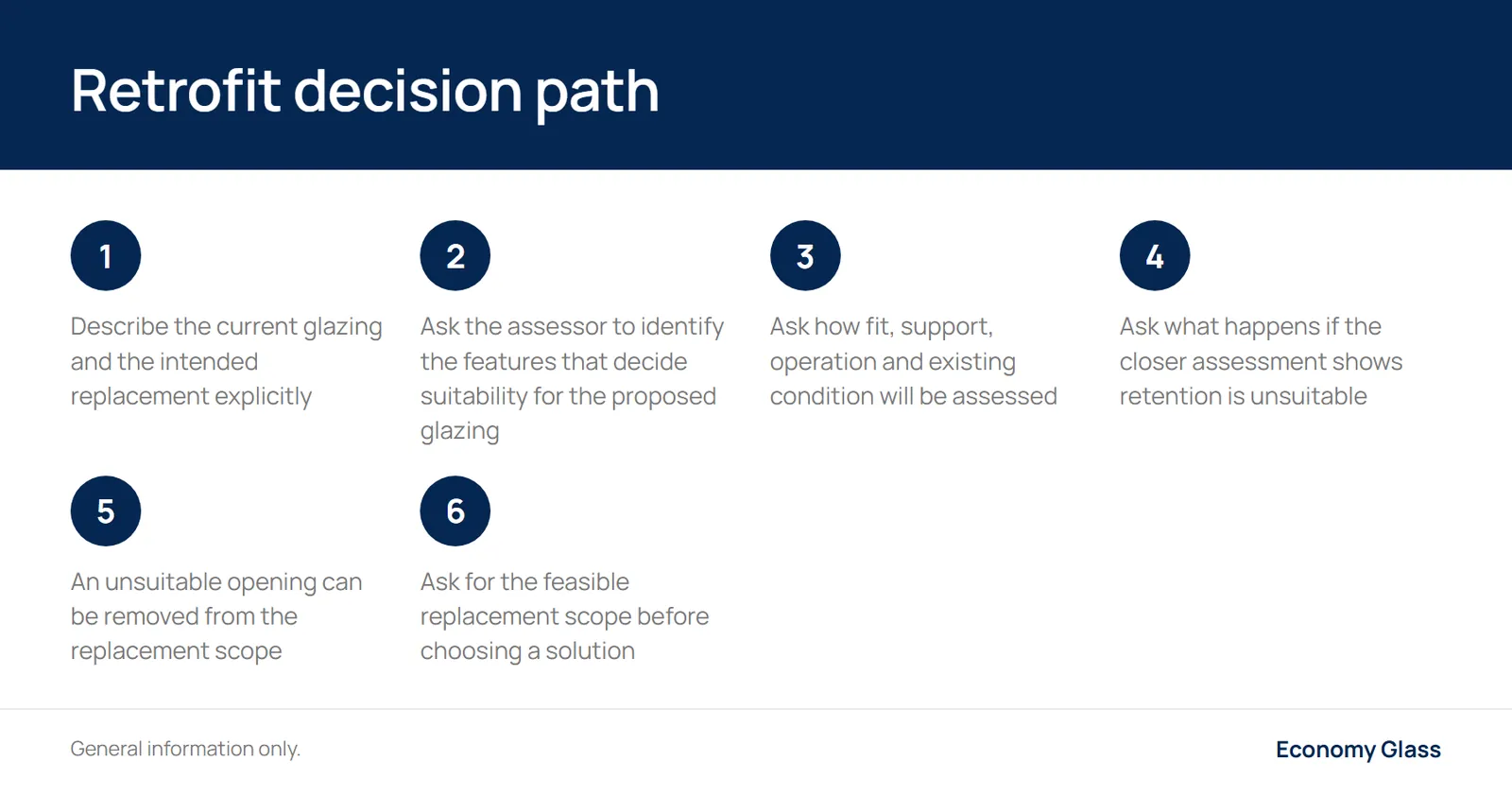
Ask the assessor to identify the features that decide suitability for the proposed glazing. Request a clear conclusion for each window type, including any conditions that remain unresolved. You do not need to measure hidden parts yourself to ask for that explanation.
Treat material as a description, not a verdict. Saying a frame is timber or aluminium gives the assessor information. It does not establish that the particular opening is suitable, sound or compatible with a proposed arrangement.
A house can also contain windows installed at different times. Do not assume a successful assessment of the front room settles the answer for a rear addition. Label the openings and keep the conclusions separate.
What the assessment needs to resolve
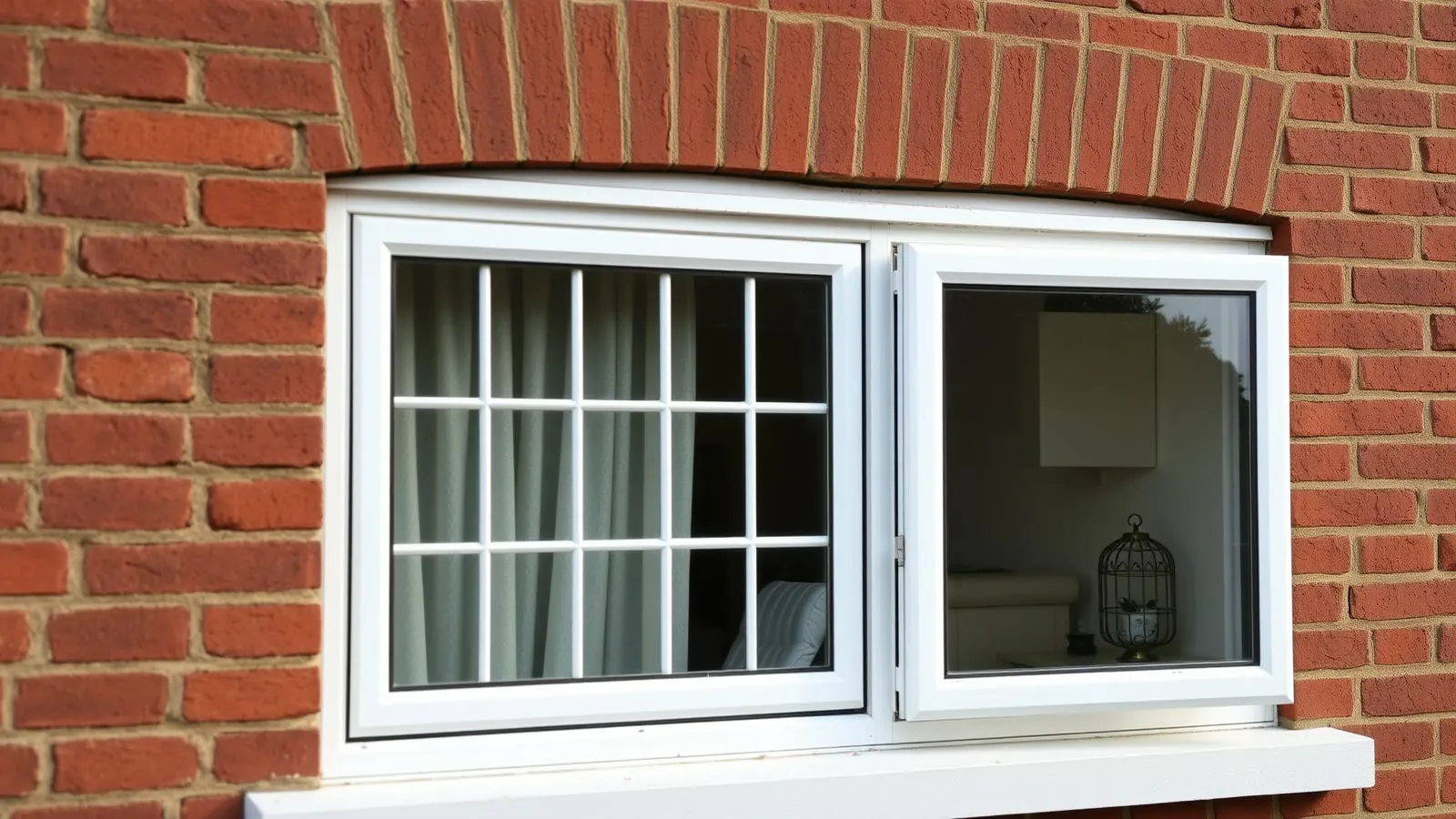
The decision should address the proposed glazing assembly and the retained window together. Ask how fit, support, operation and existing condition will be assessed. These are questions for the glazier, not a set of dimensions for a homeowner to copy.
Describe sticking, visible deterioration or water marks before the visit. Avoid diagnosing the cause from a photograph. The useful information is where the issue appears, when it occurs and whether it has changed.
For a moving sash, ask how the proposed arrangement relates to its operation. For fixed glass, ask what must be confirmed about the existing glazing arrangement. If an answer depends on closer inspection, keep it marked provisional until that inspection occurs.
Use a decision table
| Starting point | Next useful decision |
|---|---|
| Existing double glazed unit needs replacement | Confirm the unit specification and retained opening |
| Single glazed frame may be retained | Assess compatibility before selecting a solution |
| Frame has visible deterioration | Establish whether retention remains suitable |
| Window does not operate properly | Identify the operating issue and any separate work |
| Existing arrangement is unknown | Obtain assessment rather than guessing a specification |
The table helps frame the enquiry. It does not certify a window or prescribe a retrofit method.
A practical example with different outcomes
Imagine a household considering the living-room fixed pane, a bedroom opening window and a small study window. The owner wants to retain the frames wherever a suitable replacement-only approach can be confirmed.
The enquiry should name all of those openings but leave the feasibility answer open. Ask the assessor to record a separate outcome for each. One might require further information before a proposal can be confirmed. Another might fall outside a suitable replacement-glass approach.
That is more useful than a single yes or no for the whole house. It also avoids committing to an unspecified alternative when a frame cannot be retained. An unsuitable opening can be removed from the replacement scope while the homeowner considers the next decision separately.
If your enquiry is already about changing a specific existing unit, Double glazing Melbourne: replacing existing glass follows the practical replacement process in more detail.
Explain the result you want
Tell the glazier why you are considering the work. Describe the room and the concern rather than specifying a product from an unrelated project. For example, note when the room is uncomfortable or which outside sound interrupts its use.
Ask how the proposed solution addresses that concern and what limitations remain. Do not treat the word retrofit as a performance guarantee. Feasibility and the suitability of a particular glass specification are related decisions, but they are not interchangeable.
If the existing glass is damaged, make that clear at the start. The immediate need for assessment should remain visible even while you consider a broader improvement. Ask what the safe next step is for that opening.
Questions to ask before agreeing to work
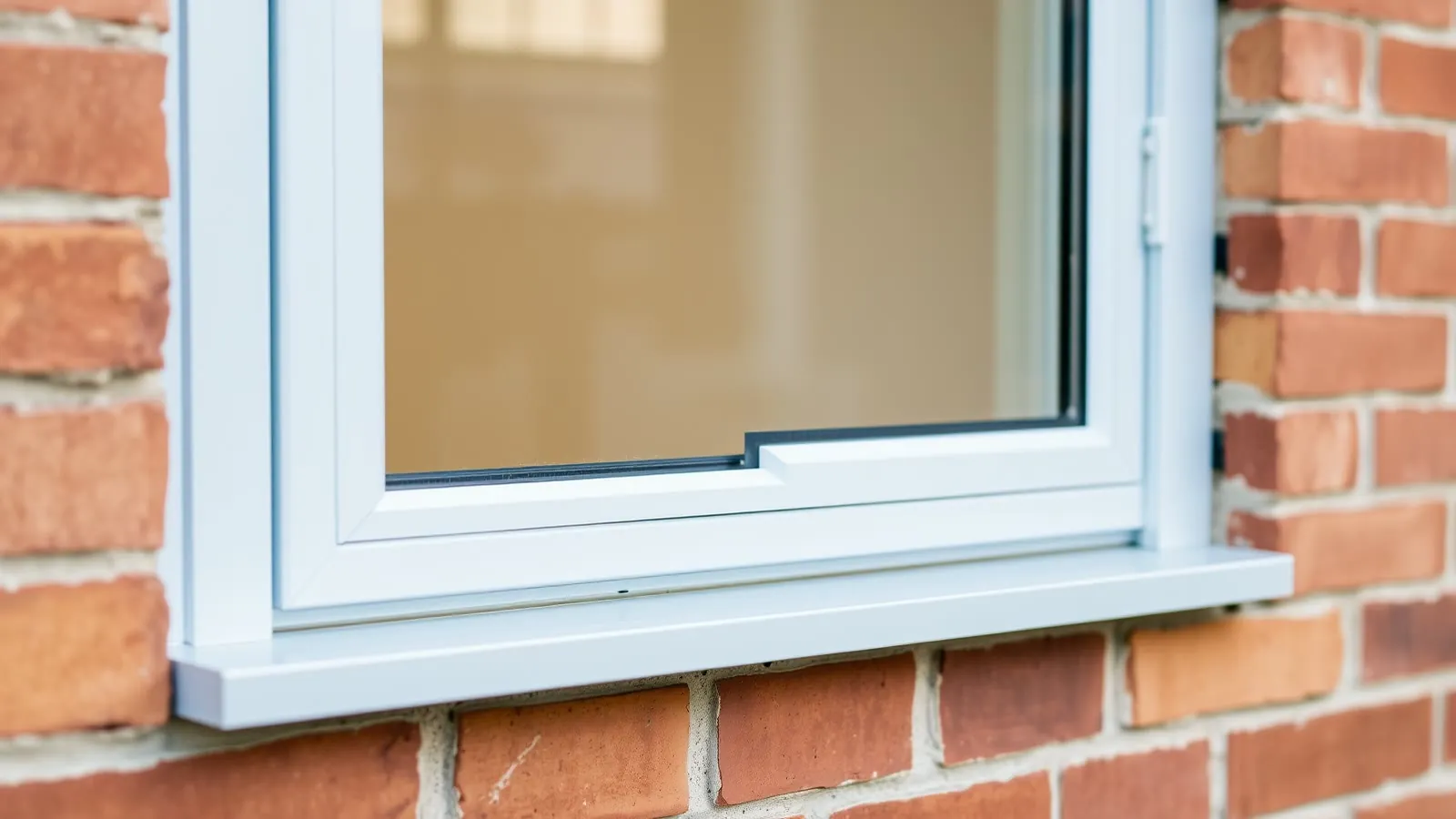
Ask what stays, what changes and what remains unconfirmed. Request the proposed glass description in writing and ask which inspected conditions support the recommendation.
Ask how any associated work is handled. Do not assume that a replacement-glass proposal includes correcting every defect in the window, making changes to surrounding finishes or supplying a different frame.
Ask what happens if the closer assessment shows retention is unsuitable. You need a clear decision point, rather than an automatic change to a different job. Keep any alternative scope separate until it is explained and agreed.
You can use Economy Glass’s location information to orient your enquiry, then confirm the particular address and assessment request directly. No attendance or delivery arrangement is assumed here.
Prepare information without dismantling anything
Provide whole-window photographs, the room location and the opening style. Include approximate dimensions only if they can be obtained safely. Mark unknown details as unknown.
Do not remove beads, take out a sash or expose the glass edge to investigate retrofit feasibility. The enquiry does not require you to prove compatibility before contacting a glazier.
If access is restricted by cabinetry, height or a shared area, describe that early. Ask how it will be assessed and who is responsible for any arrangements. A clear site description helps keep a feasibility discussion connected to the actual work.
Frequently asked questions
Can every single glazed window be retrofitted?
No. Economy Glass warns about unsuitable aluminium profiles. Obtain an assessment of the actual opening before treating retention as feasible.
Does keeping the frame settle the glass choice?
No. Ask for a suitable proposed specification and an explanation of how it relates to the opening and your concern. Retention is only one part of the decision.
Is replacing an existing double glazed unit a retrofit?
Terminology can vary in enquiries. Describe the current glazing and the intended replacement explicitly. That avoids relying on a label that different people may interpret differently.
Should I assess one window before planning the rest?
You can start with a particular opening, but ask which conclusions apply only to that window. Keep different frame types and operating arrangements separate in the plan.
To discuss the existing frames and glass at your property, request an assessment quote from Economy Glass. Ask for the feasible replacement scope before choosing a solution.