



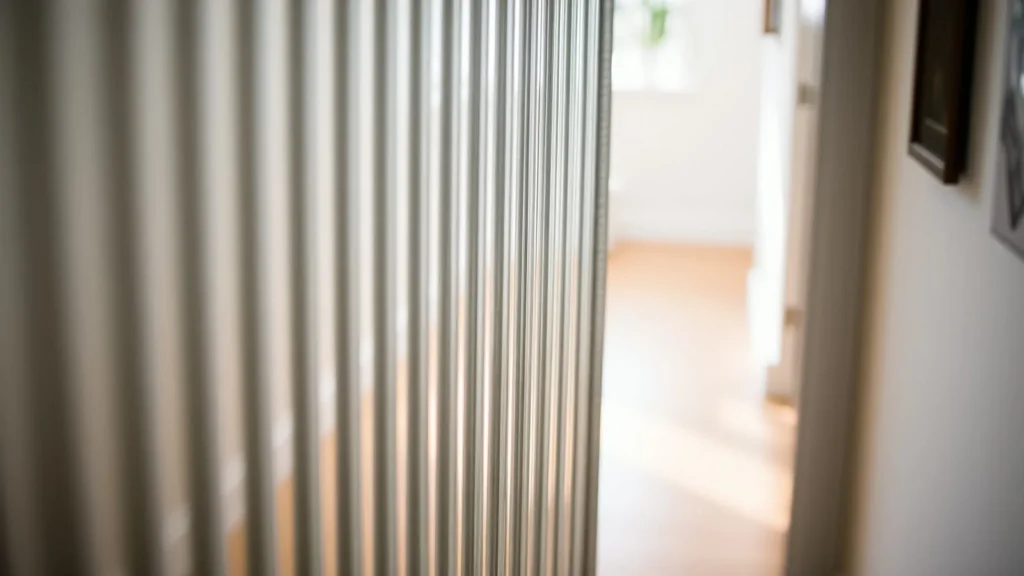
Fluted glass has become one of the most talked about finishes in Australian homes. You see it on cabinet doors, shower panels, room dividers and internal windows. It looks like a row of fine vertical ribs, and it does something clever with light: you still see colour and movement, but shapes dissolve into soft stripes.
This guide sits under our wider overview of frosted, obscure and privacy glass. It explains what fluted and reeded glass are, how much privacy they give, where they suit a home and what to ask a glazier before you order. It is general information about the glass style. Supply varies from one glazier to the next, so please check with any supplier exactly what they can provide.
What fluted glass is
Fluted glass has a surface of parallel, rounded ridges running in one direction, usually vertically. Each ridge acts like a tiny lens. Light passing through is bent, so the view behind the glass breaks into soft vertical bands rather than disappearing completely.
Reeded glass is the close cousin. The words are often used as if they mean the same thing, and suppliers do not always agree on where one ends and the other begins. A common way to tell them apart:
- Fluted: wider, concave or scooped grooves, which give a more rounded, scalloped look.
- Reeded: narrower, convex ridges, like a row of thin rods.
Both are sometimes called ribbed glass. If a quote or a catalogue uses any of these names, ask for a photo or a sample, because the name alone does not tell you the spacing or the depth of the ribs.
How much privacy it gives
Privacy depends on three things: the depth of the ribs, the spacing between them, and the distance between the glass and what is behind it.
- Deeper ribs scatter more. A pane with pronounced ribs hides more detail than one with a shallow profile.
- Closer objects blur less. Something pressed against the glass can still be seen as a shape. Things further away dissolve more.
- Light levels matter. A bright room behind the glass shows more than a dim one, and a lit room at night can show silhouettes.
In short, fluted glass is a privacy-friendly texture rather than a full block. It is excellent for softening a view and keeping the room bright, and it is less suited to a place where nothing at all may show through. For those spots, a denser frosted or obscure finish is the usual choice, and our overview of privacy glass compares them.
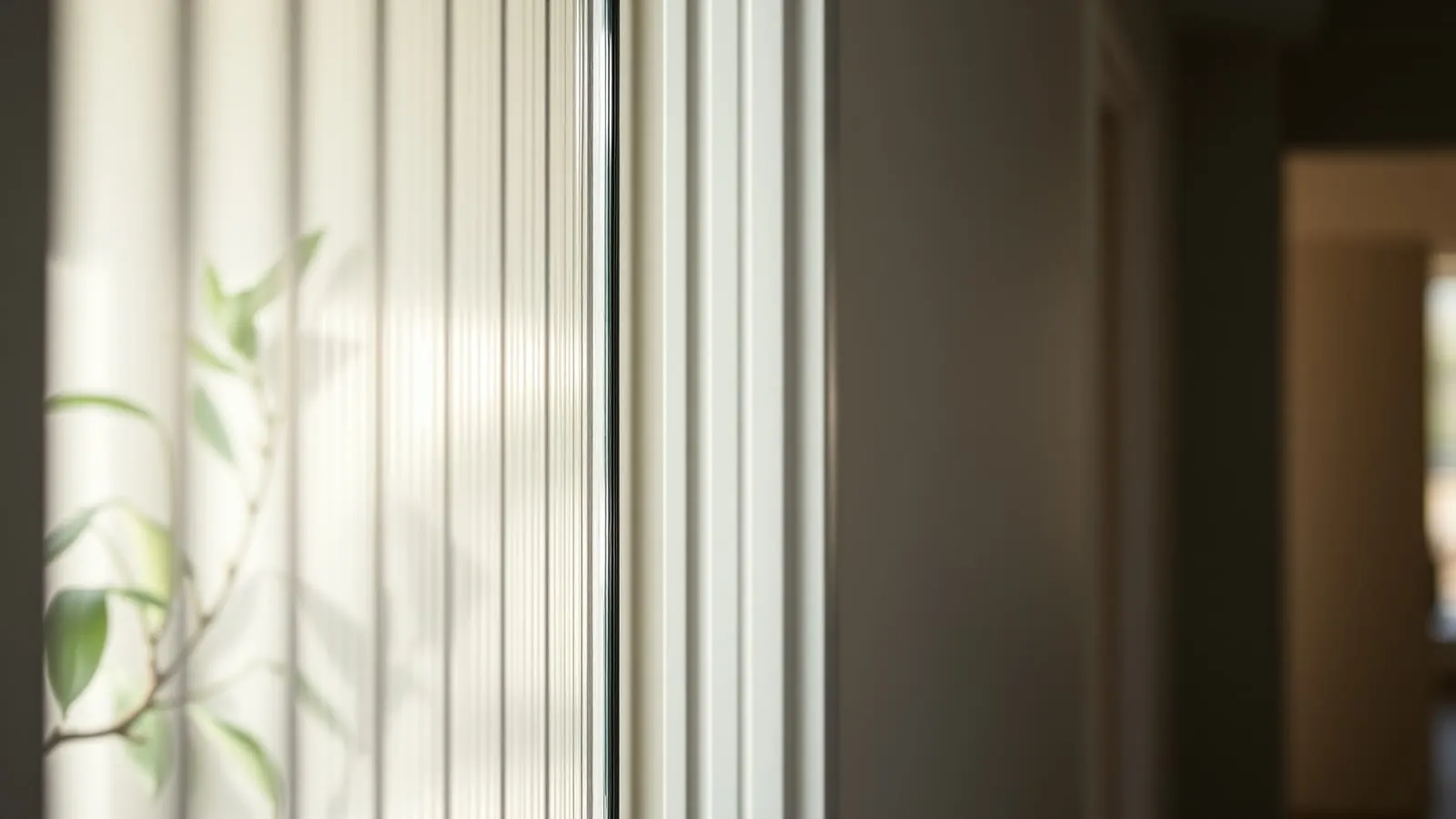
Where fluted glass suits a home
Fluted glass works best where you want softness and style more than total privacy.
- Cabinet and display doors. Ribbed glass hides clutter while letting a glow through.
- Internal doors and sidelights. It keeps a hallway bright and gives a hint of the room beyond.
- Shower and bathroom panels. It gives a spa feel and breaks up the view. Our shower screens page shows the styles of screens that glass is fitted into.
- Room dividers and feature panels. The ribs catch light and add texture to a plain wall.
- Splashbacks and backing panels. Some people like the rippled look behind a bench or a vanity. For the smooth frosted alternative, see our guide to frosted glass splashbacks.
It is less common on street-facing windows where strong privacy is the goal, and on openings where you want a clear view out.
Which side faces the room
Ribs on one face of the pane and a smooth back on the other is the usual construction. The direction you fit it changes the look and the cleaning.
- Ribs facing the room show the texture clearly and catch more light, but they collect dust and soap residue in the grooves.
- Ribs facing away give a flatter wipe-clean surface inside, with the pattern seen through the glass.
In a wet area, the smoother face towards the room is often easier to keep clean. In a dry display door, ribs facing out can look sharper. Ask your glazier how the pane will be oriented and why.
Direction of the ribs
Most people choose vertical ribs, which emphasise height and suit tall doors and panels. Horizontal ribs can look striking but are harder to wipe and show dust along each ledge. Whichever you pick, make sure every pane in the same room runs the same way.
Safety glass and thickness
Where glass sits in a door, beside a door, in a shower or close to the floor, safety glass rules apply. That often means the pane must be toughened or laminated, and toughened glass is made to size and cannot be cut or drilled afterwards. Our guide to safety glass for Melbourne homes explains the principles, and your glazier can confirm what applies to your opening.
Ribbed glass is also often thicker than a plain pane, so check that the frame, track or fixings can take it.
Questions to ask a glazier before you order
Because the names overlap and supply differs, a few straightforward questions save a lot of trouble.
- Can you supply this pattern, and can I see a sample? Hold the sample in the room where it will go, in daylight and in the evening.
- What is the rib spacing and depth? Ask for a photo of a real pane, not just a name.
- What thickness is it, and is it available in safety glass?
- Which way round will it be fitted?
- Can it be cut to my size, or does it come in set sheets? Some patterned glass comes in fixed sheet sizes, and that affects waste and cost.
- How long will it take? Ask for the timing for this specific glass in writing. Our guide to glass lead times explains what affects the wait.
- How do I clean it?
If a supplier cannot answer these clearly, that tells you something about the product.
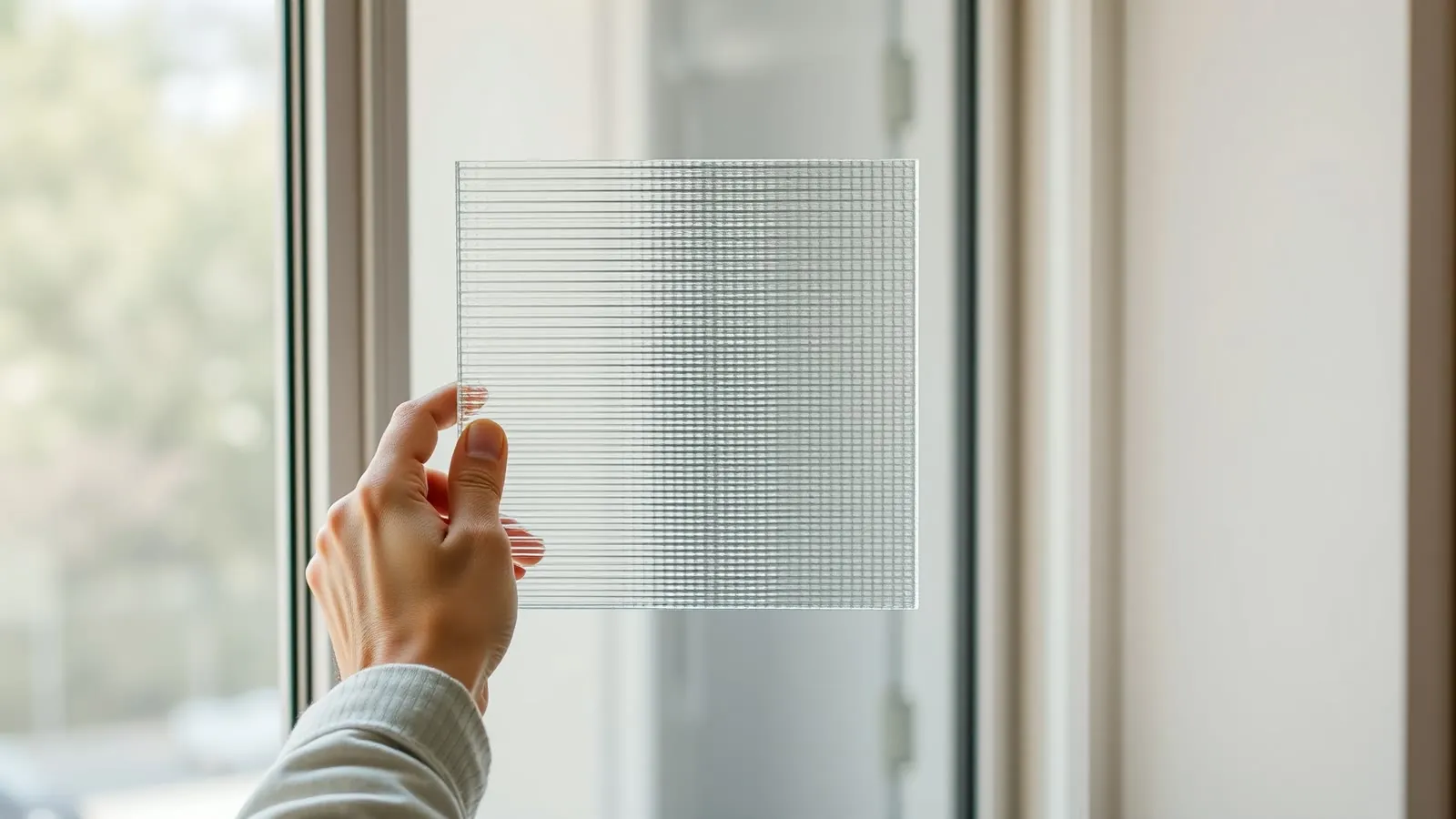
Fluted glass next to other finishes
A quick comparison helps you decide.
Frosted or satin. An even, soft white surface. It gives stronger privacy and a quieter look. Our guide to frosted film versus frosted glass covers how frosted glass compares with applying film.
Obscure or patterned. Texture is rolled into the glass in ripples or diamonds. It gives a wide range of privacy levels.
Fluted or reeded. Parallel ribs for a contemporary, architectural look. Privacy is moderate and depends on the rib profile.
Clear. Full visibility.
Choosing between them is usually a question of how exposed the spot is and how much style you want from the glass itself.
Keeping it clean
Fluted glass cleans well with a few habits.
- Use a soft cloth and a mild glass cleaner.
- Wipe along the ribs so dirt lifts out of the grooves.
- Use a soft brush on built-up dust.
- Dry the glass to avoid water marks.
- Avoid abrasive pads.
What Economy Glass can help with
Economy Glass cuts glass to size, and replaces glass in timber and aluminium windows and in hinged and sliding doors. This guide is general information about a glass style. It is not a list of what any one supplier holds, so the questions above are worth asking whoever you speak to.
Frequently asked questions
What is the difference between fluted and reeded glass?
Both have parallel ridges. Fluted usually refers to wider, scooped grooves and reeded to narrower, rounded ridges, but suppliers use the words loosely. Ask for a sample.
Is fluted glass private?
It softens and breaks up the view but does not block it completely. For stronger privacy, a denser frosted or obscure glass is usually a better fit.
Can fluted glass be used in a shower?
Often, with the right safety glass and fixings. Ask your glazier which glass suits the screen and which side should face the room.
Which way should the ribs face?
It depends on the look and the room. In wet areas, the smoother face towards the room is easier to clean.
Is fluted glass hard to clean?
Not really. Use a soft cloth and wipe along the ribs, and brush out dust from the grooves.
Does fluted glass need to be safety glass?
In doors, beside doors, in showers and low in a wall, safety glass rules apply. Your glazier can confirm what applies to your opening.
A calm next step
If you are planning glass for a door, a window or a panel and would like to talk it through, you are welcome to send details on our request a quote page. We will tell you plainly what we can do, with no pressure.