




Working out how to stop condensation on windows starts with finding which surface is wet. Water you can wipe from the room side needs a different response from moisture trapped between sealed panes. Before buying a treatment or arranging replacement glass, locate the moisture and record when it appears.
Take a photograph before wiping the window. Note the room, the time and any recent showering, cooking or indoor clothes drying. That record gives you something useful to discuss if the problem keeps returning, even when the glass is dry by the time someone inspects it.
How to stop condensation on windows, starting with location
Condensation forms when a surface is cold enough for water vapour in nearby air to become liquid. The temperature at which that happens is called the dew point. Moisture levels and surface temperature both matter. Source: Your Home, condensation.
Check the accessible room-facing surface with a clean, soft cloth. If the moisture wipes off, you have located surface water. If the haze remains, do not immediately assume it is inside the unit. Check the outside only where safely accessible, or ask a glazier to identify the affected surface.
| Where the moisture appears | What to do next |
|---|---|
| On the room-facing surface | Record moisture sources and ventilation use |
| On the outdoor surface | Observe when it clears and ask if unsure |
| Between sealed panes | Arrange inspection of the insulated glass unit |
| Around the frame after rain | Ask for investigation of possible water entry |
Water arriving with rain should not be labelled condensation without investigation. Record the weather and where the water first appears. Keep photographs of the surrounding frame as well as the glass so an assessor can see the full pattern.

Reduce moisture where it is produced
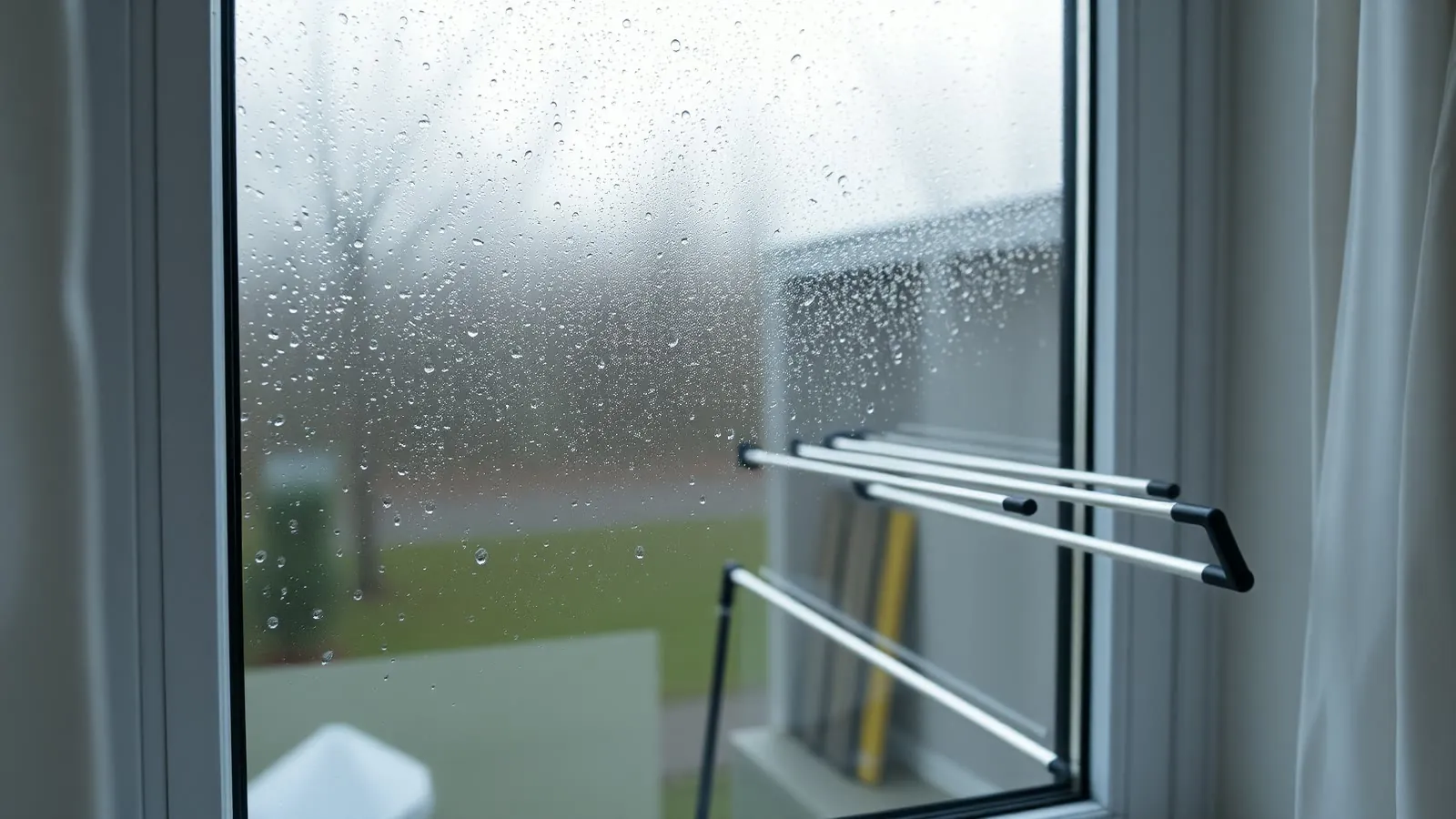
Cooking, showering, breathing and drying clothes indoors add water vapour. Your Home recommends using exhaust ventilation when cooking and showering, venting exhaust outdoors and drying clothes outside where possible. Source: Your Home, avoiding condensation.
Start by checking how those activities line up with wet windows. If the bedroom glass is wet after laundry has dried nearby overnight, record that connection. Try a different drying arrangement where practical, then observe the window under similar conditions. Do not change everything at once if you want to learn which change helps.
Use the kitchen and bathroom exhaust systems when those rooms produce moisture. If you do not know where an exhaust discharges, have it checked rather than assuming the visible grille means moisture reaches outdoors. Record a fan that seems ineffective and ask an appropriate trade to investigate it.
Suppose the bathroom mirror clears but the adjoining bedroom window stays wet. Include both observations in your enquiry. A useful report describes what you see in each space; it does not declare that the window is defective because another surface dried first.
Balance ventilation with keeping the room comfortable
Ventilation is deliberate fresh-air exchange. Draughts are uncontrolled leakage. Your Home advises considering reliable ventilation alongside airtightness, because sealing a home without adequate ventilation can increase condensation risk. Source: Your Home, ventilation and airtightness.
Do not respond to wet windows by sealing every visible opening. Ask which gaps are unwanted and which openings serve a purpose. If you have recently had draught sealing done, mention that when seeking advice and explain whether the condensation pattern changed afterwards.
Keep a short record of ordinary room use. Note if the door is closed overnight, if coverings are drawn and if the problem is limited to one opening. These details help someone assess the conditions around the glass. You do not need a complicated spreadsheet or a guessed humidity target.
If you use a humidity meter, record its reading with the time and room temperature where available. Treat it as an observation, not a diagnosis. Ask an assessor how the readings relate to the surfaces that are becoming wet before deciding that a particular number proves the glass needs replacing.
Clear the water without treating cleaning as the cure
For ordinary accessible surface water, wipe gently with a suitable clean cloth and dry the sill. Follow the instructions for your glass, particularly if it has a coating. Economy Glass’s glass-care article discusses removing loose dirt before cleaning; obtain product-specific instructions for coated glass.
Keep the photograph taken before cleaning. Once everything is dry, note whether the water returns during the same activity or only the following morning. Cleaning restores visibility, but that observation is what helps you decide if the underlying conditions have changed.
Avoid trying progressively harsher cleaners to remove a haze whose location you have not identified. If it cannot be reached from the accessible surfaces, ask for inspection. Explain what you have already tried and supply any product details you hold. That is more useful than describing the problem as stubborn dirt.

When replacement glass belongs in the conversation
Thermally improved glazing can raise internal surface temperatures and reduce condensation risk, but indoor moisture still needs attention. Source: Your Home, condensation prevention.
For the wider comparison of glass, frames and seals, see our energy-efficiency guide at Energy efficient windows: what makes a window efficient. If a coating is proposed, the Low-E guide at Low e glass explained: choosing replacement glazing explains the specification questions to ask. Neither a coating name nor a pane count should be treated as a promise that the window will always stay dry.
Ask for the existing opening to be assessed before deciding on replacement glass. Explain that moisture is the reason for the enquiry and provide the surface-location check. You can review Economy Glass’s listed service areas before sending the details, without assuming coverage for an unlisted address.
Moisture inside the sealed cavity
Condensation between the panes of a sealed insulated glass unit indicates a problem with the sealed cavity. Viridian’s technical guidance identifies this as unit failure requiring replacement. Ask a glazier to confirm the location and condition. Source: Viridian, condensation technical paper.
Moisture on the outside
External condensation can occur on well-insulated glazing under suitable weather conditions. It does not by itself establish a defective unit. Observe whether it clears as conditions change. Source: Viridian, external condensation.
Make the morning check repeatable
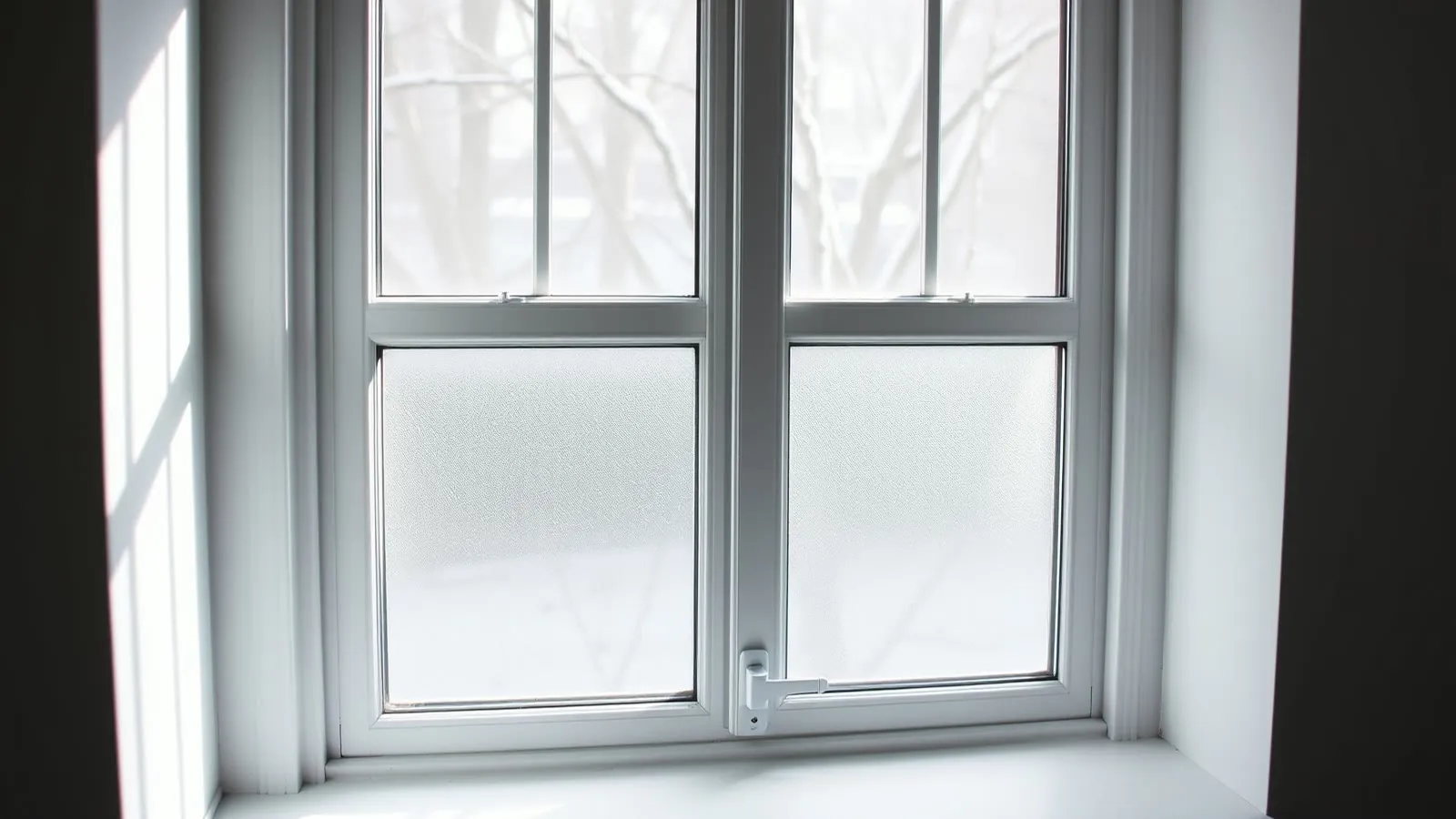
Choose a description you can use consistently, such as droplets along the bottom of the bedroom pane or a misted patch in the centre. Photograph the whole opening as well as the close detail. A close-up alone can make it difficult to identify which window needs attention.
On the next comparable morning, record what you changed and what you observed. For example: laundry dried elsewhere, bathroom fan used, droplets still present on this pane. That is useful evidence even if the change did not solve the problem. Avoid writing “ventilation fixed” after a single dry morning with different weather.
If you cannot safely identify the outside surface, leave that part of the check for an assessor. Record it as unchecked. There is no need to reach around an open sash or lean out to complete the comparison yourself.
What to ask during an assessment
Have your photographs and room notes ready. Ask the assessor to identify the wet surface first, then explain which observations support the recommendation. If replacement glass is suggested, ask what the proposal addresses and what moisture or ventilation work remains separate.
Confirm whether existing frames can be retained and what inspection is needed before ordering. If the haze is inside a sealed unit, ask for the replacement scope in writing. Avoid treating a general conversation about double glazing as confirmation that a particular opening is suitable.
Frequently asked questions
Does condensation mean the window is leaking?
Not necessarily. Record if the water follows rain or appears in dry weather, and locate the wet surface. Ask for investigation where the source remains unclear.
Can double glazing still get wet inside the room?
Yes. Improved glazing reduces risk rather than guaranteeing dry surfaces under all indoor conditions. Moisture management remains relevant. Source: Your Home, condensation.
Will glass cleaner stop it returning?
Use cleaning to remove surface water and dirt. If droplets return, continue the moisture and surface-location checks rather than assuming a different cleaner is the missing step.
What should I photograph for a glazier?
Photograph the haze or droplets before wiping, then the whole opening and surrounding frame. Add notes about which accessible surface you checked and when the problem appears.
If the moisture location remains unclear, send Economy Glass your window photographs and ask about an assessment of the existing glass.