



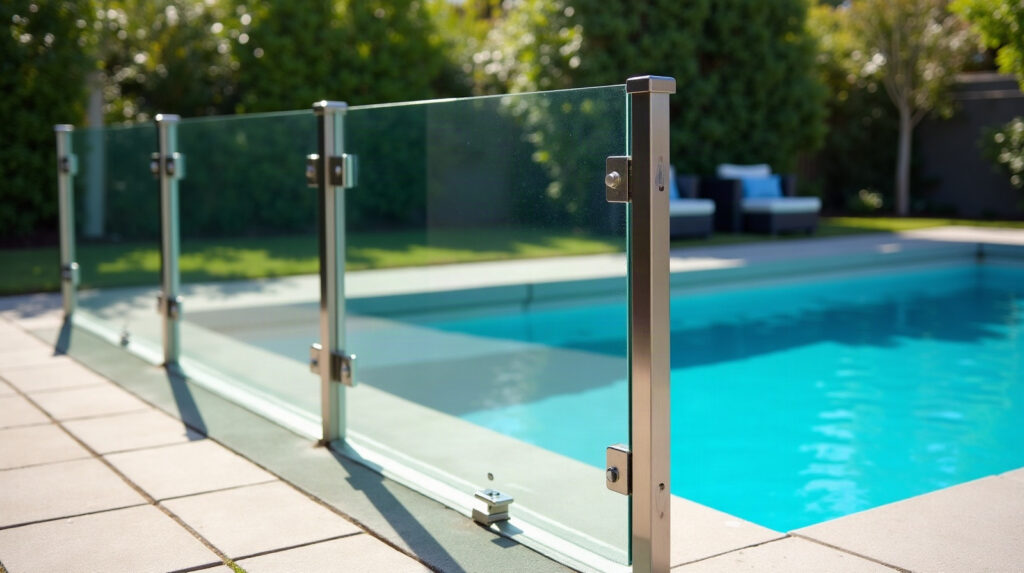
Here is how to clean glass pool fence panels properly: rinse off the grit with the hose, wash the glass with water and a mild detergent using a soft cloth or sponge, squeegee or wipe it dry, and rinse the spigots and hinges with fresh water while you are there. That routine handles most dust, splash marks and pool residue. The rest of this guide covers the stubborn stuff: hard water marks, salt and chlorine, tea staining on the hardware, bird strikes, and the products that can scratch toughened glass for good. For the rules that govern the fence itself, read our full guide to glass pool fencing in Victoria.
Cleaning is a safe DIY job. Anything that involves a chipped, cracked or loose panel is not, and we cover where that line sits near the end.
How to clean glass pool fence panels, step by step
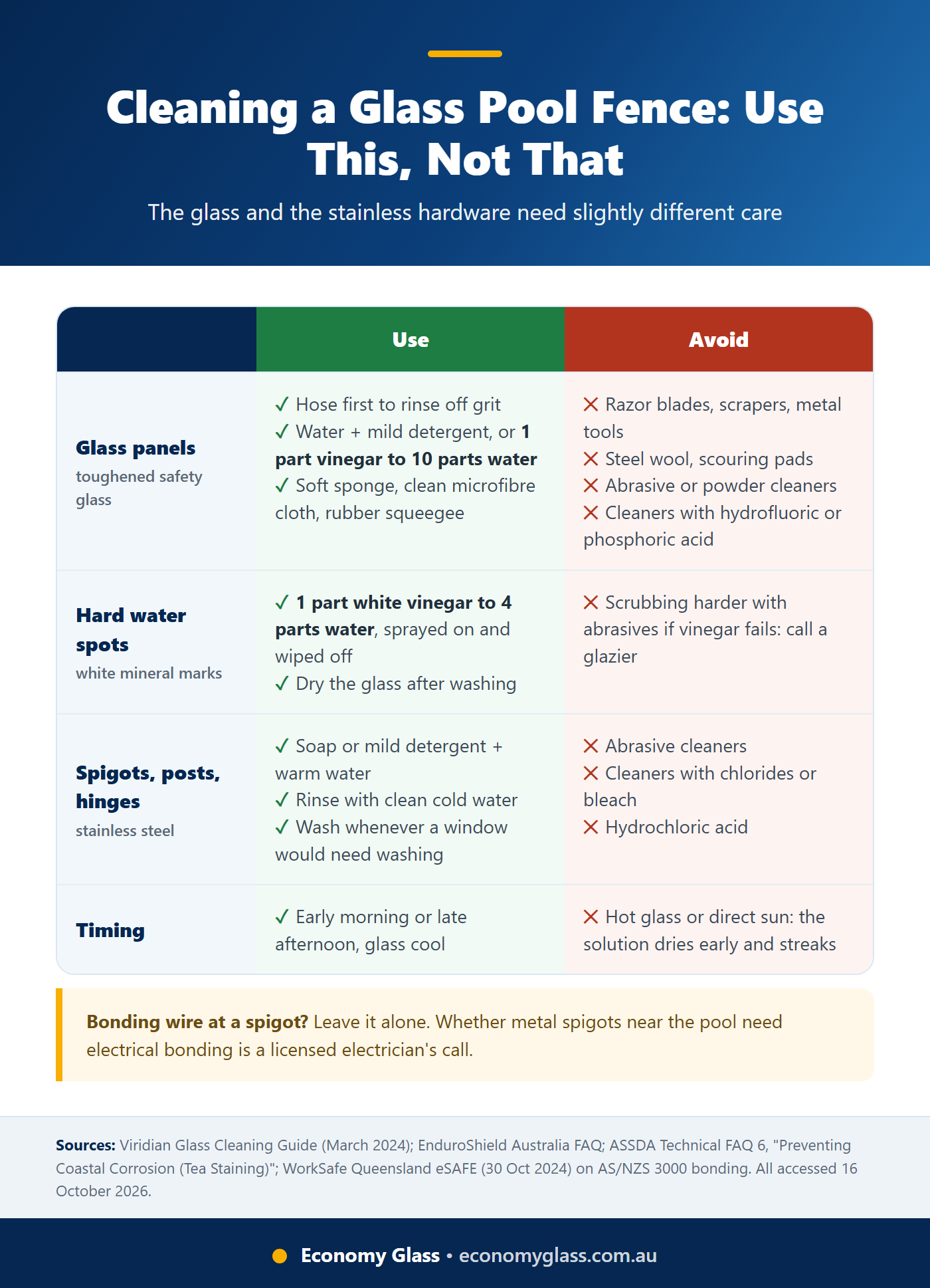
The glass maker Viridian publishes a glass cleaning guide, and its method is simple: spray the glass generously with a glass cleaning solution or a vinegar-based product, wipe it with a clean, lint-free cloth, and stop just before the glass is fully dry so it does not streak. Its home-made solution is one part vinegar to ten parts water. EnduroShield, which makes the easy-clean coating many glaziers use, says its treated exterior glass such as railings only needs water and a mild detergent such as washing-up liquid. For a pool fence, that becomes a five-step job.
- Rinse first. Hose the panels top to bottom to float off sand, dust and leaves. Wiping dry grit across glass is how scratches start.
- Wash. Use a bucket of water with a little detergent, or the vinegar mix, and a soft sponge or microfibre cloth. Work from the top down.
- Squeegee or dry. Pull a rubber squeegee down the panel in overlapping strokes, then buff the edges with a dry microfibre cloth.
- Rinse the hardware. Hose the spigots, posts, hinges and latch with fresh water and wipe them over.
- Pick your time. Viridian says not to clean glass when it is hot or in direct sunlight, because the sun dries the solution early and leaves streaks. Early morning or late afternoon works best.
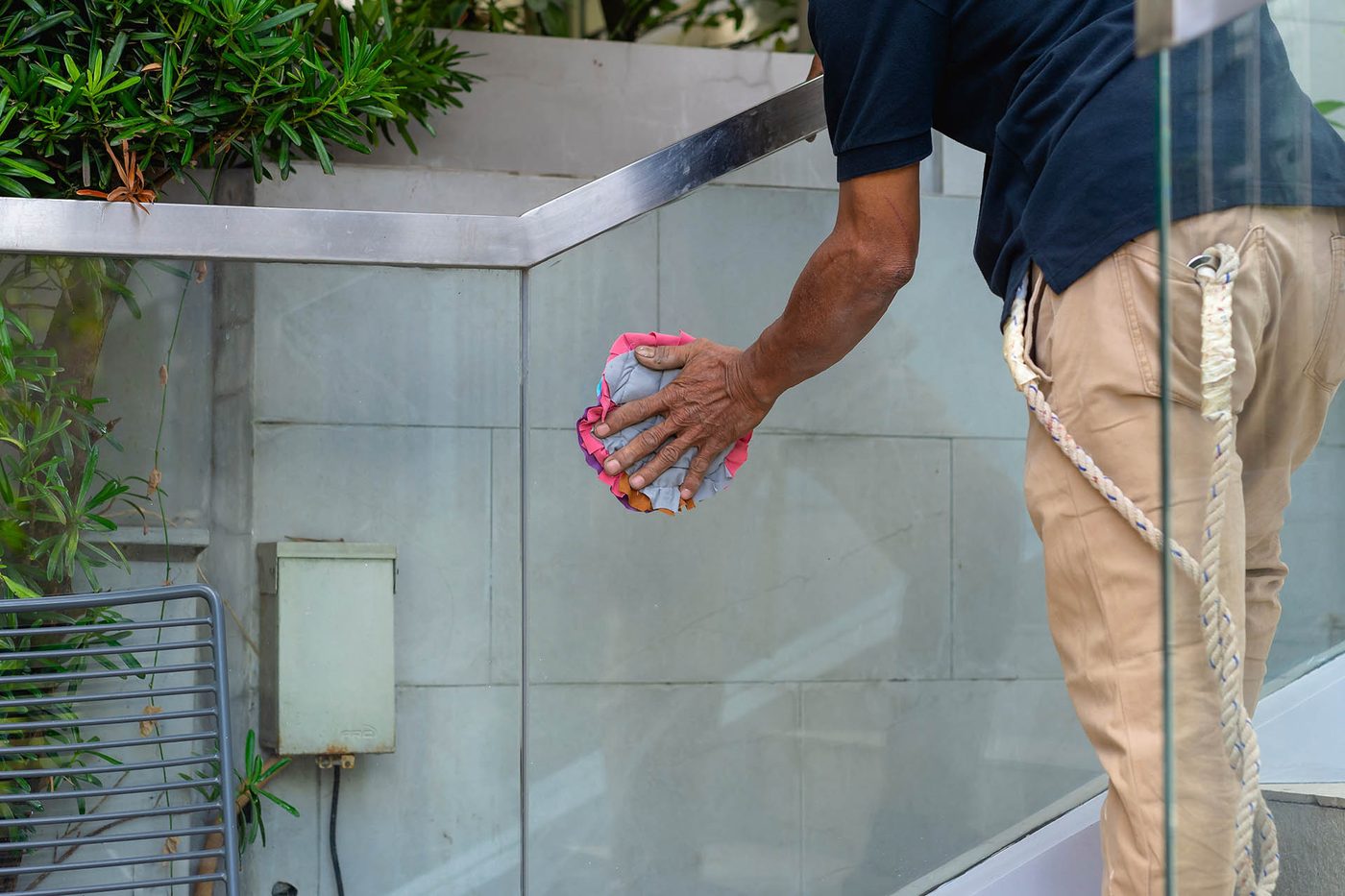
Use clean cloths every time. Guardian Glass’s care guide for its shower glass makes the point plainly: never try to remove impurities with a dirty cloth, because rubbing them across the surface can scratch it. The same applies outside, where your cloth picks up sand from the paving.
Hard water marks, chlorine and salt spray
The white spots on the lower half of a pool fence are usually what is left behind when splashes, sprinkler water or rain dry on the glass. Our guide to mineral staining on glass explains the chemistry: hard water carries calcium and magnesium, and when the droplet evaporates the minerals stay behind as milky spots. They are much easier to prevent than to remove, which is why drying the glass after a wash matters.
For spots that detergent will not shift, a mild acid is the next step. EnduroShield’s own advice for mineral build-up on treated glass is a solution of one part white vinegar to four parts water, sprayed on and wiped off. Guardian Glass’s care guide sorts water spots the same way: spots that come off with soap and water are from soft water, spots that need vinegar are hard water, and spots that vinegar will not remove point to high-silica water. If vinegar does not work, stop there and ask a glazier rather than reaching for something harsher.
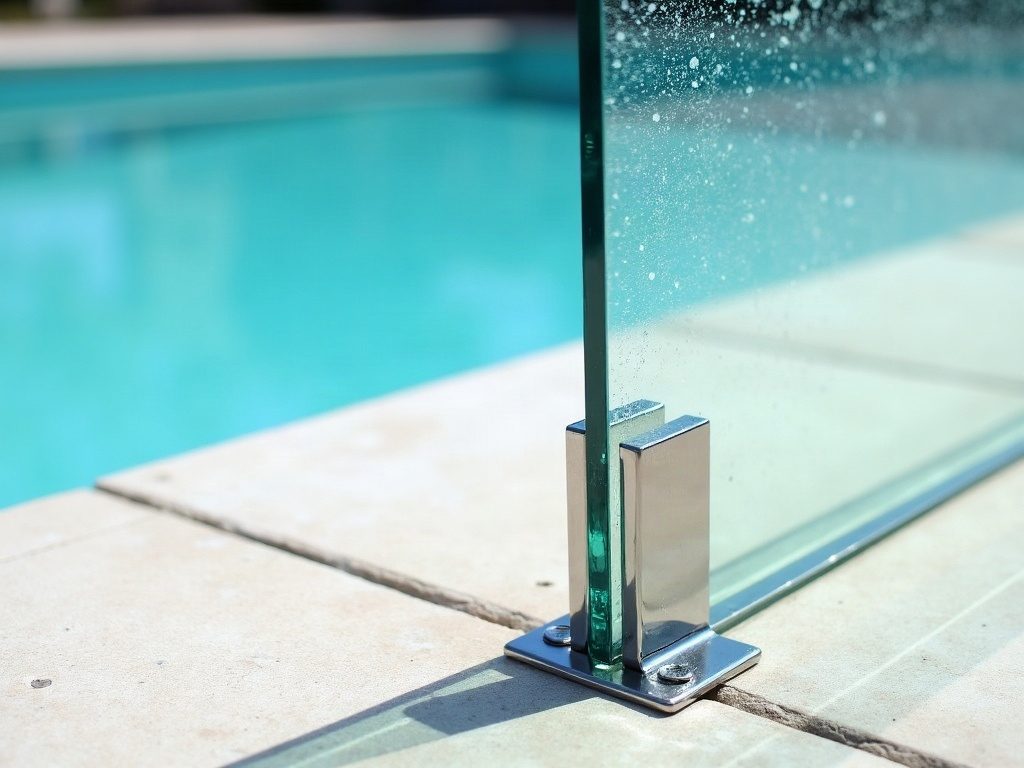
Pool water itself is the other culprit. Chlorinated or salt water splashed onto the glass dries and leaves behind whatever is dissolved in it, so rinse splashes off with fresh water before they dry. In salt-water pools and in bayside suburbs, dried salt leaves a film on both the glass and the hardware. Viridian recommends higher levels of regular cleaning wherever glass is exposed to sea salt spray, so a coastal fence needs washing more often than one inland. The same chemistry turns up inside the house: the method in our guide on how to clean shower glass handles the same hard water marks on a shower screen.
What not to use on toughened glass
Pool fence glass is toughened safety glass, and toughened glass needs care when you clean it. Viridian explains why: during manufacturing, fine glass particles can fuse to the surface of heat-treated glass, and a blade can drag those particles across the glass and scratch it permanently. Its guide lists what to keep away from glass:
- razor blades, scrapers and other metal tools
- steel wool, scouring pads and any abrasive pad
- abrasive or powder-based cleaners
- cleaning agents containing hydrofluoric or phosphoric acid, which Viridian says can permanently damage the glass surface
Heat is the other thing to respect. Glass breaks from thermal stress when it is heated unevenly, which our article on thermal breakage in glass explains. Cleaning in the cool part of the day avoids streaks and keeps the job gentle on the glass.
EnduroShield adds its own list for coated glass: do not use rough, gritty, highly acidic, alkaline or abrasive cleaners, including cerium oxide. If your fence has been coated, treat it the same way.
Caring for spigots, posts and hinges
The stainless steel holding the glass needs its own attention. The brown marks that appear on stainless near the coast or around a pool are called tea staining. The Australian Stainless Steel Development Association (ASSDA) describes tea staining as discolouration of the surface by corrosion, and says it is a cosmetic issue that does not affect the structural integrity or the lifetime of the material. Left alone, though, it looks shabby next to clean glass.
ASSDA’s care advice is straightforward. Wash stainless steel with soap or mild detergent and warm water, then rinse with clean cold water. A light, regular wash is best, and as a guide, stainless should be washed whenever a nearby window needs washing. Grooves and folds trap salts, so pay attention to the base of each spigot. ASSDA is firm on what not to use: abrasive cleaners and cleaners containing chlorides or bleach, and never hydrochloric acid. Check the label of any pool chemical you handle near the fence, and rinse the hardware with fresh water if it gets splashed.
If you are choosing hardware for a new fence near the bay, ASSDA recommends grade 316 stainless, or one with equivalent corrosion resistance, in marine environments. Ask what grade is quoted.
Metal spigots near the water also raise the question of earthing. WorkSafe Queensland says AS/NZS 3000, the Wiring Rules, sets requirements for bonding conductive metal parts within arm’s reach (1.25 m) of the pool edge, including metal spigots supporting non-metal fencing, and that only a licensed electrician can install bonding conductors. Whether your spigots need bonding is a licensed electrician’s call. Economy Glass does not do electrical bonding, so leave any bonding wire you see at the base of a spigot alone.
How to keep a glass pool fence clean
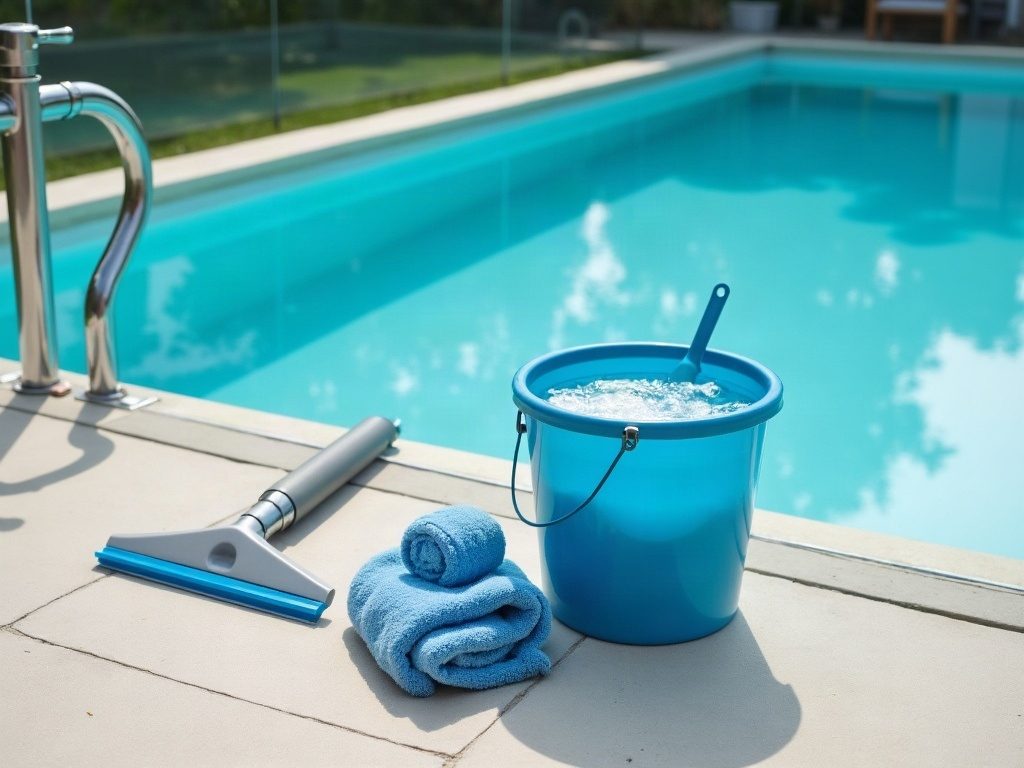
Knowing how to clean glass pool fence panels is half the job. The best way to keep a glass pool fence clean is a little and often. A quick hose and squeegee after a hot, busy weekend beats a big scrub once a season, because marks that dry on repeatedly are the hardest to shift. Point sprinklers away from the glass, and dry the bottom third of the panels after the kids have been splashing.
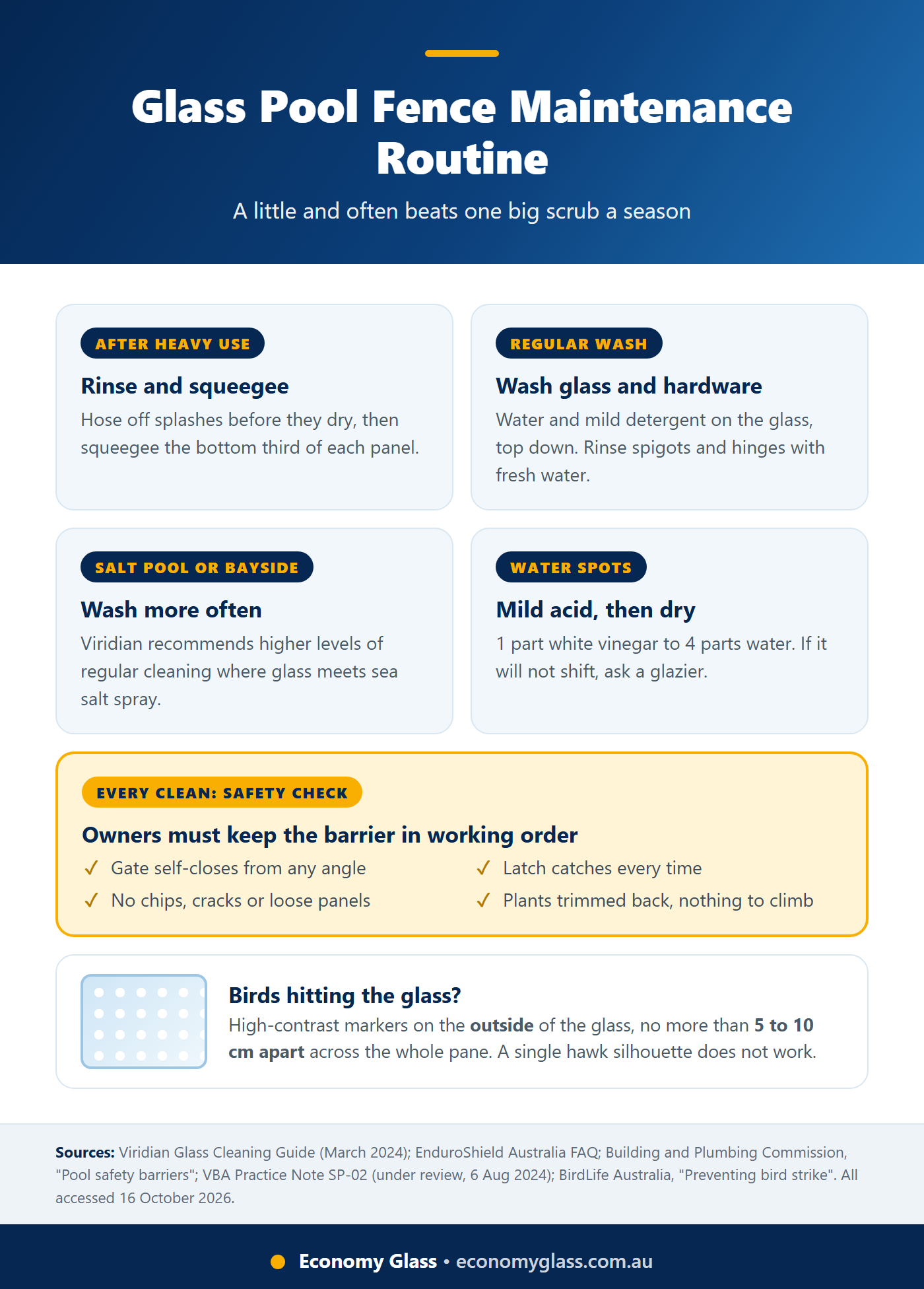
A coating makes the routine easier. EnduroShield easy-clean glass coating is a treatment Economy Glass applies to glass. It is not a never-clean product, it just makes cleaning much easier. EnduroShield’s guidance for treated exterior glass is to clean as required with water and a mild detergent. Ask us whether it suits your fence.
Use cleaning day as a safety check too. Victoria’s Building and Plumbing Commission says pool barrier gates must be self-latching and self-closing, and that owners and occupants are responsible for making sure barriers are maintained, repaired and kept in working order. While you are washing, open the gate from a few positions and let it go: it should swing shut and latch every time. The Victorian Building Authority’s practice note on pool barriers adds that maintenance includes the vegetation next to the barrier, so trim plants back from the glass and move anything a child could use to climb it.
How to stop birds flying into a glass pool fence
A spotless fence has one downside: birds may not see it. BirdLife Australia says birds cannot recognise glass as a solid object and may treat a transparent pane, or a reflection of sky and garden, as a safe flight path. Its own advice notes that letting windows get dirty reduces the risk of bird strike, which is not much comfort when you have just cleaned.
BirdLife’s fixes work on any glass. Markers should be high contrast, such as white, placed on the outside of the glass and no more than 5 to 10 cm apart, because birds judge the gaps between patterns rather than the design. A couple of stickers on a large pane will not prevent collisions, and BirdLife says predator-shaped decals such as hawk silhouettes do not reduce strike rates. Keep bird baths and feeders away from the fence line too. On a pool barrier, stick to flat decals or film on the glass, and check with your pool inspector before attaching anything else to the fence. If a bird does hit the glass, BirdLife says it can have internal injuries even if it looks fine, and carers and vets advise taking it in for assessment.
When cleaning turns into a repair
Cleaning sometimes shows up damage you had not noticed: a chip on an edge, a crack, a panel that moves in its spigot, or a gate that has started to drop. Stop and call a glazier. Toughened glass cannot be cut, drilled or repaired once it is made, so a damaged panel is replaced, and our glass repairs team can make and fit a new one. Keep children away from a damaged section until it is fixed.
Talk to a glazier about your pool fence
Washing the glass is your job. Replacing a damaged panel, fitting a new fence and applying a coating are ours. That is where Economy Glass comes in. Economy Glass supplies and installs glass pool fencing and applies EnduroShield easy-clean coating across Melbourne’s west and beyond from our Hoppers Crossing workshop, with 45 years in the glass trade and glass cut and finished to Australian Standards. Call (03) 9360 9900, Monday to Friday 8am to 4pm, or request a quote online.
Frequently asked questions
How do you clean a glass pool fence?
How do you keep a glass pool fence clean?
What removes hard water stains from a glass pool fence?
How do you stop birds flying into a glass pool fence?
How do you earth glass pool fence spigots?
Are glass pool fences safe?
For the barrier rules, the inspection cycle and what a compliant fence looks like, read our full guide to glass pool fencing in Victoria. And if the shower screen inside is fighting the same hard water, our guide on cleaning shower glass covers soap scum, stains and glass cancer.