



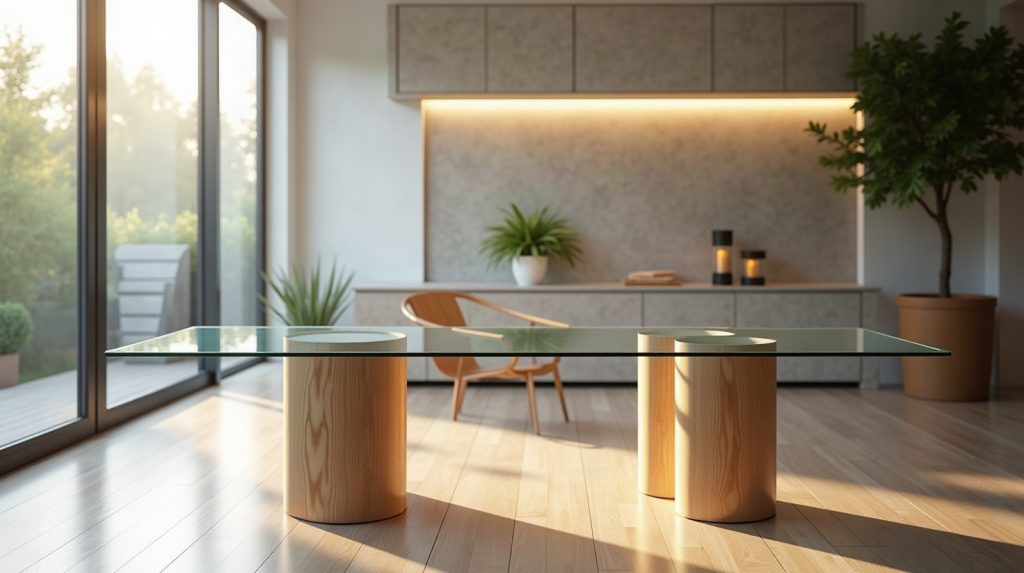
Choosing a glass table top comes down to four decisions: whether the glass is the table (a full top on a base) or a protector over a timber top you want to keep; the glass type, standard clear, low-iron for a truer colour, or a tint; whether it needs to be toughened, which for a full top on legs it should be; and the edge, polished flat for a clean modern look or bevelled for something more traditional, with the corners rounded either way. Glass thickness is the one thing you do not need to decide. The glazier will specify it from the size of the top, the span between supports and how the table is used.
Every top is made to order in our Hoppers Crossing workshop, for homes across Melbourne’s west. Here is how to get the order right.
Full glass table top or a protector over timber
A full glass top is the table surface itself. It rests on a base, whether a timber frame, a metal pedestal, legs or trestles, and it carries the plates, the elbows and the occasional climbing child. It spans between its supports with nothing underneath, so it is thicker and toughened, with fully polished edges because they are on show.
A protector is a thinner sheet laid directly on a solid timber, stone or veneer table to save the surface from heat, scratches and spills. The timber underneath supports it across its whole area, so the glass does far less work. Protectors suit a dining table you love but cannot keep unmarked, a desk or a sideboard. If the table beneath is already scratched, a clear protector shows every mark and a tinted one hides more.
Clear, low-iron and tinted glass
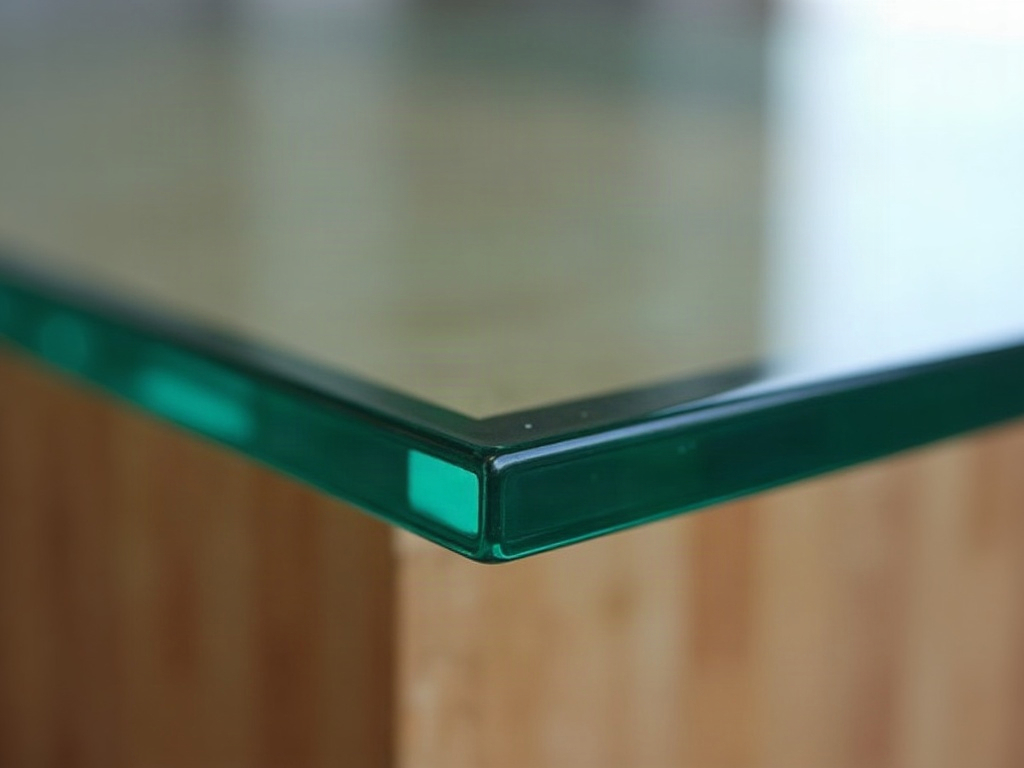
Standard clear glass has a faint green tint you notice mostly at the edge. On a thick full top the polished edge shows as a soft green line, which most people like. Low-iron glass has most of that iron removed, so the edge looks almost colourless and the colour of the timber beneath comes through true. It is the premium option, and earns its place on a pale base where the green would show.
Tinted glass, grey or bronze, is coloured all the way through. Grey over a dark base looks deliberate and hides fingerprints better than clear; bronze warms up timber. Both can be toughened. Frosted and patterned options exist, but a smooth surface is far easier to keep clean.
Why a glass table top should be toughened
Toughened glass is heat-treated so that if it does break it goes into small blunt pieces rather than long shards. On a full top standing on legs, with people sitting around it, that is the glass a glazier will specify. It is also far stronger against a knock on the edge, which is where table tops usually fail. Laminated glass, two panes bonded with an interlayer, is the other safety glass; our guide to toughened vs laminated glass explains where each belongs.
A protector lying on solid timber is fully supported, and ordinary annealed glass is common there. The case for toughening a protector is a busy family table or a hot dish set down without a mat. Because toughened glass cannot be cut or drilled after it is made, every cut-out, hole and edge detail is finished first and the top goes through the furnace last, so the measurements have to be right first. Toughened tops carry the stamp that identifies safety glass, tucked in a corner.
Polished flat edge, bevelled edge and rounded corners
A polished edge is the finish on every top we make; the question is which shape. A flat polished edge is a square edge ground smooth and polished, with the sharp arrises softened: the modern default. A pencil edge is the same with the profile rounded, softer on a coffee table at knee height. A bevelled edge has an angled band ground into the top face around the perimeter, which catches the light and suits a traditional room.
Corners matter more than people expect. A square corner on glass is a sharp point at hip and head height for children, so we round the corners on almost every top. A small radius keeps the look crisp; a larger radius is kinder in a walkway. Round and oval tops have no corners to worry about.
How to measure a glass table top and template a shape
For a rectangle or a square, measure the length and width of the existing top or the base at both ends and in the middle, and write down the largest. Decide on the overhang if the glass sits on a base: a small overhang looks lighter, none looks built-in. For a round top, measure the diameter across two directions. For a protector, measure the timber top and take a few millimetres off each side so the glass sits inside the edge.
For any other shape, make a template. Lay cardboard or thin MDF on the base, trace the outline you want, cut it, and set it back on the base to check it. Mark the top face and where any base fixings or an umbrella hole need to go. We cut from the template exactly, so bring it to the workshop with the base measurements. With table top glass cut to size from a template, an odd-shaped base gets a top that fits it and only it.
Bumpers, replacing a damaged top, and when to call a glazier
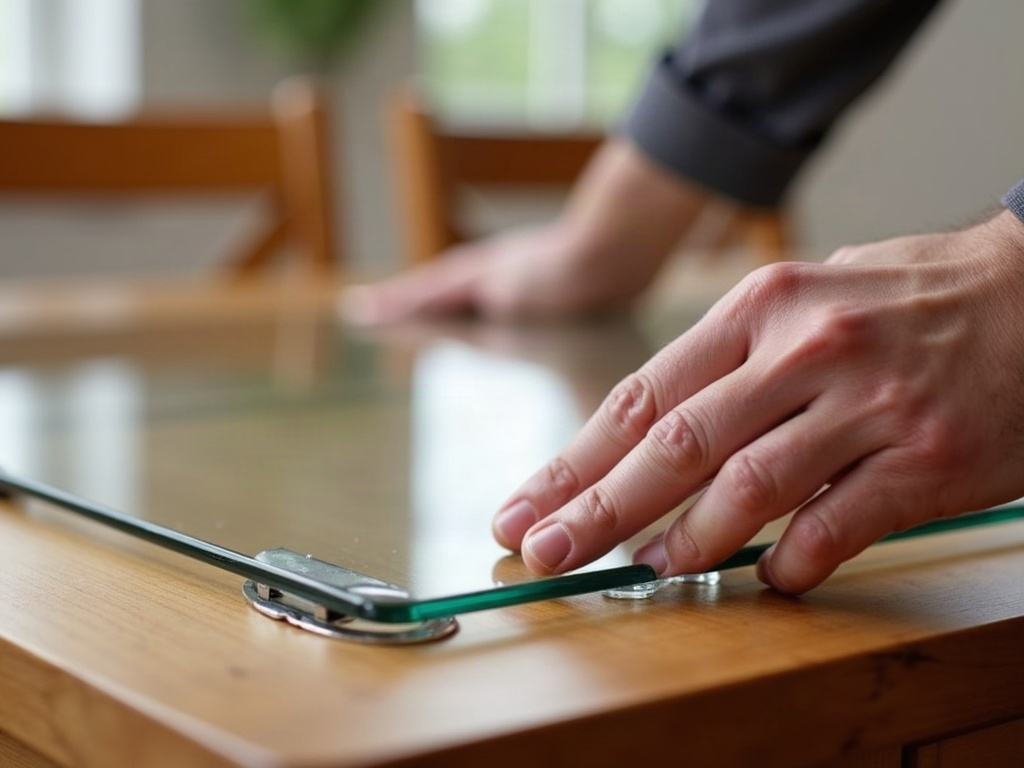
Clear rubber or silicone bumpers go between the glass and the base. On a full top they stop the glass creeping on the frame; on a protector they lift the glass so air can move and the timber does not sweat. Fit one near each corner and one or two along the long sides. If a top slides or rocks, the fix is nearly always a missing bumper or an uneven base, not the glass.
A chip on the edge of an annealed top is a weak point a crack will start from, and a crack anywhere means the top is finished. Toughened glass cannot be re-cut or re-polished once made, so the answer to a chipped or cracked top is glass table top replacement: measure or template the old top while it is whole and have a new one made. Measuring, templating, cleaning and fitting bumpers are yours to do; cutting, drilling, edge work and handling broken glass are a glazier’s. A custom cut is the answer whenever the base is not a standard rectangle or the top needs holes or cut-outs; see our glass cut to size service.
That is where Economy Glass comes in. Economy Glass supplies and installs glass table tops across Melbourne’s west and beyond from our Hoppers Crossing workshop, with 45 years in the glass trade and glass cut and finished to Australian Standards. Call (03) 9360 9900, Monday to Friday 8am to 4pm, or request a quote online.
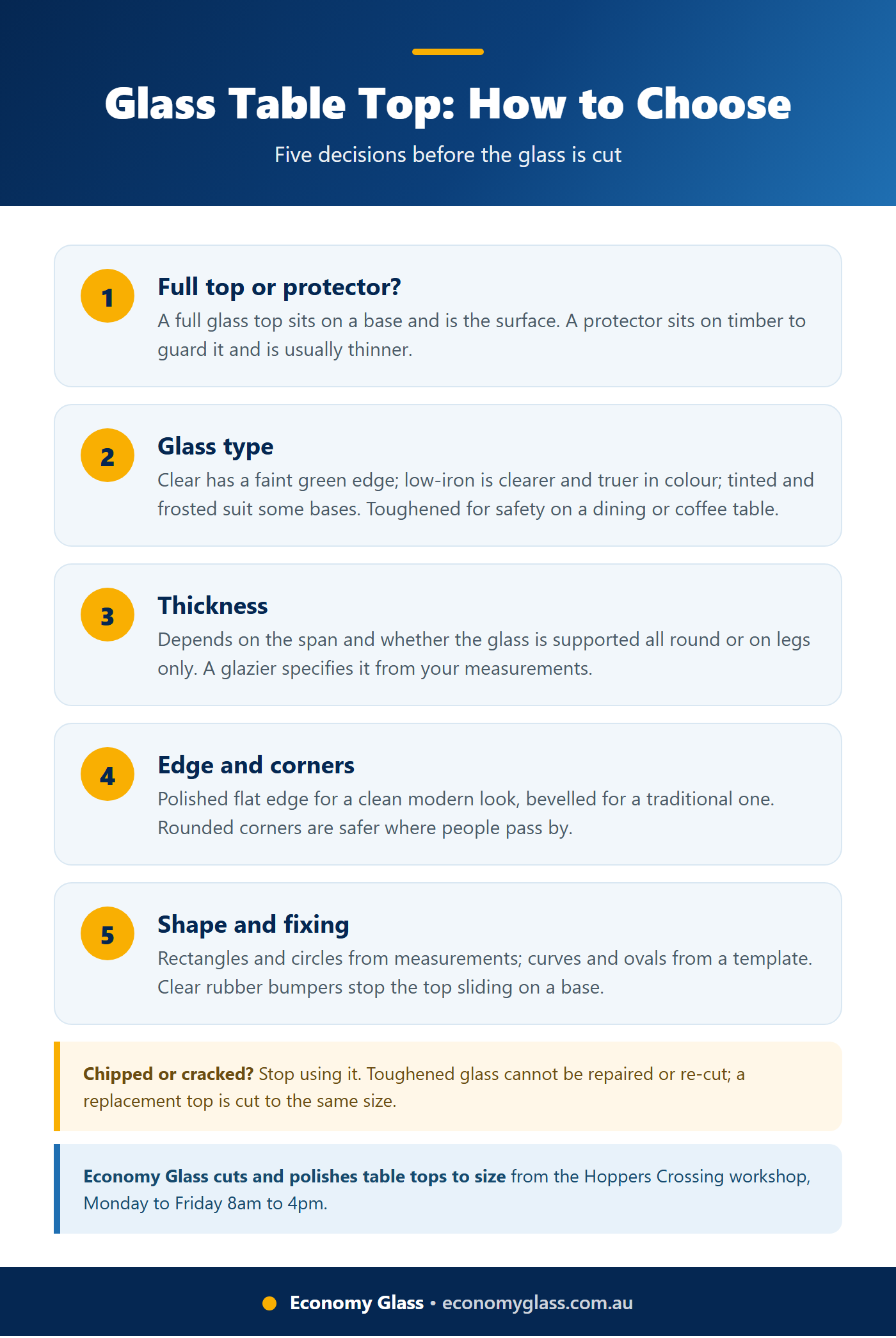
Glass Table Top: How to Choose: the quick version
Save or print this checklist before you call.
Frequently asked questions
How thick should a glass table top be?
Does a glass table top need to be toughened?
Can you replace just the glass on my table?
What is the difference between a polished edge and a bevelled edge?
Related reading: see our glass cut to size service, our guide to toughened vs laminated glass and our safety glass page, or request a quote from Economy Glass.