



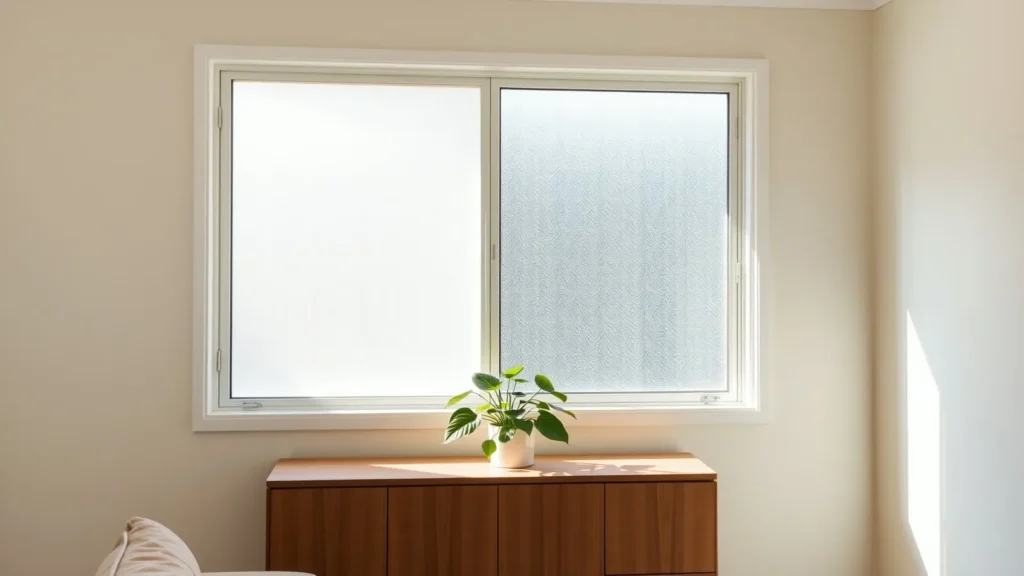
When a window needs privacy, two answers come up almost straight away. One is a frosted film stuck onto the existing glass. The other is changing the glass itself for a frosted or patterned pane. Both end with a window that lets light in and keeps people from looking through. They get there in different ways, and the differences matter for how long the result lasts and how it looks.
This guide sits under our broader overview of frosted, obscure and privacy glass. It compares the two options fairly so you can pick the one that suits your window. Our own work is glass, so we treat film as an alternative to compare against, not something we are selling here.
What each option actually is
Privacy film. A thin adhesive sheet applied to the surface of a clear pane. It gives the glass a frosted, patterned or tinted look. It sits on the glass rather than being part of it.
Frosted or privacy glass. The glass itself has a treated surface or a built-in pattern. The effect is part of the pane and stays for as long as the glass does.
That single difference, applied versus built in, explains most of what follows.
Where film does well
Film has real strengths, and in the right setting it is a sensible choice.
- Speed. A film can be applied to existing glass without the pane being removed.
- Reversibility. If you change your mind, film can be taken off.
- Flexibility of look. Films come in plain frosted, patterns, borders and tints, so you can try a design on a small area.
- Sound existing glass. If the pane is in good order, there is nothing wrong that needs replacing.
- Short-term situations. For a rental, or a space you plan to change soon, a removable option makes sense.
Where frosted glass does better
- Longevity. There is no layer to peel, lift or fade. The finish lasts as long as the glass.
- Edges. Film has edges. In a steamy room or a sunny window, edges can lift over time. Glass has no edges to lift.
- Cleaning. Frosted glass copes with normal glass cleaning. Film can mark or lift if cleaned with the wrong cloth or cleaner.
- Appearance. Good frosted glass has an even, consistent look across the whole pane. Film depends on how well it was applied, with air bubbles and joins being the usual weak spots on larger windows.
- A chance to fix other problems. If the pane is cracked, misted or being replaced anyway, choosing a privacy glass at the same time avoids doing the job twice.
A side by side
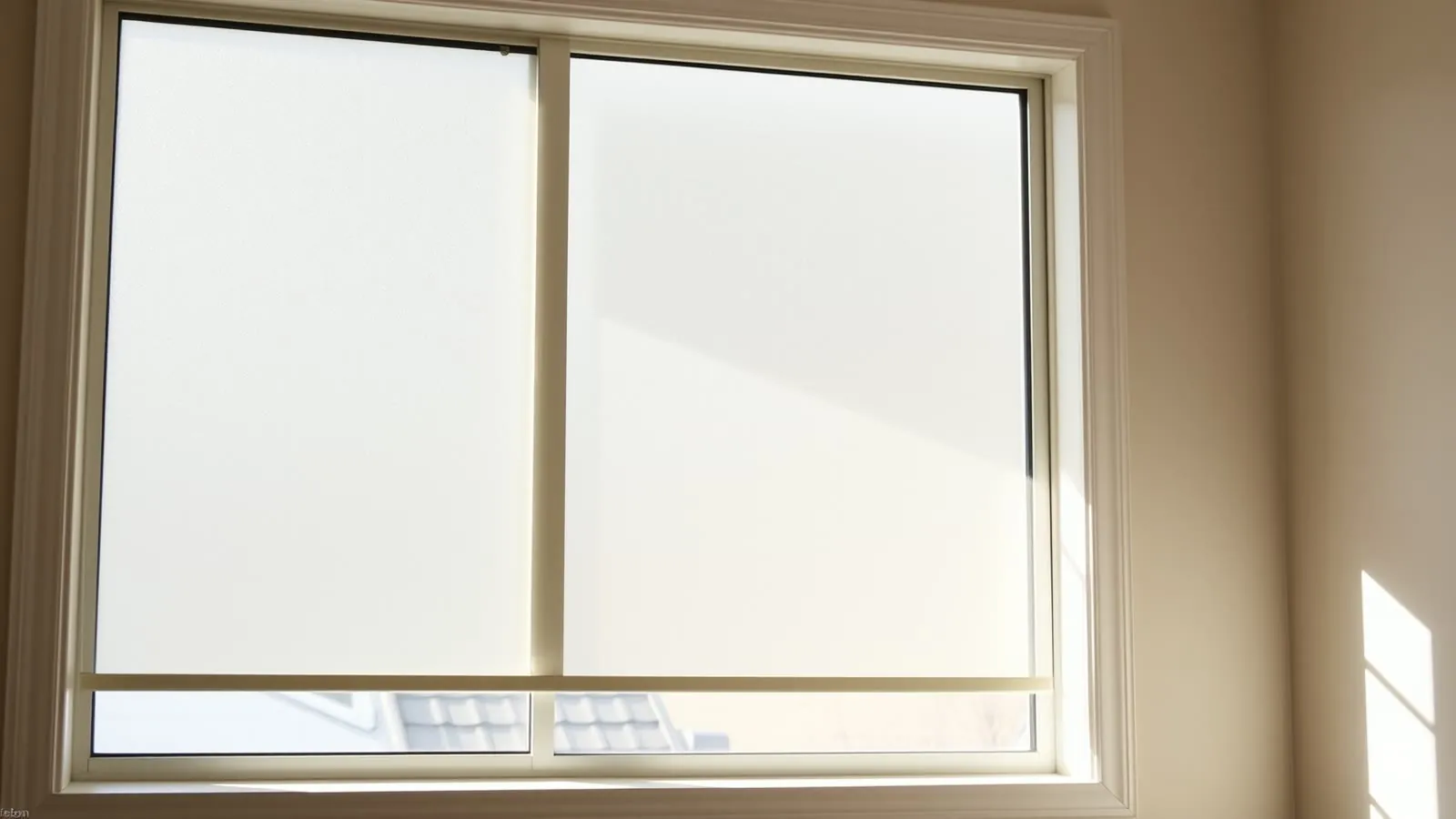
Here is a simple comparison. Individual products vary, so treat it as a guide.
Speed to finish.
- Film: quick, on existing glass.
- Glass: needs the pane to be measured and replaced.
Permanence.
- Film: removable.
- Glass: permanent, as part of the pane.
Upkeep.
- Film: needs gentle cleaning and a check on the edges.
- Glass: wipes like any glass.
Looks over time.
- Film: depends on the product and the application.
- Glass: stable.
Damaged glass.
- Film: does not fix a cracked or failed pane.
- Glass: replaces the problem pane as well as adding privacy.
Check these before applying film
A few things deserve a pause before you put film on any window. These are general points, and no specific claim is made about any product.
- Is the glass sound? Film cannot cover a crack or a failing seal. Cloudy glass in a sealed double glazed unit needs the unit replaced, not covered over.
- Is it a sealed double glazed window? Ask the film supplier and check any warranty on the unit before applying film, because some suppliers have conditions about what can be stuck to their glass.
- Is the window in the sun? Strong sun can be tough on adhesives. Ask the film supplier how their product handles it.
- Is the surface clean and smooth? Application is only as good as the preparation.
- How big is the pane? Large panes are harder to cover without joins or bubbles.
We would rather you ask these questions than assume. If the film supplier cannot answer them, that is useful information in itself.
Where film makes less sense
- A pane that is already damaged. Cover-ups hide problems for a while, but a cracked pane needs replacing. Our window glass replacement service handles that.
- A misted double glazed unit. The seal has failed and the unit has lost much of its insulating value. Replacing the unit is the fix. See our double glazed unit replacement page for how it works, and our guide on how to stop condensation on windows for the difference between misting inside a unit and condensation on the surface.
- Wet rooms with a lot of steam. Edges are the weak point in humid rooms. A built-in finish tends to be the lower-maintenance choice, and our guide to frosted glass for bathroom windows covers finishes, steam and cleaning in detail.
- Glass in doors. Doors and low glass have safety requirements. Check with your glazier before choosing any treatment for them.
When replacing the glass is the neater answer
Replace the pane when:
- it is cracked, chipped or loose in the frame,
- it is a sealed unit that has misted,
- you want a finish that will last without maintenance,
- you are changing the glass for another reason, such as safety or noise,
- the window is large, and you want an even finish.
Economy Glass replaces window glass in timber and aluminium frames, and in doors, sidelights and shopfronts. Many standard windows are replaced within the day. If the glass is in a sealed double glazed unit that has failed, we replace the unit. What we do not do is install or retrofit new double glazing.
When film is a reasonable choice
Film makes sense when:
- the glass is sound and you only want privacy,
- you want a quick, reversible change,
- you are renting or may change the room soon,
- the window is small and easy to apply to,
- you are happy to check the edges from time to time.
Questions to ask whichever route you choose
- What exactly will it look like? Ask for a sample on glass, not just a swatch.
- How will it look at night with the lights on?
- How is it cleaned?
- What happens at the edges and corners?
- What does the supplier say about warranty and about how long it should last?
- Does the window need safety glass? If it is a door or low in a wall, ask.
A word on privacy at night
Neither option solves the night view on its own. With lights on inside, a silhouette can show on a frosted pane, whether the frosting is film or glass. Heavier frosting reduces it. A blind or curtain removes it. Think about the evening, not just the day.
Frequently asked questions
Is privacy film as good as frosted glass?
They do different jobs. Film is quick and reversible on sound glass. Frosted glass has the effect built in and lasts as long as the pane.
Will film damage my windows?
It depends on the product and the glass. Ask your film supplier and check any warranty on the window, especially for sealed double glazed units.
Can I put film on a double glazed window?
Possibly, but check first. Ask the film supplier and the unit’s supplier whether there are conditions. If the unit has misted, replacing it is the fix, not covering it.
Is film cheaper than replacing the glass?
It is often the quicker option. Costs depend on the size of the window and the product, so ask for a quote for each route if the price matters.
How long does film last?
That depends on the product, the sun and the room. Ask your supplier what they stand behind.
Can I replace just the glass in my window?
Yes, in many windows, provided the frame is sound. Send a photo, rough measurements and the finish you have in mind, and we will tell you what we can supply.
A calm next step
If a pane needs replacing, or you would like to talk through whether new glass suits your window, you are welcome to send a photo and a few measurements on our request a quote page. We will tell you plainly what we can do, with no pressure.