



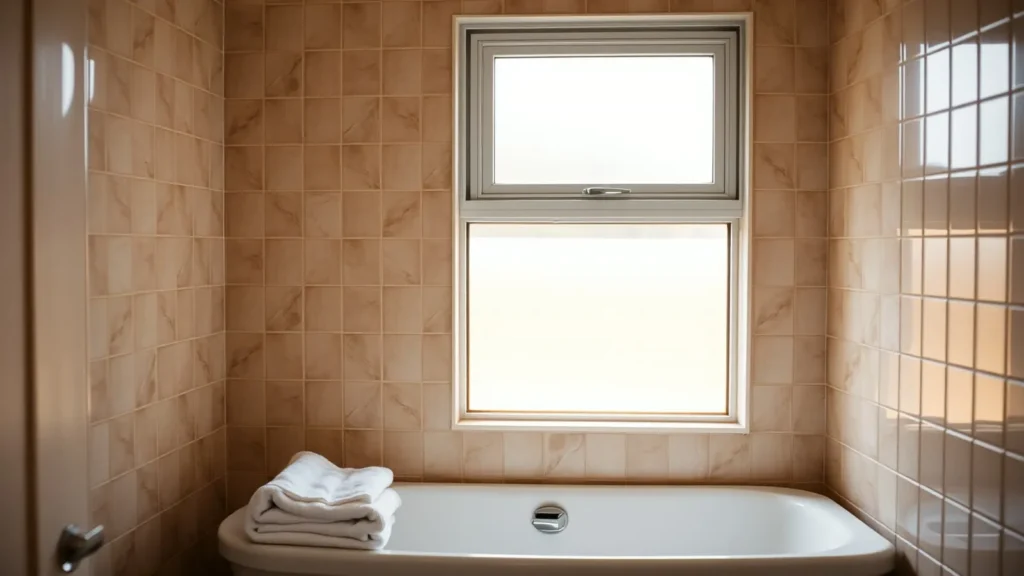
A bathroom window has two jobs that pull in opposite directions. It should let daylight and fresh air in, and it should keep the room private. Clear glass does the first job and fails the second. Frosted glass is the classic fix, and for good reason: it keeps most of the light and hides nearly all of the detail.
This guide sits under our wider overview of frosted, obscure and privacy glass, which covers every kind of privacy glass. Here we stay in the bathroom and look at what suits a wet, steamy room, how to choose a finish, and how to keep it looking good.
Why bathrooms suit frosted glass
A bathroom is the room where privacy matters most and where windows are often in awkward places. They face side paths, neighbouring windows or the street. They are frequently small, and they sit at a height where people outside can look straight in.
Frosted glass suits that setting for a few reasons:
- It keeps the room bright. The surface scatters light rather than blocking it, so a bathroom does not turn dim.
- It hides detail. A person outside sees a soft, pale pane rather than movement and shapes.
- It is permanent. The effect is part of the glass. There is no film edge to lift in a steamy room.
- It copes with moisture. Glass itself is not affected by steam, which is more than can be said of some other window treatments.
Choosing a finish
Several finishes work in a bathroom, and the right one depends on how exposed the window is and the look you want.
Smooth satin or frosted. An even, soft white surface. It looks clean and modern, and it gives strong privacy.
Patterned or obscure. Texture is built into the glass: small ripples, diamonds or waves. Some patterns hide more than others. A tight pattern gives strong privacy, while a bold, open one lets more colour and movement through.
Reeded or fluted. Vertical ridges give a stylish look, but the privacy varies with the depth of the ribs. These suit bathrooms where the window is not closely overlooked. Our guide to frosted film versus frosted glass compares glass with film, and our guide to fluted and reeded glass goes deeper on the ribbed look.
Tinted. Tint reduces glare but is not a privacy solution on its own, especially at night.
The best test is a sample held up in the bathroom itself. Check it in daylight and, if you can, in the evening with the light on. A pane that looks private at noon can look quite different after dark.
The night test
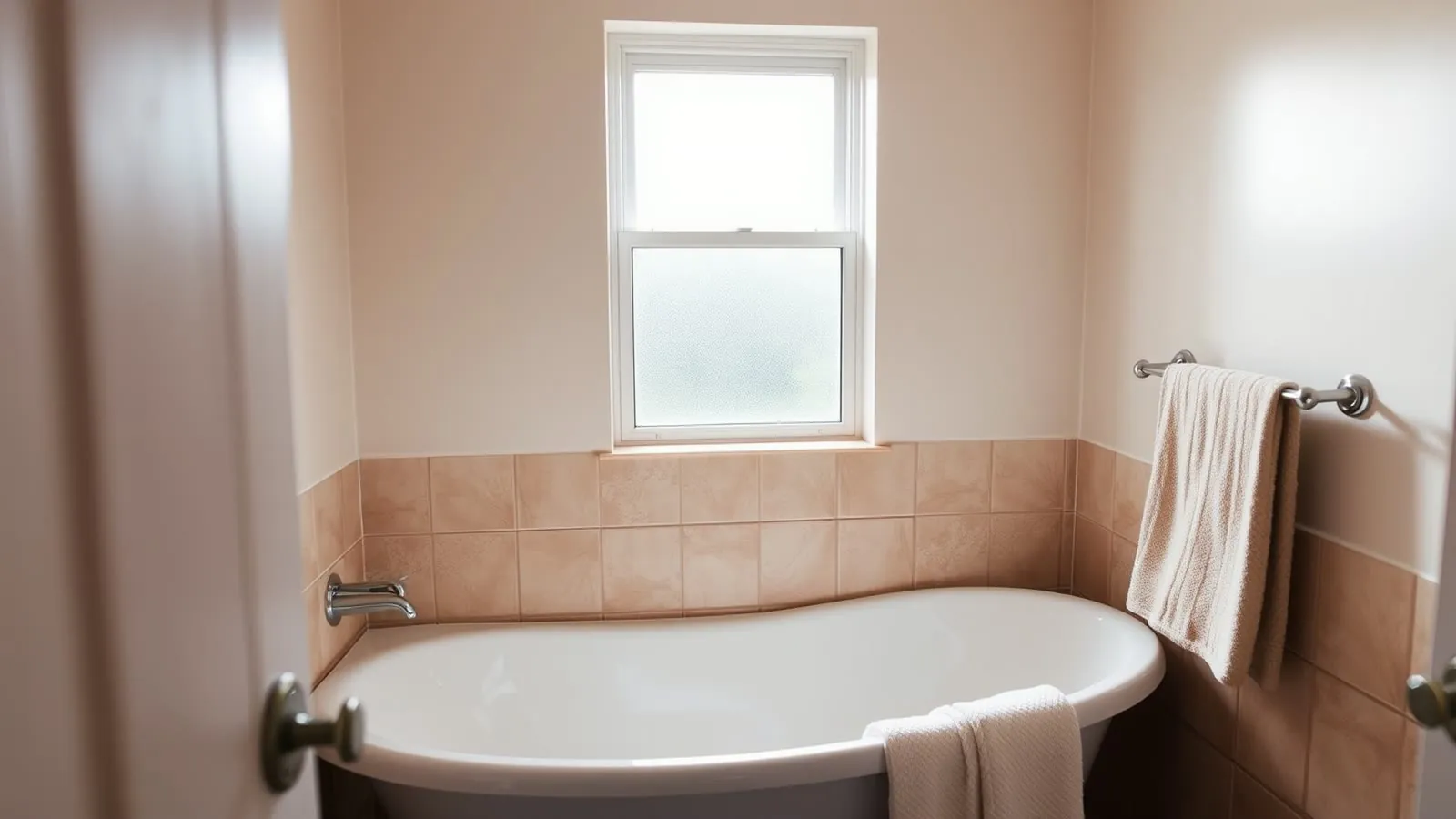
Privacy at night is the question people forget. During the day, outside is brighter than inside, so the glass looks like a pale wall. At night with the bathroom light on, the situation reverses. Anyone outside can see a glowing pane, and a person standing close to the glass can cast a silhouette on it.
Heavier frosting reduces the silhouette. A blind or curtain removes it completely. If your window faces a neighbour at close range, plan for both.
Which side of the glass faces the room
Some textured and etched glass has a smoother side and a rougher side. In a bathroom, the usual preference is to have the smoother face towards the room, because it is easier to wipe down. Ask your glazier which way round the pane will be fitted and why.
Steam, condensation and the frame
Steam does two things in a bathroom. It fogs the glass, and it finds weak spots in the frame. A good privacy pane does not fix either of those problems.
- Condensation on the glass is normal on cold mornings. Our guide to stopping condensation on windows explains why it happens and what helps, such as ventilation and sealed double glazed units.
- A tired frame can be a bigger issue than the glass. Look for soft timber, flaking paint, rusty fixings or worn seals. If the frame is sound, a new pane will sit well in it. If it is not, sort it out first.
- Ventilation. An extractor fan or an opening window keeps humidity down and helps the glass and frame last.
Replacing a clear pane with frosted glass
In many bathrooms the simplest approach is to replace the existing clear pane with a privacy glass. Economy Glass replaces window glass in timber and aluminium frames, and many standard windows are replaced within the day. The sections below explain what to have ready.
What helps for a quote.
- A photo of the whole window, so the frame and style are clear.
- A photo of the pane up close, showing the bead or seal around it.
- Rough measurements of the glass. Width and height are enough to start.
- A note about which room it is and what you are hoping for: privacy, light, or both.
Questions worth asking.
- Which privacy finishes can be supplied for this window, and can I see a sample?
- Does this opening need safety glass? Bathroom windows near a bath or shower, or low to the floor, are worth checking. Our safety glass guide for Melbourne homes explains the principle and your glazier can confirm for your window.
- Is the pane being cut to size or made to size? Float glass is cut on site, while toughened glass is made to measure and cannot be cut or drilled afterwards.
- How long will it take?
If the glass is cracked, chipped or the putty has failed, our glass repairs service covers windows and other household glass, with an emergency service when it cannot wait.
Cleaning a frosted bathroom window
Frosted and patterned glass is easy to clean with a few simple habits.
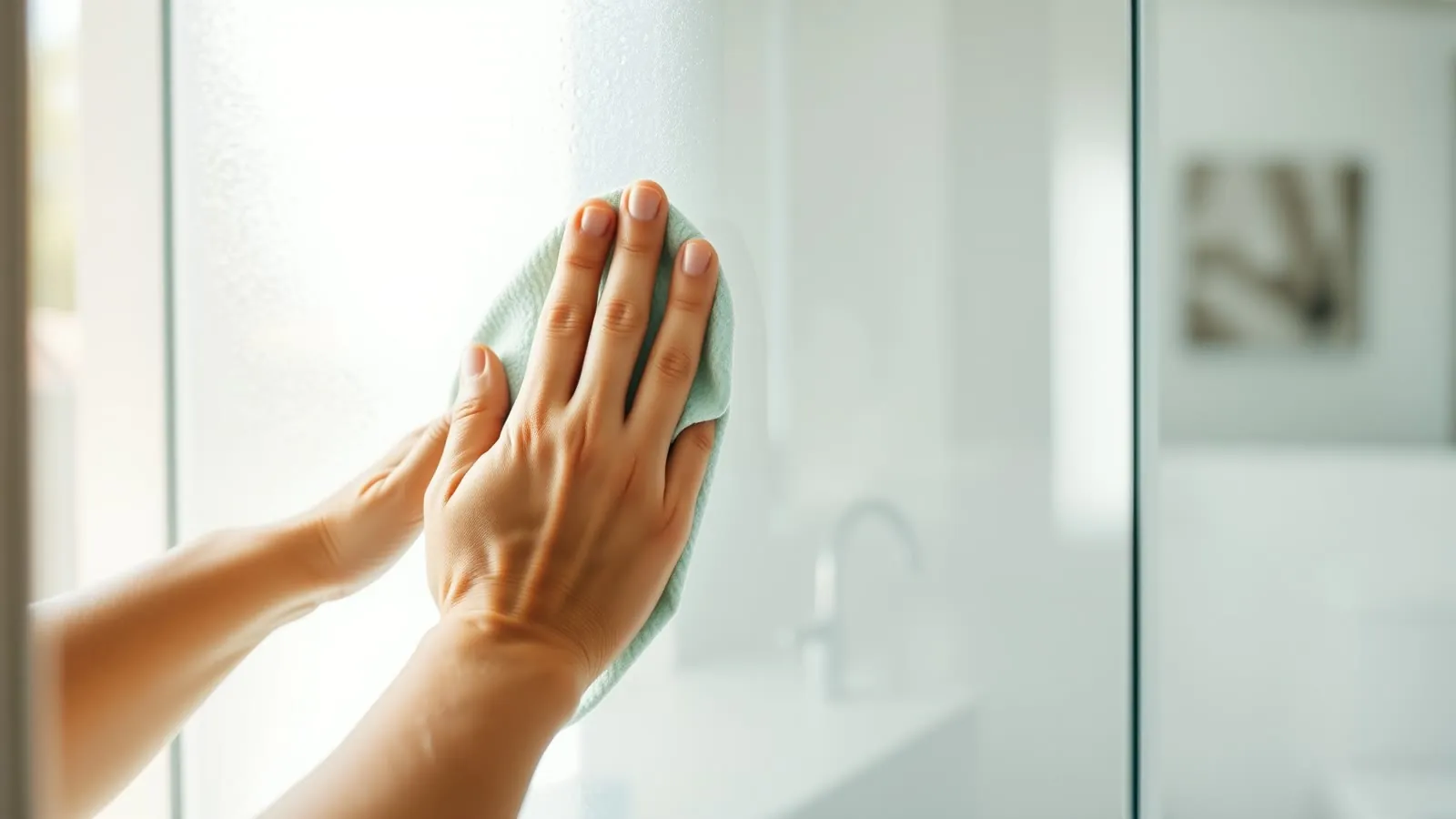
- Use a soft cloth and a mild glass cleaner. Avoid abrasive pads.
- Rinse soap residue. Hard water and soap leave a film that can show on a satin surface.
- Wipe along the pattern. It lifts dirt out of the texture.
- Dry the glass. A quick wipe stops water marks.
- Test a strong cleaner on a corner first. Treated surfaces can react differently from clear glass.
What about film?
A frosted film on clear glass is a quicker route to privacy and does not need the pane to change. In a steamy bathroom, though, the edges of film can lift over time, and it can mark if cleaned the wrong way. Film suits some situations well. Our guide to frosted film versus frosted glass sets out the trade-offs so you can compare it with replacing the glass.
A short checklist
- Decide how exposed the window is and how strong the privacy needs to be.
- Look at samples in the bathroom, in daylight and with the light on.
- Check the frame is in good condition.
- Ask about safety glass for the position of the window.
- Plan for a blind if the window is closely overlooked.
- Choose a finish you are happy to wipe regularly.
Frequently asked questions
What is the best glass for a bathroom window?
For most bathrooms, a frosted or patterned privacy glass is a good choice. It keeps daylight and hides detail. The best finish depends on how exposed the window is.
Can people see through frosted glass at night?
Not clearly, but with the light on inside, a person near the glass can show as a silhouette. A blind or curtain removes the issue.
Is frosted glass hard to keep clean in a bathroom?
No. A soft cloth and a mild cleaner are enough, and rinsing soap residue stops marks from building up.
Does frosted glass stop condensation?
No. Condensation depends on temperature, humidity and ventilation. Good airflow and sealed double glazed units help, and our condensation guide explains more.
Does a bathroom window need safety glass?
Sometimes. Glass low in a window, near a shower or bath, or in a door may need to be safety glass. Check with your glazier for your opening.
Can you replace just the glass, not the whole window?
Yes, provided the frame is sound. Send a photo, rough measurements and the finish you have in mind, and we will tell you what we can supply.
A calm next step
If your bathroom window needs more privacy or the pane is damaged, you are welcome to send us a photo and a few measurements on our request a quote page. We will explain what can be done for that window, with no pressure.