




Low e glass uses a low-emissivity coating to reduce radiant heat transfer. The name describes a feature of the glass, not a complete window or a guarantee of the same result in every room. Source: NFRC, Low-E coatings.
When replacing existing window glass, ask which coating is proposed, what performance data supports it and how it suits the opening you already have. Those questions are more useful than choosing a product because the quote says “energy efficient”. Start with the room problem, then compare the specification offered to address it.
What low e glass changes in a replacement specification
The coating is separate from pane count. Low-E glass can be used in a sealed double-glazed assembly, while suitable products can also be used in single glazing. The product must suit its intended application. Source: Your Home, low-emissivity glass.
For example, a proposal for a replacement sealed unit should identify more than the coating. Ask for the complete glass build-up, cavity description and overall unit thickness. For a single-pane proposal, ask for confirmation that the particular coating is suitable for the surface position and conditions in which it will be used.
Economy Glass already has an introduction to low-emissivity coated glass. The next step is knowing what to ask when that feature appears on a replacement-glass proposal. Keep product selection separate from the question of whether your existing frame can accept the suggested assembly.
Compare insulation, sunlight and daylight separately
Ask for U-value, solar heat gain coefficient and visible light transmittance. These describe insulation, solar gain and daylight respectively. Check whether the figures apply to the glass or the whole window before comparing proposals. Source: NFRC, performance ratings.
| Your priority | Information to request |
|---|---|
| Better insulation | U-value and the assembly it describes |
| Less unwanted direct-sun heat | SHGC and a room-specific explanation |
| Retaining useful daylight | VLT and an appearance discussion |
| Keeping existing frames | Inspection and compatibility confirmation |
The practical comparison is between complete proposals. If one specifies a coating without data and another supplies detailed figures, ask the first supplier for the missing information. Do not fill the gap with figures from a similarly named product found online.
Our broader guide to window performance at Energy efficient windows: what makes a window efficient explains how glass, frames and seals fit together. Keep that whole-window perspective when deciding how much a coating specification tells you. A glass-only figure should remain labelled glass-only throughout the discussion.
Match the coating to the room’s use
Low-E products do not all admit the same solar heat. Your Home distinguishes products that retain useful solar gain from those designed to reduce it. Source: Your Home, Low-E transmission options.
Explain your priority in ordinary terms. “This room is uncomfortable beside the glass after dinner” gives a different brief from “the afternoon sun falls across my desk”. Include the times you use the room, existing shading and anything you want to preserve, such as winter sunshine or the view.
Imagine comparing options for those rooms together. Ask the assessor to explain any recommendation for different products. If the same product is proposed for both, ask how it meets both briefs. The aim is to understand the reason for the choice, rather than insisting on either uniform or different glass in advance.
Bring up daylight before selecting a sample. Point out a bench or reading chair where light matters. Ask how to view the proposed glass alongside retained panes if appearance is a concern. Record any product description you are shown so it can be matched to the written proposal later.
Hard coat and soft coat need an application check
Hard coat and soft coat describe coating technologies. Your Home distinguishes durable pyrolytic coatings from softer vacuum-deposited coatings used inside insulated glass units. The application and protection requirements need to be checked for the actual product. Source: Your Home, coating technologies.
Treat these names as prompts for questions, rather than a ranking that chooses the glass for you. Ask where the coated surface will sit, whether it is exposed to the room and what instructions apply. If an answer relies on a brochure, request the relevant page or product document with the quote.
Do not assume the same named coating is appropriate in every assembly. Have the assessor identify the intended product and confirm suitability for the retained opening. If further measurement or inspection is required, resolve that before treating the recommendation as a final order specification.
For an enquiry about existing glass, you can start with Economy Glass and provide labelled photographs. State that you want to discuss replacement glazing and identify any frame-retention preference. Ask for suitability to be confirmed rather than presenting the coating you have read about as a settled choice.
Confirm the cleaning instructions before installation
Coated glass can require different care from uncoated glass. Window-system manufacturer AWS advises checking the glass manufacturer’s cleaning instructions for coated glass, including Low-E. Follow the instructions for the particular product. Source: AWS, coated-glass maintenance.
Ask for a copy you can keep and pass to anyone who cleans the windows. Have it identify the glass and the affected surface. A generic instruction to clean normally is not much help if you do not know whether the coating is exposed or protected inside a sealed unit.
If you later notice haze, do not start testing stronger cleaners without checking the instructions. Photograph it and ask for advice, particularly if its location is unclear. The useful information is where the haze appears and whether it can be reached from an accessible surface.
What to ask before choosing
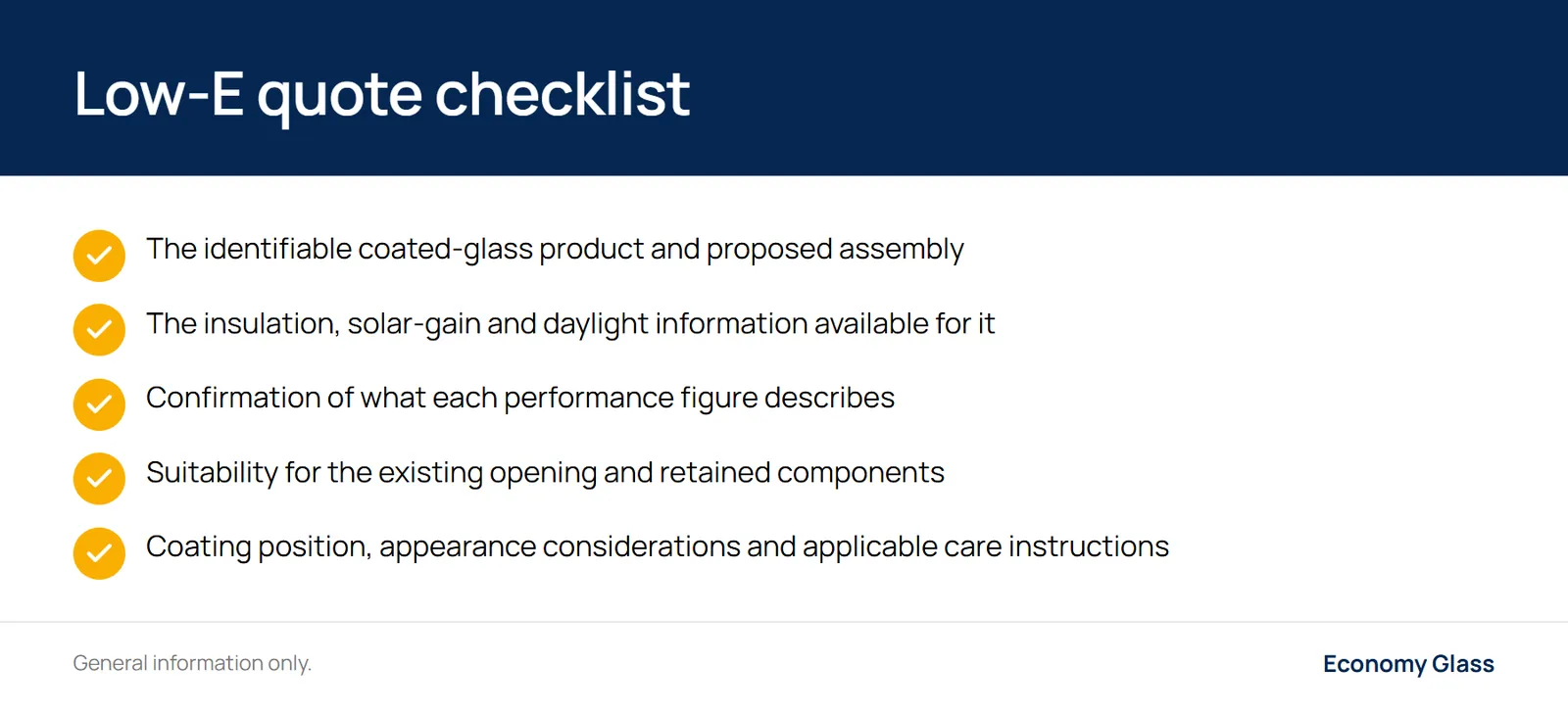
Bring your room notes to the conversation and ask for the following points to be addressed in writing:
- The identifiable coated-glass product and proposed assembly.
- The insulation, solar-gain and daylight information available for it.
- Confirmation of what each performance figure describes.
- Suitability for the existing opening and retained components.
- Coating position, appearance considerations and applicable care instructions.
If condensation is your main concern, describe where the water appears. Our guide at How to stop condensation on windows: find the cause first helps you make that initial check. Ask what part of the problem the glazing proposal addresses, and which moisture or ventilation issues need separate attention.
Keep the final product description with your house records. Include the opening labels, so you can identify which glass was fitted where. That gives future enquiries a clear starting point without relying on your memory of a coating name.
Compare two proposals without losing the details
Put the proposals beside your labelled opening list. Check that each describes the same panes and the same retained components. If one covers only the living-room fixed pane while another also includes the opening sash, resolve that scope difference before comparing their product descriptions.
Next, circle any term that lacks an identifiable reference, such as premium coating or improved glass. Ask for the actual product behind it. A descriptive label can introduce the option, but it should not be the only information you retain about what will be fitted.
If the selection changes during discussion, request an updated written description and matching care instructions. Keep the final version with the opening labels. This is particularly useful when some existing glass remains, because a future cleaner or assessor will need to know which panes were replaced.
Frequently asked questions
Is Low-E another name for double glazing?
No. Low-E describes a coating; double glazing describes an assembly with separate panes and a cavity. Ask which combination the proposal specifies. Source: Your Home, glazing choices.
Does Low-E mean the glass will look dark?
Do not choose from the label alone. Request the product’s daylight information and discuss samples, tint and reflection alongside neighbouring glass. Decide on the actual proposal rather than an assumed appearance.
Can I choose the coating before an inspection?
You can identify your preferences, but have suitability for the existing opening confirmed. Ask the assessor to check the proposed assembly before ordering replacement glass.
Will a coating fix every comfort problem?
Ask which problem the proposal addresses and what remains outside its scope. Report draughts, operating faults and moisture separately so they are assessed rather than absorbed into a general efficiency promise.
To discuss a coating for an existing opening, request a replacement-glazing assessment. Include the room’s main problem and ask for the proposed glass specification to be explained.