



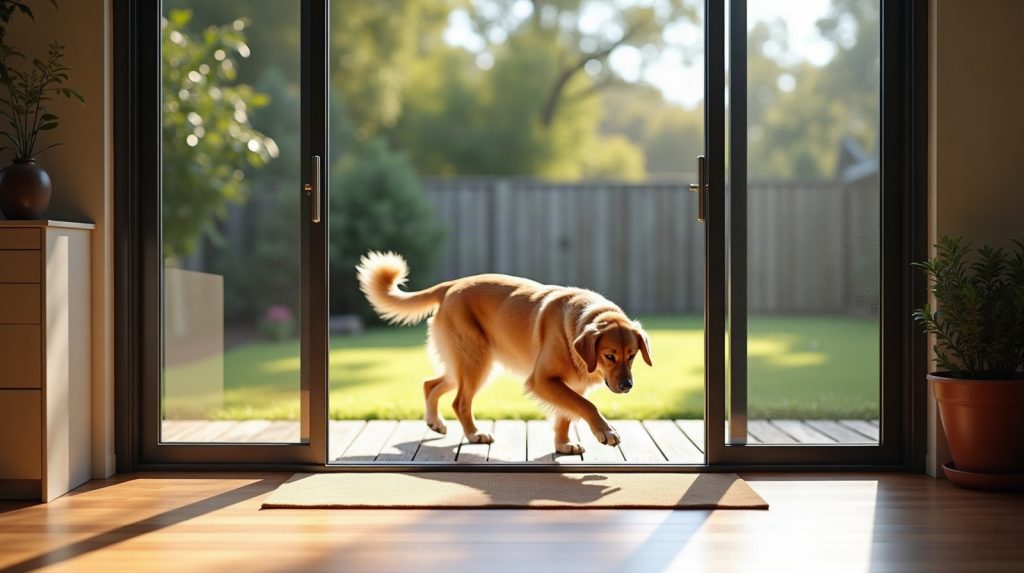
A dog door in a glass door is not cut into the glass you already have. Toughened glass cannot be cut or drilled once made, and the ordinary glass in some older doors is not the right glass for a doorway anyway. Instead, the glazier measures your door, has a new toughened safety glass panel made with the pet door opening in it, swaps that panel into your existing frame and fits the pet door through the opening. Your door, track and frame stay exactly as they were. It is normally done in one visit, for dogs and for cats alike.
Across Melbourne’s west, from Hoppers Crossing and Werribee out to Point Cook and Tarneit, the back door is nearly always a glass sliding door, so fitting a dog door in glass door panels is one of our most common jobs. Here is how it works, what to decide before you book, and where the safe limit sits for doing it yourself.
Dog door in glass door: why the panel is replaced, not cut
Doors and the fixed panels beside them are places where people can walk into glass, so safety glass is required there, and the stamp in a corner of the pane tells you what is in your door now. If it shows toughened glass, the panel cannot be cut: toughened glass is under tension across its whole surface and breaks into small pieces the moment it is scored. If there is no stamp, the door may hold ordinary annealed glass, which should not stay in a doorway. Either way the answer is a new toughened panel made with the opening already in it.
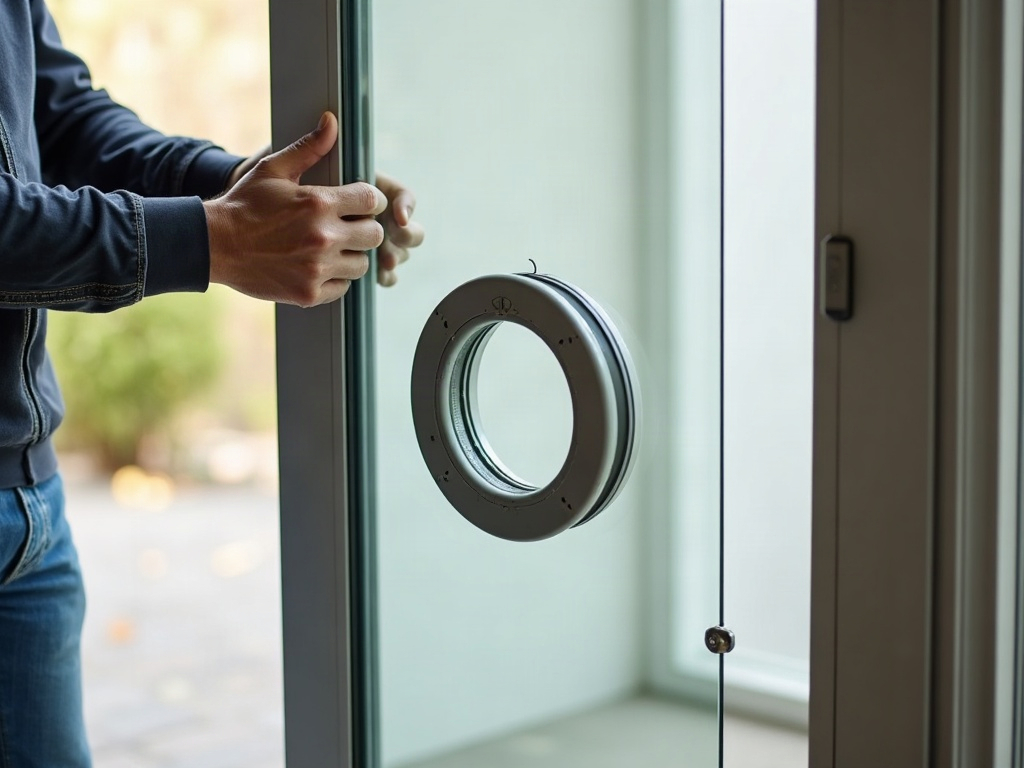
The opening is cut and its edges finished while the glass is still annealed, then the panel goes through the toughening furnace. Many glass pet doors use a round opening, because a circle toughens more evenly than a square with tight corners. The pet door itself is a two-part frame that clamps through the opening from both sides, with a rubber gasket between frame and glass. Our guide to toughened vs laminated glass explains why toughened is the glass used here.
How the pet door installation works, step by step
The first step is measuring. The glazier measures the existing panel, checks how the door is glazed (the beads or rubber gaskets that hold the pane) and confirms the size and model of pet door you want. The new panel is then made to order with the opening positioned exactly where the flap needs to sit for your pet.
On the day, the old panel comes out of the sash, the new toughened panel goes in with fresh glazing rubber, and the pet door is fitted through the opening and tightened evenly so the gasket seals against the glass. A sliding panel is lifted off its track to be reglazed, then rehung and adjusted so it still runs and locks; a hinged door is usually reglazed in place.
Sliding doors, hinged doors and sidelights
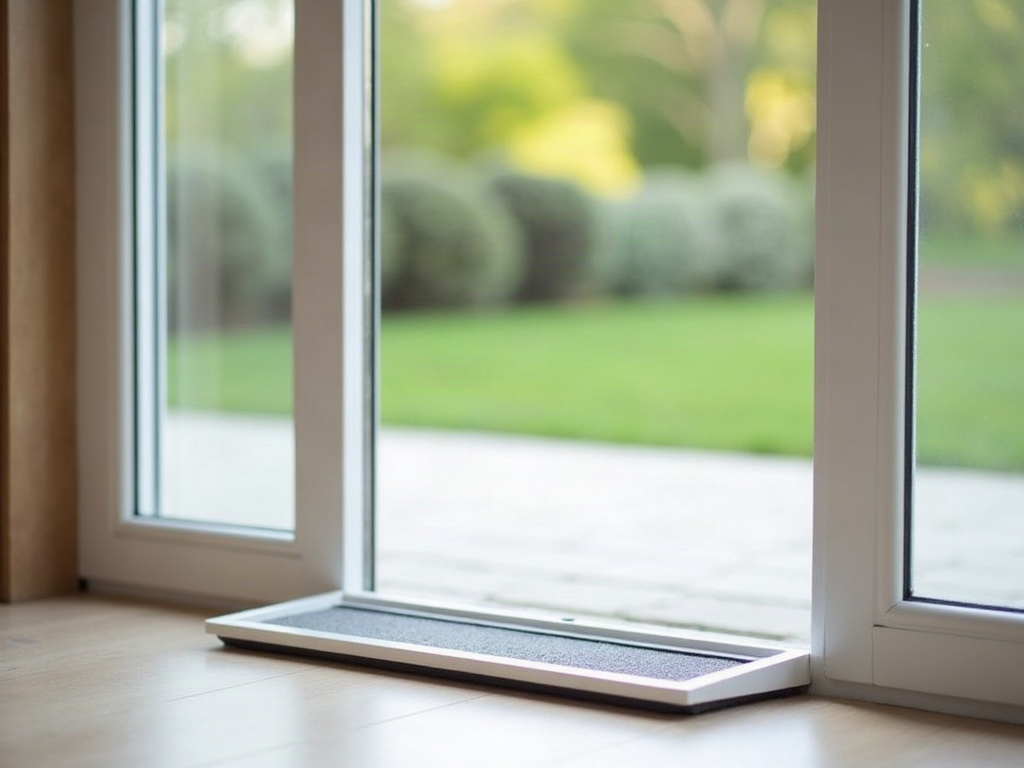
Most pet door installation in glass happens in a sliding door, and the usual choice is the fixed panel rather than the sliding one. With the flap in the fixed panel the door still slides fully open and the sliding panel keeps its lock and handle untouched. Fitting into the sliding panel is possible, but the flap then moves with the door, so the glazier checks that it clears the frame at every position.
A hinged glass door works too, with the flap placed low on the lock side so a dog pushing through does not swing the door. Where the door is solid timber, a fixed sidelight beside it is often the best home for a pet door in glass: it never moves, it seals well and the pet learns the route quickly. Very narrow sidelights and some double glazed units need a closer look, which is why the glazier measures first.
Choosing the right size for your dog or cat
Pet doors come in a handful of sizes and picking the right one is mostly two measurements: your pet from the ground to the top of the shoulder, and the widest part of the chest. The flap opening should be a little taller than the shoulder and comfortably wider than the chest, so the animal walks through without ducking or squeezing. If you have a puppy, size for the adult dog. With two pets, size for the larger one and place the flap low enough for the smaller one.
A cat door in glass works the same way but is smaller, lighter and set lower. Cats like a flap they can push with their head without much effort, and microchip-reading cat doors, which only open for your own animal, come in versions made for glass. A pet door for glass door use is chosen by the pet, not the door.
Where the flap sits and how it stays weathertight
The bottom of the flap should sit close to the floor: high enough to clear the door track and any threshold, low enough that a short-legged or older dog steps through rather than jumps. The glazier places the opening so the pet door frame sits clear of the glazing bead on every side and the flap swings freely both ways.
Melbourne’s west gets its share of westerly wind and sideways rain, so sealing matters. A properly fitted pet door has a gasket between its frame and the glass, a magnetic strip along the bottom of the flap so it closes itself, and brush or rubber seals around the flap edge. Most also come with a slide-in panel to lock the flap shut at night. The glass panel itself is glazed the same way as the original, so there is no draught around the new glass.
Renters, strata and when to call a glazier
If you rent, ask the property manager in writing first. Replacing a panel is reversible: the original glass can be kept and reglazed later, and a landlord who understands that is often happy to agree. In a strata unit or townhouse the door may be common property, so check with the owners corporation too.
Measuring your pet, choosing which panel and vacuuming the door track before we arrive are all yours to do. Cutting or drilling glass is not. Toughened glass shatters the moment a drill bit touches it, and lifting a full-height sliding panel out of its track is heavy work that breaks glass and hurts backs. If a panel has already cracked, leave it in place, keep pets and children away and call for a glass repair. Every panel we fit is toughened safety glass and carries the stamp that identifies it.
That is where Economy Glass comes in. Economy Glass supplies and installs pet doors in glass across Melbourne’s west and beyond from our Hoppers Crossing workshop, with 45 years in the glass trade and glass cut and finished to Australian Standards. Call (03) 9360 9900, Monday to Friday 8am to 4pm, or request a quote online.
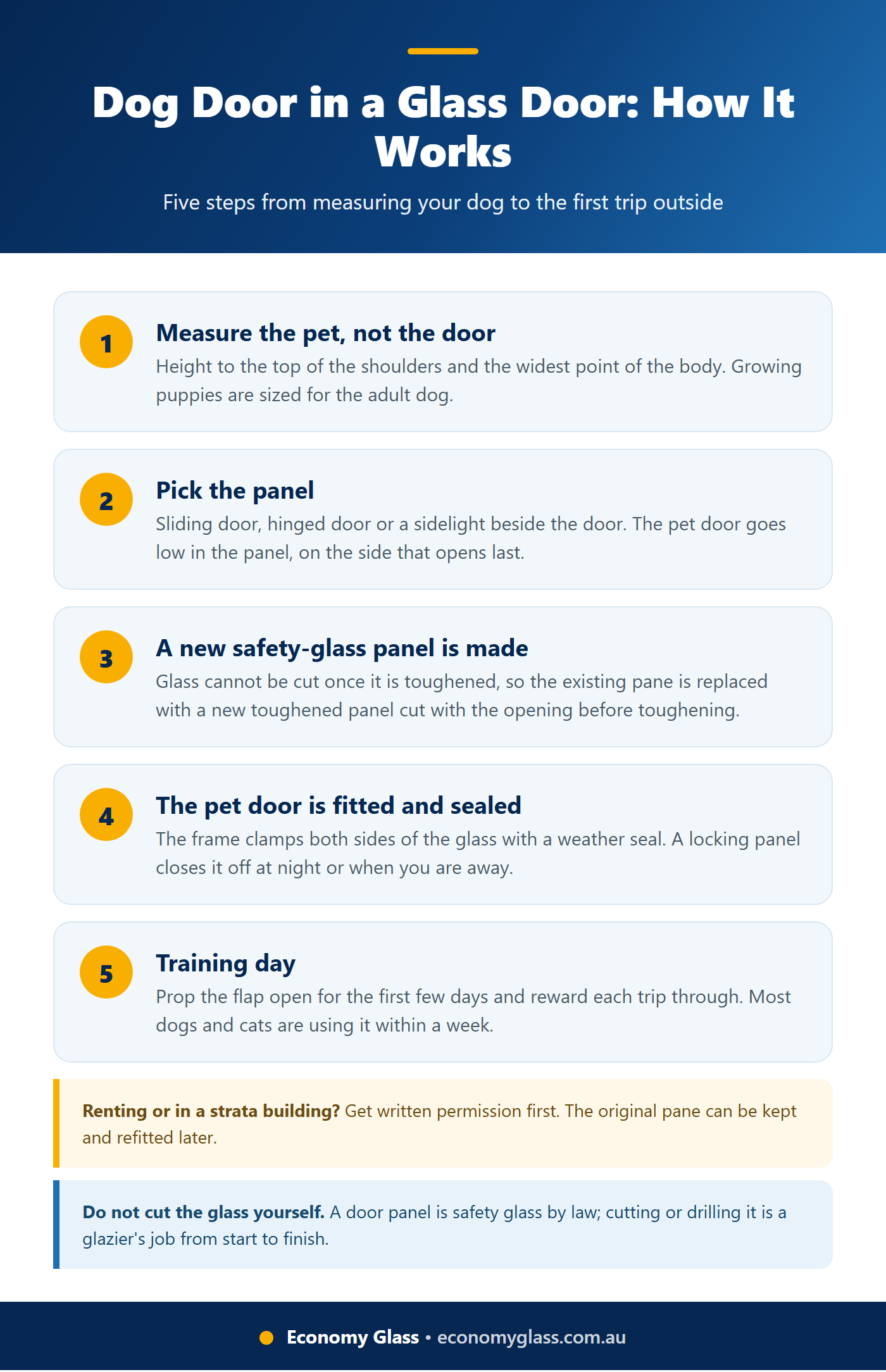
Dog Door in a Glass Door: the quick version
Save or print this checklist before you call.
Frequently asked questions
Can you put a dog door in an existing glass door?
Do I need a whole new door for a pet door in glass?
Will a pet door in a glass door let in draughts and rain?
Can the pet door be removed later if I move out?
Read our guides to toughened vs laminated glass and safety glass, see our glass repairs service if a panel has already broken, or request a quote from Economy Glass.