



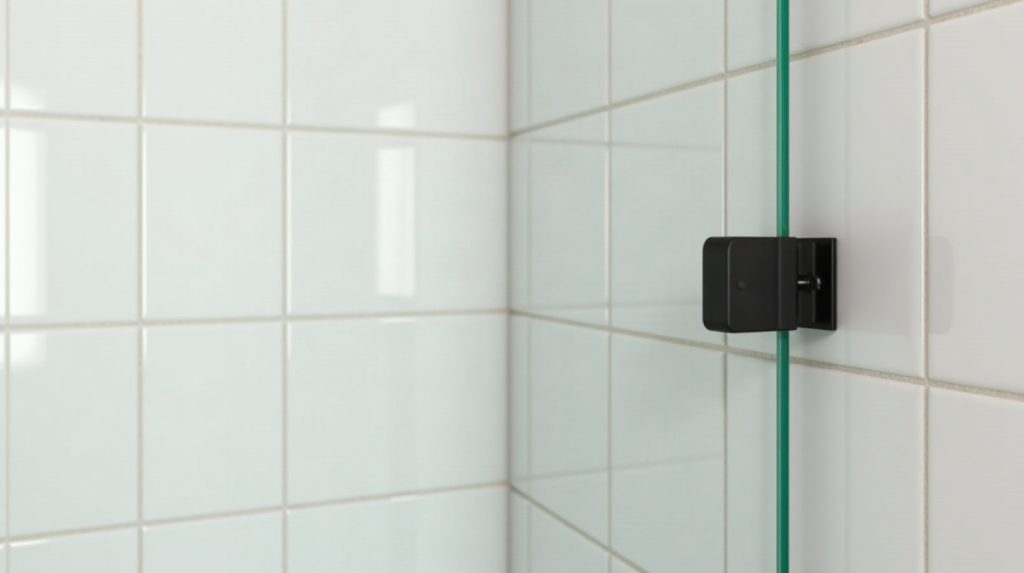
A frameless shower screen is thick toughened glass held by hinges, brackets and channels, with no frame around the panels. A semi-frameless shower screen puts a slim aluminium frame around the fixed panels but leaves the door and panel edges bare. Both use toughened safety glass. The real differences are how much hardware you see, how much the frame forgives an out-of-square wall, how water is managed and how the screen cleans. Frameless gives the cleanest look and suits a newly tiled, square bathroom. Semi-frameless is the sensible choice for most older homes across Melbourne’s west, where the walls are rarely square.
Whichever way you go, the glass is not negotiable. Under AS 1288, the Australian Standard for glass in buildings, bathrooms and shower screens are human-impact areas that require Grade A safety glass. Our 2026 guide to safety glass in Melbourne homes explains where those rules apply through the house.
Frameless vs semi frameless shower screen: the short answer
Choose frameless if you want the glass to disappear, the bathroom is newly tiled and square, and you will squeegee after each shower. Choose semi-frameless if the bathroom is older, the walls or floor are out of level, or you want a near-frameless look with a more forgiving seal line. Choose fully framed for a rental, second bathroom or laundry where toughness matters more than looks. All three use toughened shower screen glass; what changes is everything around it.
How a frameless shower screen is built
Frameless screens use thicker toughened glass than framed ones because the glass carries itself. Each fixed panel sits in a slim wall channel or on brackets, and the door hangs on wall-mount or glass-to-glass hinges bolted through holes drilled before toughening. There is no frame to hide a mistake, so the glazier checks the walls for plumb and the floor for fall, and orders every panel and hole to suit that exact bathroom.
The eye lands on the tiles, not the screen. Hardware comes in polished chrome, brushed nickel, matte black, brass and gunmetal to match the tapware, and every edge is polished because it is exposed and touched every day.
How a semi-frameless shower screen is built
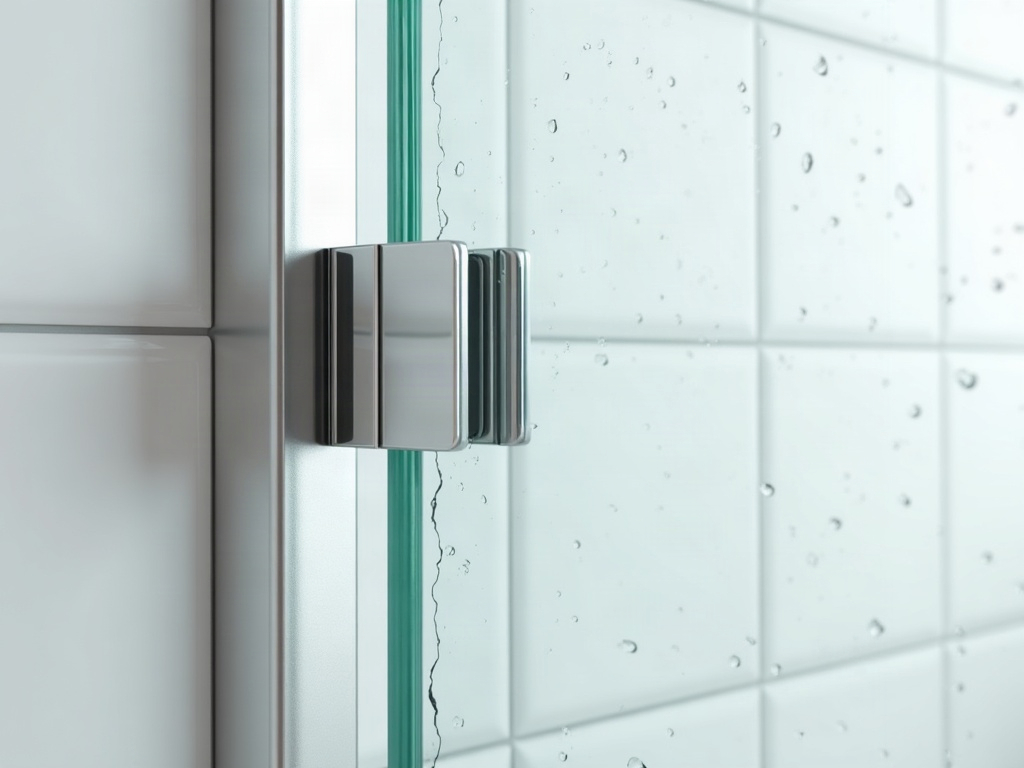
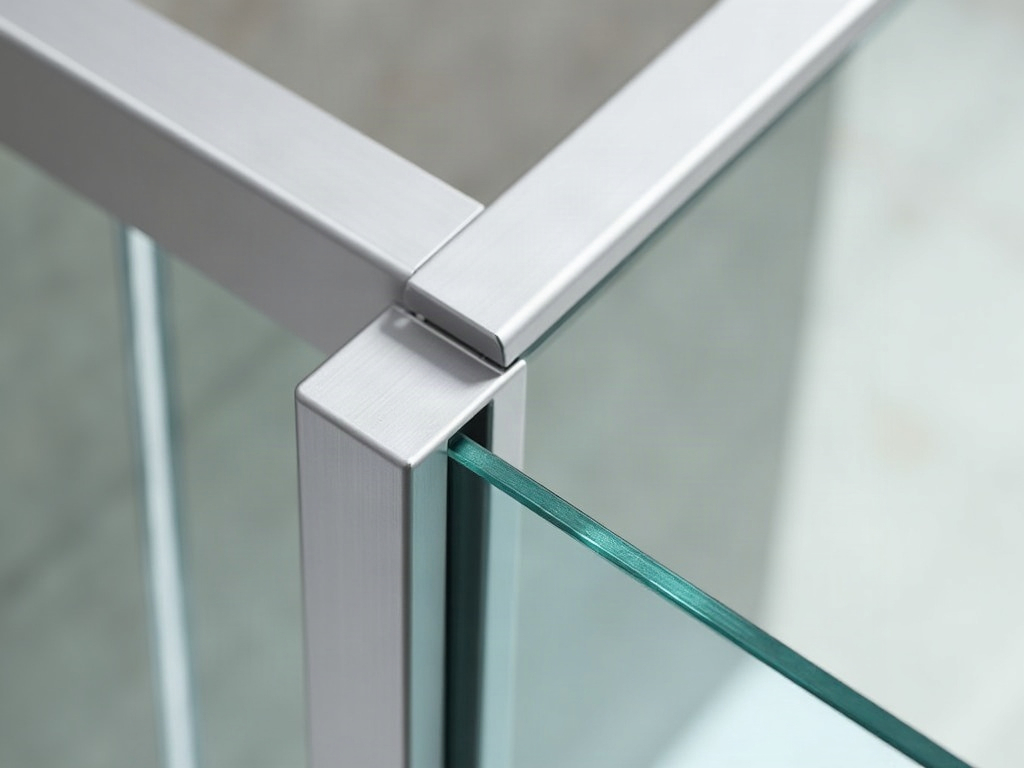
A semi-frameless screen runs a slim aluminium frame along the top and wall sides of the fixed panels, with the glass sitting in that frame rather than in channels. The door is frameless: a pivot or hinged door with bare polished edges, hung from the frame or the wall. Because the frame carries the fixed glass, those panels can be a little thinner, and the frame absorbs small errors in the walls. The aluminium is powder-coated or anodised, usually white, silver or black.
From across the room a well-made semi-frameless screen reads as almost frameless; up close you see a thin line of aluminium at the top and wall, and usually a low water bar at the floor.
Framed screens, briefly
A fully framed screen surrounds every panel and the door with aluminium. It is the most forgiving of an uneven opening, the easiest to seal and the toughest in daily use, which is why it is still standard in laundries, rentals and second bathrooms. The trade-off is more metal, more joints and a track to keep clean. Our shower screens page covers all three styles.
Older bathrooms: which screen fits
Most of the homes we work in across Werribee, Hoppers Crossing, Tarneit and Williamstown were built long before frameless glass was common: walls that lean a little, tiles that are not quite flat, a hob that slopes, a floor with a shallow fall. A frameless screen cannot hide any of that; the silicone gap between glass and wall shows every place it varies. A semi-frameless screen’s wall frame is packed and scribed to the wall, so the glass sits straight even when the wall does not.
Frameless works in an older home when the bathroom is being retiled, because the tiler can plumb the walls and set the fall before the screen is measured. If the tiles are staying, semi-frameless is the safer choice, and few visitors will notice the difference.
Cleaning, leaks and living with each screen
Cleaning is where frameless wins outright. There is no frame to trap soap scum and no track, so a squeegee and a soft cloth keep the glass clear, though clear glass shows every water mark and the squeegee becomes a habit. Semi-frameless keeps a little frame where scum collects; framed screens have the most edges plus a track.
No shower screen is watertight; screens manage water rather than stop it. A frameless screen relies on the fall of the floor and clear polycarbonate seals on the door edges. On a floor that drains well it stays dry. On a flat floor water finds its way out, while a semi-frameless or framed screen with its water bar and full seals controls it. Older bathrooms with a shallow fall are the main place we steer people away from frameless.
Everyday wear is similar across all three: door seals go cloudy and stiff, hinges loosen, rollers on sliding screens wear. Those are repair jobs, not replacement jobs, and our shower screen repairs page covers what can be fixed on an existing screen.
Why old annealed shower screens get replaced
Plenty of older screens in Melbourne’s west still carry their original glass, and some of it is annealed: ordinary window glass in an aluminium frame, put in before safety glass was expected in a bathroom. Annealed glass breaks into long, sharp shards, and a shower, where a person can slip against the panel, is the worst place for it. Viridian Glass, in its 2026 breakdown of AS 1288 for glaziers, lists annealed glass used where toughened or laminated is required as one of the most common non-compliances, and the bathroom is where we find it most often.
Check the corners of your panels for the safety mark, the small permanent stamp that names the standard the glass was made to. No stamp, a corroded frame, glass chipped at an edge, or a door that has dropped on its hinges are all reasons to replace rather than repair. For the difference between the two kinds of safety glass, read our toughened vs laminated glass guide; for a shower screen the answer is toughened.
Talk to a glazier
Measuring the opening, checking the walls with a level, cleaning the glass and checking the door seals are all things you can do yourself. Ordering the glass, drilling for hinges and fitting a heavy toughened panel are not. A frameless panel has no frame to save it from a knock, and its holes have to line up with hardware bolted to a tiled wall, so getting it wrong is costly and dangerous.
That is where Economy Glass comes in. Economy Glass supplies and installs frameless shower screens across Melbourne’s west and beyond from our Hoppers Crossing workshop, with 45 years in the glass trade and glass cut and finished to Australian Standards. Call (03) 9360 9900, Monday to Friday 8am to 4pm, or request a quote online.
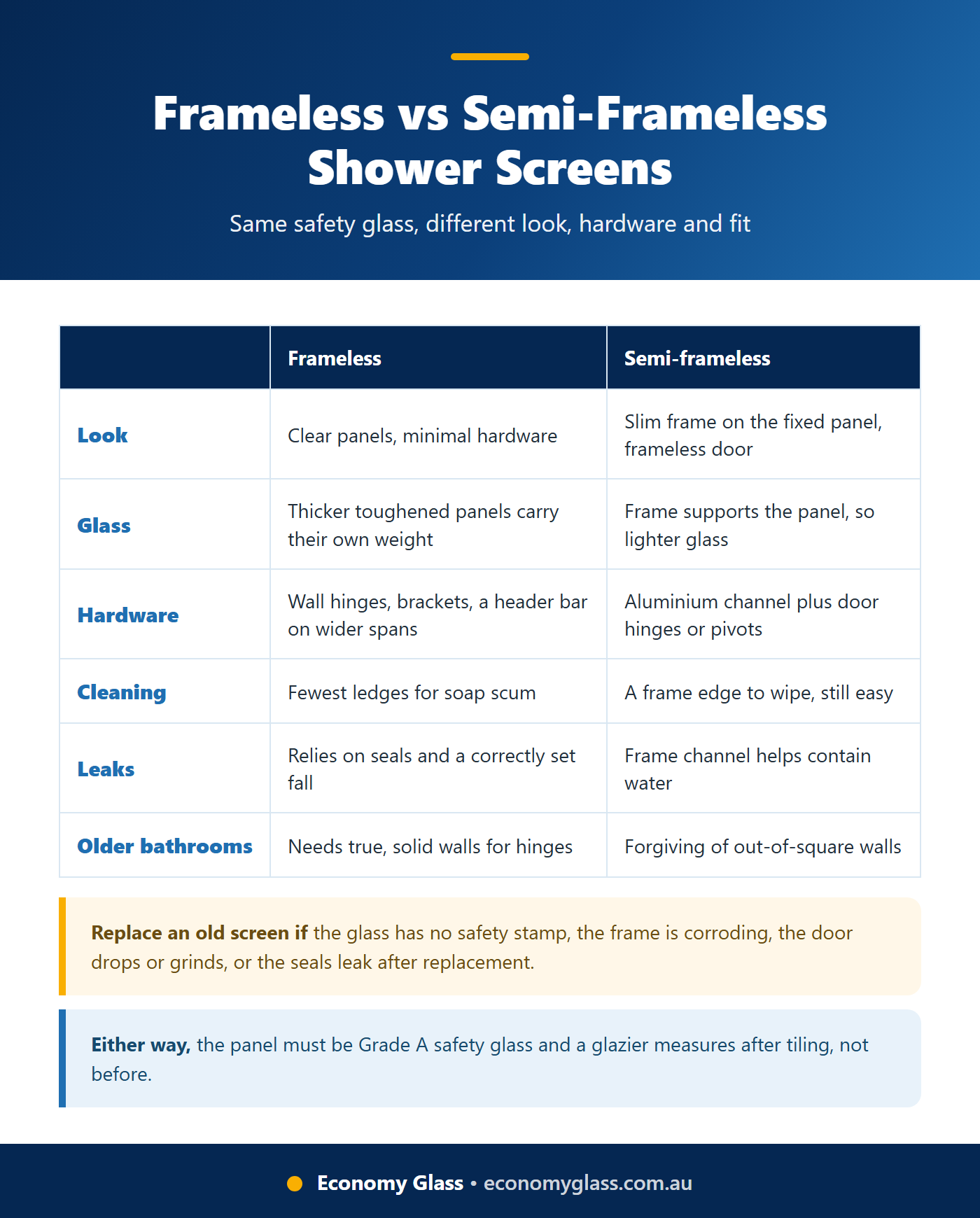
Frameless vs Semi-Frameless Shower Screens: the quick version
Save or print this checklist before you call.
Frequently asked questions
Is a frameless shower screen better than a semi-frameless one?
Do frameless shower screens leak?
What glass is used in shower screens?
Can my old shower screen be repaired instead of replaced?
For the rules behind the glass, read our 2026 guide to safety glass in Melbourne homes and our toughened vs laminated glass comparison, see what can be fixed under shower screen repairs, or request a quote from Economy Glass.