



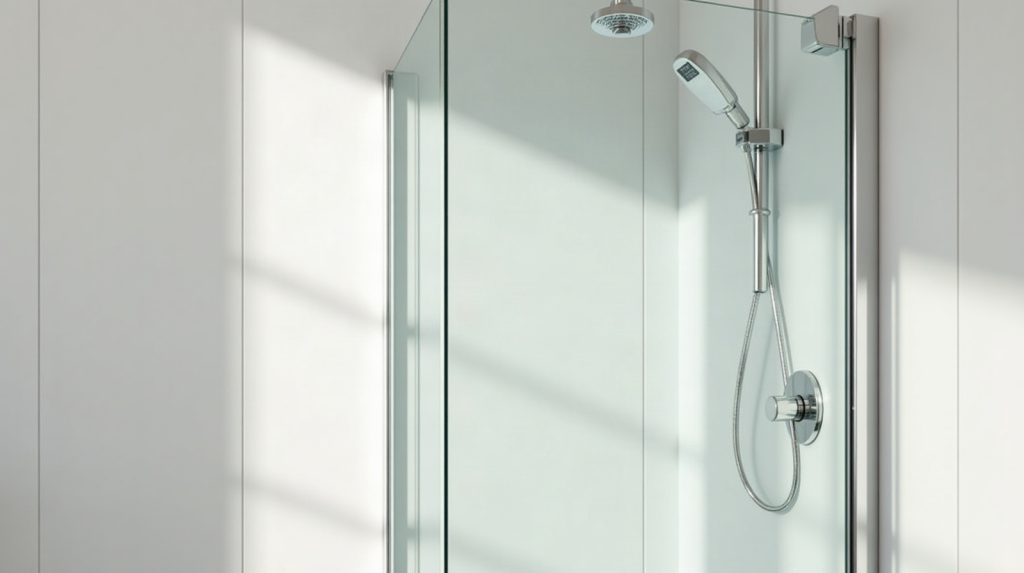
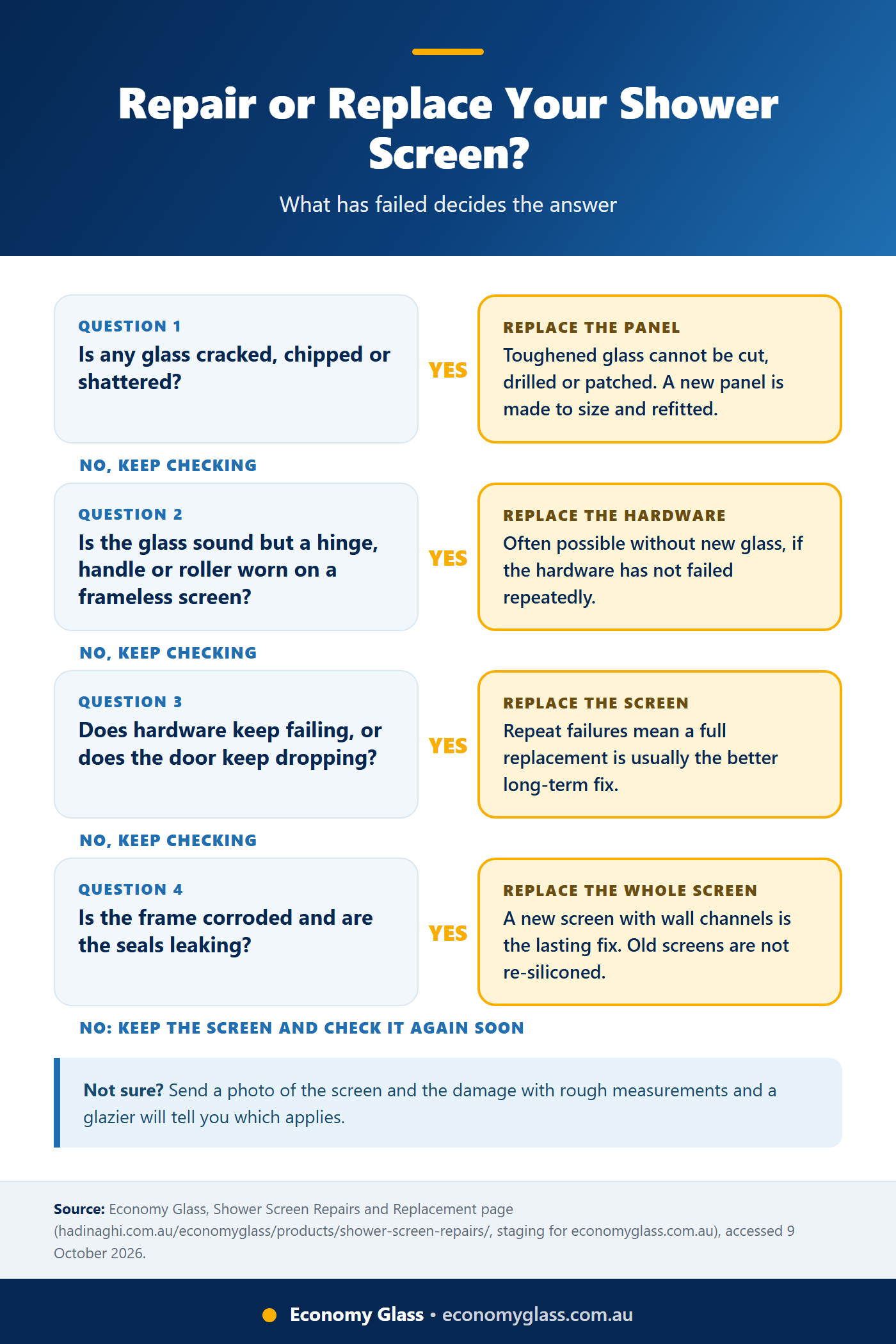
Replace a shower screen when the glass is cracked or chipped, the door keeps dropping, the hardware keeps failing, or the seals leak and the frame is corroding. Toughened shower glass cannot be repaired once it has cracked, so a damaged panel always means new glass. Everything else is a judgement call, and this guide gives you the checks to make it. It sits alongside our full guide to shower screens in a Melbourne bathroom renovation, which covers the rules and the order of work when the whole bathroom is being redone.
Shower screen replacement: the seven signs
Walk through your bathroom with a torch and check each of these. One sign on its own is a reason to call a glazier. Two or three together usually mean the whole screen is finished.
- Cracked, chipped or shattered glass. Toughened safety glass cannot be cut, drilled or patched once it is made. A chip on an edge matters too: Viridian Glass’s May 2026 explainer on why glass breaks says the edges are by far the most vulnerable part of a panel, because chips and shells along them act as weaknesses.
- No safety stamp. Check the corners of each panel for the permanent mark that identifies safety glass. If an older screen has no stamp, treat it as ordinary annealed glass. It is not illegal to keep, but it is not glass a glazier will refit.
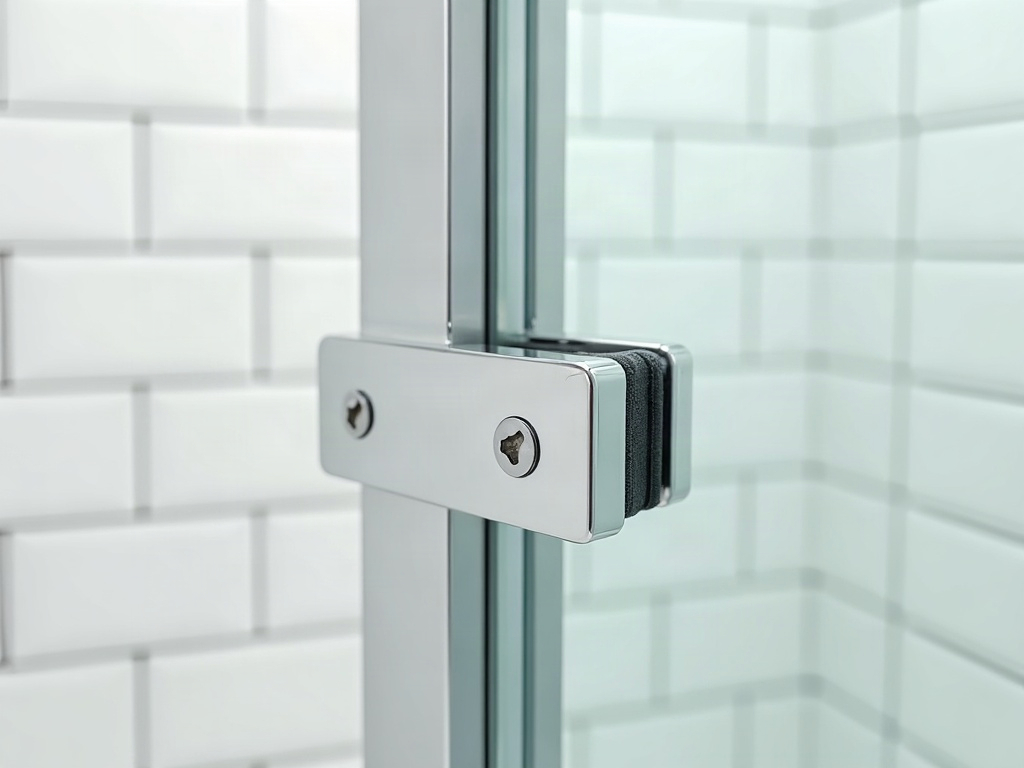
- A door that drops or drags. The hinge carries the full weight of the door every time it opens. When a poor hinge lets go, the door sags and the glass is at risk.
- Hardware that keeps failing. One worn handle is a small job. Hinges, rollers or handles that fail again and again point to a screen that has reached the end of its life.
- Seals that leak or silicone gone black. Running water wears silicone down. Once it darkens and traps dirt, it no longer seals.
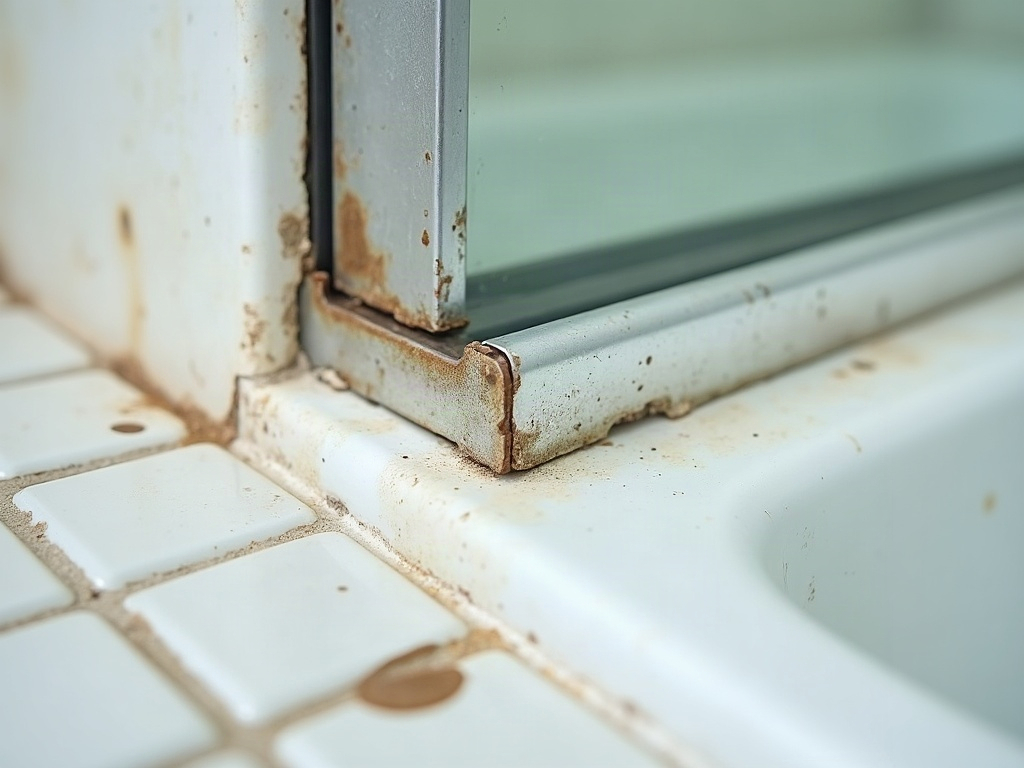
- A corroded frame or track. White crust or pitting on a framed screen, particularly along the bottom track, is the aluminium failing.
- A new bathroom layout. Move the shower, change the tiles or fit a different shower base and the old screen will not fit the new opening, however good the glass is.
Can you replace just the glass?
Often, yes. If the frame and hardware are sound and only one panel has broken, we can remake that panel to the exact size and refit it. Because the replacement is cut to the opening, we need the old panel’s measurements, which is why a photo of the screen and the damage is the best first step. Laminated glass that has cracked stays in one piece in a web pattern, but it is replaced too.
Frameless screens give you a middle option. Where the glass is fine and only the hinges, handles or rollers are worn, hardware can sometimes be replaced without new glass. The catch is repetition. If the hardware keeps failing, a full replacement is usually the better long-term fix, and we tell you which applies before you commit. We do not re-silicone old screens. Where the seals have gone, a new screen with wall channels is the lasting fix.
Shower screen leaking: why it happens and what fixes it
A screen leaks for one of three reasons: the silicone has worn out, the door has dropped on its hinges and no longer closes against the seal, or the fall of the floor is sending water toward the glass. A leak matters beyond the puddle. The Building and Plumbing Commission lists mould growth, structural damage and water infiltration into dry areas as the problems wet area waterproofing exists to prevent, and a screen that leaks for months works against all of it.
For a new screen, the fix is in how it is fixed to the wall. Wall channels cover the full edge of the glass, leave little exposed silicone and resist mould better than brackets alone. Where silicone is used, it should be a sanitary, mould-resistant product, which our guide to neutral cure and sanitary silicone explains in more detail.
How a shower screen replacement works
The process for a replacement is short, and most of it is done before anyone arrives with glass.
First, you send a photo and rough measurements. A picture shows us the screen type and whether a single panel will do. Second, we quote, with a clear price for the glass, hardware and installation. Third, we measure and make the glass. The replacement panel or screen is manufactured to our precise measurements. Fourth, a glazier removes the old glass safely, fits the new screen and cleans up.
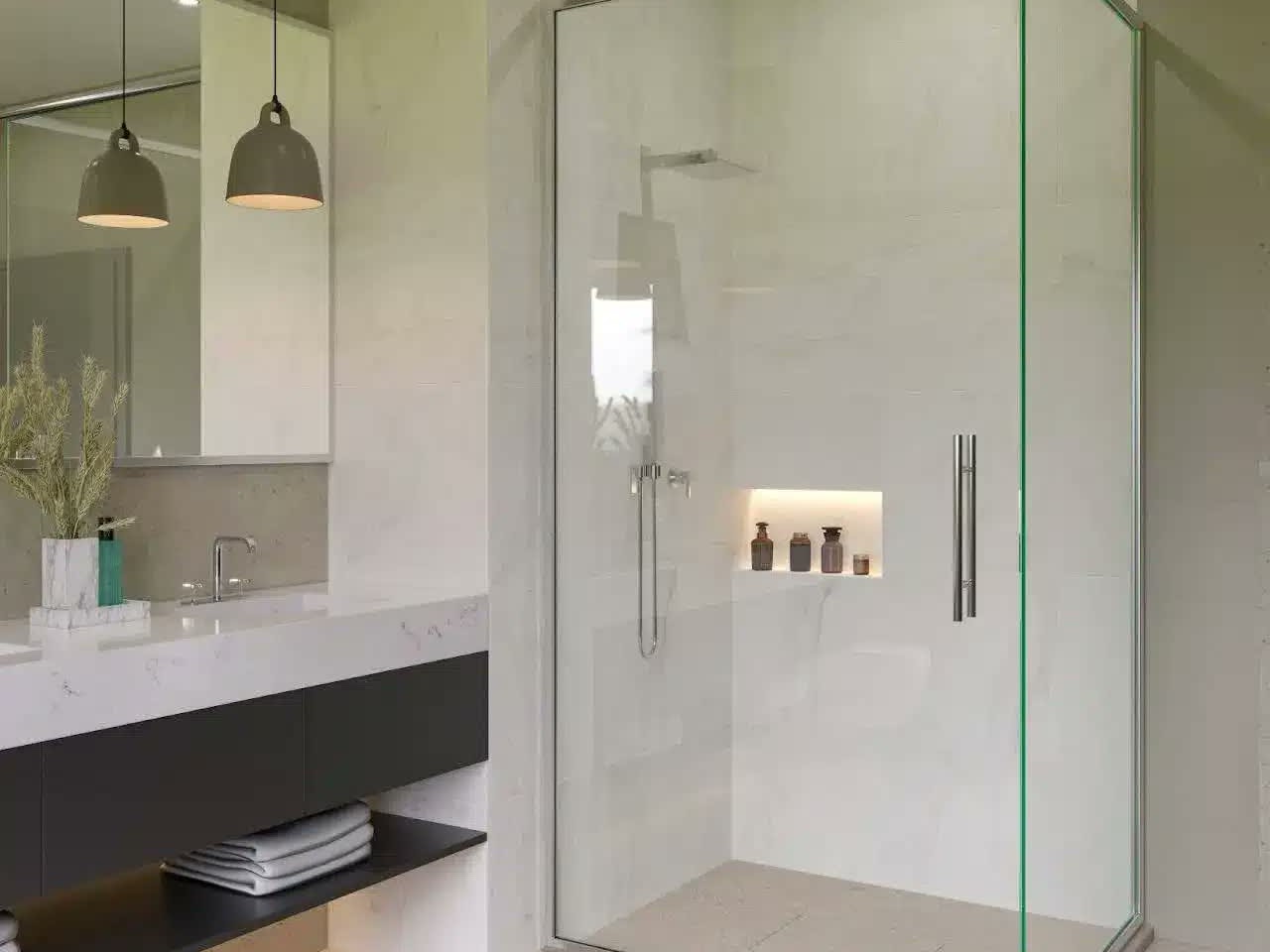
Why does the glass wait for a measure? Because it cannot be altered afterwards. As we explain in our guide to how much shower screens really cost, a custom screen is measured on site and every panel is cut to those measurements, which is what lets it fit a wall that is out of plumb or a floor that is out of level.
What you can do yourself is limited, and that is deliberate. Take photos, note the screen style, check for the safety stamp, roughly measure the opening and clear the bathroom. Do not try to take a screen apart. Glass panels are heavy, toughened glass can shatter if a corner is knocked, and removing a screen fixed to the wall means working on the lining behind the tiles. If your house was built before 1990, Asbestos Victoria’s fact sheet says asbestos is commonly found in many homes of that age, including in walls behind ceramic tiles, so tell your glazier before anyone drills.
Choosing the replacement: like for like or an upgrade
A replacement is a chance to change the screen, not just swap it. If you want the open look, frameless shower screens use 10 mm clear toughened glass, with fixed panel, wall-to-wall and corner layouts, and hardware in finishes from polished chrome to matte black and brass. If budget or safety is the priority, a framed or semi-frameless screen is sturdier and more economical. Our range of shower screens covers all three styles, and frameless vs semi-frameless shower screens compares the two most popular.
For rental properties, a fully framed screen is a good choice because it is robust and sealed on all sides, while semi-frameless screens are the most popular and budget-friendly. Whichever you pick, the glass is Grade A safety glass, and we confirm the type and thickness for the screen style you choose.
When to call a glazier
Checking the stamp, cleaning the glass, tightening a loose handle and measuring the opening are all fine to do yourself. Replacing a panel, hanging a door, fitting hardware to toughened glass and anything involving broken glass belong with a glazier, because the glass has to be the right type, made to size and fitted to the standard.
That is where Economy Glass comes in. Economy Glass supplies and installs shower screen replacements across Melbourne’s west and beyond from our Hoppers Crossing workshop, with 45 years in the glass trade and glass cut and finished to Australian Standards. Call (03) 9360 9900, Monday to Friday 8am to 4pm, or request a quote online.
Frequently asked questions
Can you replace just one panel of a shower screen?
Can a cracked shower screen be repaired?
How do I replace a shower screen?
How much does a shower screen replacement cost?
My shower screen is leaking. Do I need a new one?
How do I remove an old shower screen?
Want the full picture? Read our guide to shower screens in a Melbourne bathroom renovation for the rules, the order of work and the glass choices, or request a quote from Economy Glass.