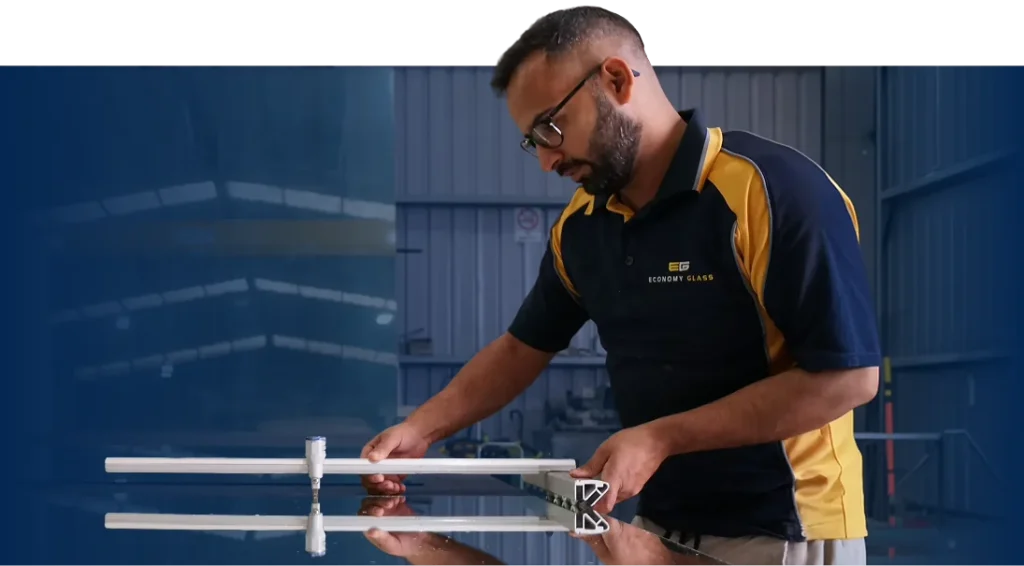
Toughened safety glass
Toughened Glass (or tempered glass) is known for its robustness and resistance to impact, which is critical for modern living in situations where safety and durability are paramount.
The glass undergoes a rigorous manufacturing process where it is heated to high temperatures and then rapidly cooled. This treatment significantly enhances its strength compared to normal “float” glass, making it up to five times stronger and less likely to break.
When it does break, Toughened Glass shatters into small, granular chunks instead of jagged shards, significantly reducing the risk of injury. This characteristic makes it an ideal choice for a multitude of applications, from vehicle windows to shower screens, and is a regulatory requirement in locations prone to human impact, such as doors, low windows and balustrades.
Choosing Toughened Glass not only ensures a safer environment but also brings peace of mind, knowing that the glass around you is designed to withstand the unexpected, keeping you and your loved ones protected.
Superior safety
In the event of breakage, Toughened Glass crumbles into small, blunt pieces, significantly reducing the likelihood of injuries associated with sharp edges. This feature is crucial in homes with children and pets, providing additional safety and peace of mind for parents and pet owners.
Enhanced durability
Toughened Glass is engineered for resilience, being able to withstand up to five times more impact than standard glass. This strength ensures a long-lasting installation, reducing the need for frequent replacements and thus offering long-term financial savings and less material waste.
Increased security
The robust nature of Toughened Glass makes it a formidable barrier against forced entry, elevating the security level of your premises. Its resistance to impact means it stands as a deterrent to burglars, contributing to a safer home or business environment.
Thermal resistance
Toughened Glass boasts a higher thermal stress threshold, making it less likely to crack under extreme temperature changes. This quality ensures that windows and doors remain intact through seasonal temperature fluctuations, promoting energy efficiency and comfort within the space.
Laminated safety glass
Laminated Safety Glass offers a robust, modern solution designed to meet stringent safety requirements while providing superior daily performance. Engineered by sandwiching a tough, transparent interlayer between two or more sheets of glass, laminated glass creates a strong barrier. Unlike standard glass, which breaks into sharp, dangerous shards, laminated glass is designed to hold together even under heavy impact, keeping the pane intact within its frame.
The primary advantage of laminated safety glass lies in its multi-layered protection. In the event of an accidental collision, extreme weather or an attempted forced entry, the glass cracks into a web-like pattern rather than shattering. Because the internal interlayer retains the broken fragments, it drastically reduces the risk of serious injury and maintains a continuous barrier. This makes laminated glass an ideal choice for high-traffic zones, lower-level windows, glass doors, overhead glazing, as well as anywhere security and human safety are top priorities.
Beyond physical security, laminated safety glass delivers functional everyday benefits that elevate your indoor environment. The specialised interlayer acts as a built-in filter, blocking up to 99% of harmful UV rays to protect your furniture, flooring and interior decor from sun damage and fading. Additionally, the dampening qualities of the interlayer noticeably reduces exterior noise pollution, creating a quieter, more peaceful indoor space.
Superior safety & security
Holds together when broken, preventing dangerous loose shards and acting as a strong barrier against forced entry or impact.
Maintains structural integrity
Even if cracked, the glass remains sealed within its frame, keeping wind and weather out until it can be replaced.
Blocks harmful UV rays
Filters out up to 99% of UV radiation, protecting furniture, flooring and interior fabrics from fading.
Effective sound dampening
The interior plastic layer absorbs acoustic vibrations, noticeably reducing exterior noise pollution compared to standard glass.